Published: by Crystal Paine on | This post may contain affiliate links. Read my disclosure policy here.
Want to know a quick way to shave a little bit off your grocery bill each week?
Check the sale ads when you’re planning your menu.
Most larger store chains have their sale ads online, so you can quickly pull them up and browse them when making your menu. Not only will this give you some extra inspiration for meal ideas, but you’ll also be more apt to plan meals around what is on sale at the store instead of just going off of whatever sounds good.
It so simple, it only takes 10 extra minutes or so, and it can easily save you an extra $10 or more on your weekly grocery bill.
Published: by Crystal Paine on | This post may contain affiliate links. Read my disclosure policy here.
I live in a very large city & there are 3 of the very same grocery stores within a 5-mile radius of where I live. Will it do any good to check deals at each of those grocery stores or will one most likely have the same deals as the one around the corner? -Andrea
Great question, Andrea! I’d strongly suggest checking out all the stores that are within a 5-mile radius of your home, even if they are the same chain. Why? Well, here are three reasons:
1. Different stores have different markdown policies.
I’ve been amazed at the difference of markdown policies at our local Dillon’s stores. One store routinely marks things down at least $0.50 more than the other store. For instance, one store will mark down bagged salads to $1.69 while the other store will mark down the exact same salads to $0.99. By shopping at the store with lower markdowns, I can often save at least a few extra dollars each shopping trip.
2. Some stores are more coupon-friendly than others.
Stores in the same chain can vary widely in their friendliness toward coupons. Usually, if the manager is coupon-friendly, this will trickle down to all the staff. It will save you time and effort to shop at the store that is most accepting toward couponers.
3. Some stores have better stock than others.
If a store doesn’t keep their sale items in stock, it’s rather pointless to shop there regularly. Finding out which store in your area is the best at keeping their shelves stocked–especially when there’s a great deal or loss leader–can save you time and hassle.
Take Time to Investigate–and Then Shop With Confidence!
When you first move to an area (or are first starting to practice strategic shopping), take a few weeks or months to shop at different stores within a close radius of your home to check them out. After a few regular visits to different stores, you’ll probably have a good idea which one(s) are the best to routinely shop at. Once your investigative period is over with, you can streamline your life by doing all of your shopping at the store(s) you found to be the best.
Do you think it’s beneficial to check out all the stores in your area, even if they are the same chain? If so, why? I’d love to hear your thoughts!
It’s the first commandment of personal finance: live within your means.
Sometimes that means spending less; but as Crystal has pointed out, there’s a second way to live within your means…
Increase your income.
There are lots of ways moms can earn money, even if you don’t want a regular full-time or part-time job, and even if you’ve been home with your kids for years. I also think there are lots of reasons savvy home economists should try to earn good money. After all, if you’ve learned to live on one income, becoming a two-income family means that anything you can bring in (after taxes and childcare expenses) can go toward big goals!
Unfortunately, because many moms do want to work from home, there are lots of scams out there. Your best bet to make sure you’re working for a reputable business is to start your own business. If becoming an entrepreneur sounds intimidating, just remember that entrepreneurs solve sticky problems in a brilliant fashion. What do moms do…? 🙂
So make a list of all the skills you have that someone might pay for. If you’re not sure what might be in demand, head over to sites like Urban Interns, Mom Corps, Elance, and even Craigslist to see what kinds of ads employers and job seekers are posting.
Do you have any of these skills, or could you learn them with some time spent at the library or reading up online?
Some options for at-home jobs include:
Ghostwriting
Copywriting
Editing and proofreading
Website help (development, design, trouble-shooting, virus repair, etc.)
Social media
Public relations
Virtual assistant work
Bookkeeping
Research
If you’re into creative and artistic work, you might hunt around on Etsy to see what’s selling, or through local artists’ markets.
If you don’t want to work from home all the time, there are plenty of other business concepts with flexible hours and low barriers to entry:
Party planning (and running)
Organizing
Staging yard sales or selling things online for people
Choose one skill and focus your efforts on that concept. Hunt around for other people who are doing this. Research what they charge. Pick their brains for advice if they’re up for it. Make a list of why you’re good at this particular skill, such as relevant experience from the past, or any volunteer work you’ve done.
Next, make a portfolio of work. Can you show evidence of this skill by doing a project for a friend, your church, or a non-profit you work with? Get results you can point to: three high schoolers who raised their GPAs thanks to your tutoring; before and after photos of a messy office you organized; a brochure you wrote for a local non-profit that helped increase the number of names in their donor database by 25 percent. You get the idea.
Once you’ve got a portfolio, you’re ready to get out there. Email or call everyone you know and say you’re looking for leads. Mention your results. You may need to be persistent, but soon you’ll land your first paying gig. Do a bang up job on that and you’re on your way.
There’s more to running a business, of course, then just getting started. But you’ll pick up skills as you go. The important thing to remember is that you can do this. Don’t sell yourself short.
You’ve already been doing valuable work for years. Now, you’ll just get paid for it!
Published: by Crystal Paine on | This post may contain affiliate links. Read my disclosure policy here.
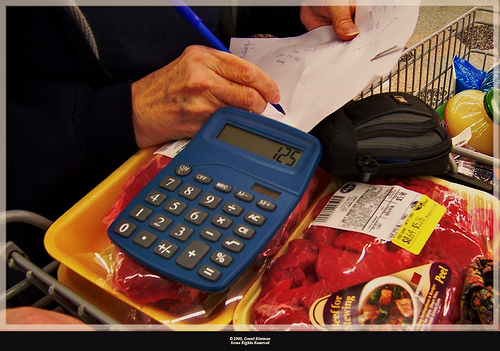
One simple way to save money on your grocery bill is to always bring a calculator with you when you shop. I’ve done this for years and it’s been a huge help.
Why You Should Always Shop With a Calculator
1. You can keep a running total to make sure you’re not going over budget.
Since I use cash when I shop, it’s important to keep a tally of how much I’ve spent so far so that I don’t get up to the register and not have enough money to pay for my groceries. Keeping a running total also encourages me to carefully evaluate all purchases as I put them into my cart–and it helps ward off the temptation to make impulse purchases on things I don’t really need to buy.
2. You can easily compare the cost per ounce.
Some grocery stores have the cost per ounce right on the price tag, but many stores don’t. This is when a calculator is your best friend. Instead of trying to stand there and work out the equations in your head or scratch them out with a pen on your grocery list, whip out your calculator and you can quickly figure out which product is a better deal to purchase.
3. You can quickly tell if you were incorrectly charged at checkout.
I can’t tell you how many times I’ve been overcharged at the checkout lane because something didn’t ring up right, they didn’t scan all of my coupons, or my coupons didn’t deduct the right amount. If you keep a running total of how much you’ve spent, you’ll instinctively know if something’s amiss at checkout and you can immediately check the receipt to figure out the issue and get it corrected.
Published: by Crystal Paine on | This post may contain affiliate links. Read my disclosure policy here.
The last few days have been a bit on the crazy side. I was scheduled to take a short trip to Los Angeles for a video shoot for a BBC project. Since it was going to be so close to where Jessica lives, she was going to drive up and spend the afternoon/night with me.
All went smoothly until I landed in Dallas. Then pretty much nothing went smoothly.
The flight was delayed by an hour. We took off and then had to re-land because something malfunctioned on the plane. They couldn’t fix it, so we had to wait for five hours while they found another plane we could use.
I finally made it to LA–where Jessica had patiently been waiting for over five hours for me to show up! Poor thing, I felt so badly she had to wait forever for me to show up!
But we made up for lost time and had a wonderful dinner in an outdoor French restaurant and stayed up talking until 2 a.m. We walked around Santa Monica the next morning and had breakfast at another cute crepe restaurant.
And then Jessica had to head back home and I headed to the studio to do 20 one-minute video clips. I called and asked Jesse to please pray for strength for me as I was wiped out and exhausted and wasn’t sure how I was going to pull off all that filming–especially since the whole on-camera thing is still way outside my comfort zone.
But it all ended up going really well, the crew was fantastic to work with, and I honestly forgot how tired I was when I started talking about saving money and simple things moms can do to make a big impact on their finances. And despite my fear of cameras, I actually ended up having a lot of fun!
I got back to LAX in the early afternoon and prepared for a nice quiet trip home. I should have known better!
When I got to the gate, I found out my flight had been delayed by 20 minutes. Not too big of a deal–except that meant my layover in Dallas would only be 20 minutes, and that was cutting it quite close.
I talked to the guy at the desk and he just shook his head and told me that it would be awfully hard for me to make it onto the second flight. However, he generously offered to move me up to near the front of the plane to help buy me a little more time to make it to my gate when we landed in Dallas.
We got on the plane and all was going well until about five minutes before we were supposed to take off. The pilot came over the loud speaker and said that the co-pilot was missing and we were waiting for him to arrive. Um, that was not a good sign.
We ended up waiting another 15 minutes for him to get there and my chances of making my next flight were pretty much evaporated by then. So I resigned myself to staying the night in Dallas as it was the last flight out on Saturday evening.
When we finally landed, I got off the plane as quickly as I could and made a beeline for the second flight, in the off chance it had been delayed. Nope, it had pulled out of the gate 10 minutes before I got there.
Oh well, at least I got in a good run. 🙂
By this time it was almost 10 p.m. and I was thoroughly wiped out. I made my way back to the gate I’d come from and got in line to get a hotel voucher and to get my ticket changed for the next day.
There were lots of people in line, it was chaos at the counter, and they were very under-staffed. I finally made it to the counter about 20 minutes later and a man who had just come on shift tried to help me get the hotel voucher and ticket changed. It was pretty obvious he didn’t know what he was doing and he had to make phone calls a few times to try and figure out how to get my flight changed.
He eventually got it squared away and handed over my hotel voucher and ticket for the next day. He told me to go run down and get on the gray bus marked “hotel shuttle” before it left. I hurried as fast as I could and located the gray bus, but they said my voucher wasn’t for the hotel they went to. Two more gray buses came and they both said that my voucher wasn’t for a hotel they went to, either.
I was beginning to get a little concerned. It was dark, it was late, and the airport was fairly deserted. And here I sat on the curbside waiting for a phantom bus to come pick me up. Finally, another bus arrived and they told me it was for my hotel.
I eagerly hopped on board, so thankful I was going to be able to go to bed soon! But I began to get worried when the bus drove quite a ways away from the airport. It seemed odd that the airline would put me up in a hotel so far away.
However, they’d told me it was the right bus, so I figured they must have just run out of hotel rooms close by or something.
When I got to the hotel, my gut feeling was confirmed: I was at the wrong hotel. Apparently, I was supposed to get on the red bus, not the gray bus. And of course, my voucher wouldn’t work at this hotel. They said they’d drive me back to the airport and drop me off to wait for the red bus to come.
The thought of going back and standing out on a dark, deserted curb at 11:30 p.m. at night to wait for another bus after everything that had happened over the past two days was just about the last thing I wanted to do. So, chucking my frugal nature out the window in favor of practicality and my need for sleep, I said, “Can I just pay for a room?”.
And I think it was $79 well spent. 🙂
{By the way, I did finally make it home in one piece at 11 a.m. yesterday morning. I was never so happy to be back home again!}
Published: by Crystal Paine on | This post may contain affiliate links. Read my disclosure policy here.
I’m finally getting this post up tonight–hours later than I’d hoped. I was rather exhausted today after a crazy weekend trip (more on that in a little bit), so I spent most of today just snuggling and reading with my children and trying to get back into the swing of things.
How did you do on last week’s goals? What are your goals for this week? I’d love to have you share your progress on last week’s goals and your goals for this coming week in the comments. Of, if you’ve blogged about it, leave your direct link below. Let’s cheer each other on to live purposeful and productive lives!
Published: by Crystal Paine on | This post may contain affiliate links. Read my disclosure policy here.
The internet is a wonderful place to find all sorts of fascinating, uplifting, and educational stuff. I’ve been blessed beyond words by the things I’ve read online and by the people I’ve met online.
But while online relationships can be great, face-to-face friendships are so important. In fact, I’d go so far as to say that they are vital and necessary to living a thriving and rich life. Talking through a computer screen just never has the same effect as sitting down over a cup of coffee with someone.
Instead of having to pay airfare and hotel and conference fees, instead of having to figure out how to work out the logistics of leaving your family behind, and instead of having to worry about packing your bags, you can save your money, stay home, and enjoy a fun meet-up in your local area with other women who are craving deep, rich, close friendships and local community.
Details About the (in)RL Event:
What’s it called: (in)RL {short for “IRL” or “in real life”}
When is it: A couple hours each on Friday & Saturday April 27 & 28, 2012
What’s it about: Creating a catalyst for women to connect in real life, right where they are.
Why’s it special: It’s the un-conference that comes to your doorstep; just meet up with girl friends and tune in to our online webcast.
Who’s it for: For the women who’ve been hurt by friends, for the women who’ve been healed by friends, for the women who crave local Jesus community, for the women who wish they had the time, baby sitter or budget for a girl’s weekend away.
Want to participate in this exciting event happening in cities and towns all around the world? Visit the (in)RL website for more details and find a meet-up in your local area (or sign-up to host one).
PSST! All hosts also have the opportunity to purchase BeachHouse in a Box Kits. These kits includes home decor items and guest giveaway kits that are available for purchase at incredibly discounted prices. You can read more details on these kits here.
If anyone had told me a year ago that I would run a 5K, I would have laughed. Not only would it have been hard to believe I would ever run for fun, but the investment of running clothes, accessories (iPod arm strap, anyone?), and especially the shoes, was a little overwhelming for my fresh-out-of-college budget.
Enter…Couponing!
For anyone who thinks that couponing is a ball and chain that consumes any semblance of free time, I’m here to tell you I wouldn’t have been able to pursue this new hobby without couponing. Here are a few reasons why…
1. Couponing frees up money from other budget categories.
If I only spend $10 on groceries instead of my budgeted $20, that’s $10 I can put in my “running” saving fund.
2. Couponing changes your mindset.
My limited budget forces me to be creative, and I look for deals on everything now. I bought my running clothes from Plato’s Closet using a Groupon. Thanks to Swagbucks, I will even buy my next pair of running shoes using Amazon gift cards.
3. Couponing opens up a whole new world.
Before coupons, I would have pushed off exploring a new interest because I couldn’t afford it. Now, I get to experience new things and save money!
The best part? I only coupon for an average of two hours a week! The most time-consuming part is clipping the coupons on Sundays, which takes about an hour. It is usually turns into a family affair while we watch tv. The other hour is spent in short spurts throughout the week as I check my email for daily deals, flip through the circulars, and check my favorite money-saving websites.
Many people think that couponing is too time consuming to have any real payoff. For me, couponing is a tool that has allowed me to enjoy doing new things I never would have been able to afford otherwise.
Amanda Elizabeth is a follower of Christ, lover of flowers, babies, and saving money. She blogs about food allergies, frugality, and the importance of living simply at Life, Liberty, and the Pursuit of Coupons.
Published: by Crystal Paine on | This post may contain affiliate links. Read my disclosure policy here.
If you have a great marriage or a difficult marriage, you’ll find much encouragement, inspiration, and practical words of advice in Rekindling the Romance. My husband and I have a great marriage, but we’ve had our ups and downs and rocky patches over the years. We’ve struggled, we’ve both been selfish and self-centered, and we’ve both had to ask forgiveness more times than I can count.
This book challenged me to step back and reconsider what I can do to make my husband and our marriage more of a priority. In the busyness of life, businesses, children, homeschooling, and other things, it’s easy to let our marriage take a backseat. But in 25 years from now, very few of these seemingly “pressing” day-to-day things will matter more than our marriage.
I’d highly recommend Rekindling the Romance to all married couples who are longing to deepen and strengthen their marriage–for the long haul!
Economic hardships and rising food prices are spurring people to find methods for saving money on their grocery bills while still purchasing the items they need. For many, a shopping trip is now a well-planned activity, no longer a time to just throw anything into the cart.
Follow these easy tips to get the most from your money at the grocery store.
1. Keep a Running List of Items You Need
Post a notepad on the refrigerator or other handy spot, keeping a list of items that are running low in the pantry or fridge. One of the most important aspects of disciplined shopping is knowing exactly what you need while resisting the temptation to buy items not on your list.
Not only does this make shopping quicker and less costly, it ensures that you are not doing multiple small shopping trips throughout the week, a waste of time and gas money.
2. Watch the Sales
Some people only buy certain products when they are on sale. Stores tend to rotate the same items through a cycle of on-sale, off-sale. Note the sale prices in you store ad, and don’t buy the product unless it is at or below this target price, whether at your regular store or another.
Stock up when the item you want is on sale so you have enough to last until the next time it is on special. Integrate watching sales with your running shopping list.
3. Practice Comparison Shopping
If you do a weekly shopping trip, visiting several stores on the same trip, keep separate lists for each store based on the latest sale ad for that store. It can be amazing how prices vary from one store to the next, so take advantage of this whenever possible.
Also, going from one store to another to find the best price may not save money if the stores are far apart, so resist the temptation if you think you will burn more gas than you will save on the groceries.
4. Coupons
Coupons are a great way to save, but only if they are for products you normally use. If you buy off-brand detergents, for example, using a coupon for a premium brand detergent may not be as cost effective as buying your regular brand.
One of the best ways to save money when using coupons is to use them while the product is already on sale — you get double savings doing this! Some stores have special online coupons, so go to your favorite store’s website and see if they have coupons to use in conjunction with your store discount card.
5. Pay with Cash
There is a psychological aspect to cash that doesn’t exist when using credit or even debit cards. It is simply harder to hand over your hard-earned cash than it is to swipe a piece of plastic. As odd as it might sound, this is actually one of the easiest ways to stay within your budget.
Grace Pamer is a work from home mom and the author of Romantic Frugal Mom, one woman’s on going quest to keep romance alive despite modern day time pressures.
Shopping when you’re hungry encourages you to make impulse purchases. All of a sudden that box of doughnuts has your name on it, the salad bar looks incredibly enticing, and the pie from the bakery seems irresistible.
You can have great resolve to stick with your grocery budget, you can be determined to only buy what’s on your list, but when your stomach is begging to be fed, it’s much easier to give into the temptation and blow your budget. Even just a $5 or $10 splurge on a few items every few weeks can really start to add up to a lot of unnecessary purchases over time.
So before you head to the store, make sure you’ve already eaten at home. It’s such a simple thing, but your wallet will thank you.
Published: by Crystal Paine on | This post may contain affiliate links. Read my disclosure policy here.
So, after months of wanting to try making it, I finally made Homemade Naan yesterday. And it was so, so simple.
I used this recipe from Food For My Family. It worked just exactly like she outlined. I don’t have a baking stone, so I just used a cookie sheet. The texture might have been a little better with a baking stone, but they still turned out well.
I decided to just make a single batch instead of trying to double or triple it. And I think that’s probably what made it such a cinch. Of course, it only made five, but hey, at least I can now say that I made Homemade Naan. 🙂
The result was beautiful and yummy, though I think the Greek yogurt gives it a bit of an interesting taste (However, believe it or not, I’ve never had Naan before, so I’m guessing that’s just probably how it’s supposed to taste?!).
At any rate, I will definitely be making homemade naan again–especially now that I know how easy it is to make!
In case you missed it, here’s my list of 12 DIY projects I plan to attempt in 2012:
12 Do-It-Yourself Projects I Plan to Attempt in 2012
1. Homemade refried beans are healthier — Canned, store-bought beans are usually full of hydrogenated oils and preservatives.
2. Homemade refried beans are cheaper — I can buy a 25-lb. bag of organic pinto beans from Azure Standard for around $40. That means I’m only paying about $1.60 per pound of dry beans… which makes as much as 4 cans of beans from the store.
3. Homemade refried beans taste much better — To be perfectly honest, I despised refried beans for the longest time. It wasn’t until I learned how to make them myself that I discovered I actually love them! Homemade refried beans have a much better texture and are full of flavor.
For reasons like that, you have to give these beans a try, at least once!
What are Refried Pinto Beans?
Refried beans are traditionally Pinto Beans that are soaked and cooked in water (to soften) then mashed and mixed with a variety of spices and seasonings.
They are rich in protein and fiber and pair well with many Hispanic foods.
Why are they called refried beans?
“Refried” doesn’t mean the beans have been “fried twice”. In fact, refried beans aren’t ever “fried”!
The word “refried” comes from the Spanish name, “frijoles refritos” — or beans that are “well fried”.
Refried beans are traditionally made with pinto beans, but black beans or even kidney beans can be substituted.
Refried Bean Recipe Substitutions and Additions
Homemade refried beans are a very forgiving recipe — so feel free to use whatever you have in your pantry, or whatever your family’s taste buds prefer!
Substitute black beans for pinto beans.
Try shallots or scallions instead of onions.
Mix up the spices and seasonings to spice things up, if that’s your style.
Add more milk to make them creamier or broth to thin them out.
Top the finished beans with a variety of cheese for extra flavor and protein!
How to Make Refried Beans from Scratch
1. To prepare the beans, place dry beans in a large bowl, cover with an ample amount of water, and allow to soak overnight. (Keep in mind that 1 cup of dry beans equals approximately 3 cups of cooked beans).
2. The next day, drain and rinse the beans. Cover them generously with fresh water and simmer for several hours or until tender. A slow cooker works wonderfully for this as well!
3. In a large pot or saucepan, saute the onions in fat until they are soft and translucent. Add the minced garlic and cook for 1-2 minutes more.
4. Add the cooked beans. If your beans are without liquid, you may need to add extra water or milk at this point. (I prefer to leave a little of the bean broth in with the beans when I freeze them.)
5. Stir in cumin, paprika, salt, chili powder, and black pepper.
6. Bring to a slow simmer and allow it all to cook on low heat for 10-20 minutes, stirring occasionally.
If the mixture is dry, you may need to thin it with a splash of milk or water at this point. However, if you started out with extra liquid in your cooked beans, you may not need to add anything.
7. Once the beans have cooked down and the flavors have had time to incorporate, mash them with a potato masher, fork, or my personal favorite: an immersion blender. I prefer slightly chunky beans, versus a super-smooth “puree” consistency.
8. Serve with tacos, burritos, or alongside chips as a dip.
How to serve this recipe for Refried Beans
Refried beans make for an easy lunch or after-school snack — simply wrap them up with some cheese in a tortilla and serve them as a bean and cheese burrito.
We love using homemade refried beans in this easy layered nacho dip with chips.
Southwest roll-ups are another tasty treat and a wonderful way to use homemade refried beans.
One of our favorite ways to eat refried beans is to make simple bean and cheese quesadillas with homemade tortillas, cheddar cheese, and sour cream. YUM!
Storing Refried Pinto Beans
The beauty of using dried beans is that they are self-stable for years!
Once cooked, however, you can keep your pinto beans refrigerated for up to a week, or freeze them for longer storage (see notes below).
Similarly, you’ll want to refrigerate your prepared refried beans in any food storage container or glass jar for up to a week or freeze them for later.
Freezing Refried Beans
Cooked pinto beans freeze surprisingly well. I like to freeze them in 2-cup containers and use 4 cups whenever I’m ready to make refried beans.
You can also freeze fully-prepared refried beans and simply defrost them whenever you want a fast and easy side dish.
Making refried beans from scratch transforms a rather boring side dish to a flavor-packed feature that just might end up being the main event on your menu. It’s worth giving them a try!
Homemade Refried Beans FAQs
Are refried beans always made with lard?
Nope — that’s a popular traditional recipe though. You can use any type of “fat” you have in the house. I prefer butter, coconut oil, beef tallow, or lard. Olive oil isn’t stable at such high temps so I usually avoid that fat for this recipe.
What spices should I add to refried beans?
This depends on what you want the finished product to taste like! I always like lots of onions and garlic. Also, salt and pepper are a must for homemade beans. Cumin, paprika, and chili powder are my go-to spices, but you can also add cayenne pepper if you want a little extra heat!
Why do people put milk in refried beans?
Milk is thought to make the beans creamier… but if you have any dairy intolerances, you can easily substitute water, bone broth, or even some of the liquid from cooking the beans.
Are homemade refried beans better than canned?
I suppose this is an opinion… but I’d say a resounding YES! Homemade refried beans have so much more flavor and a much better texture too!
Can I make refried beans in a slow cooker?
Yes, you can add all the ingredients to your slow cooker and cook on high for 8 hours, checking after 5 hours to make sure there’s enough liquid. We’ve used this slow cooker recipe many times and LOVE it!
½tsp.chili powder more or less, depending on how spicy you want your beans
½tsp.black pepper
milkoptional if you want to thin the beans
Instructions
To Soak The Dried Beans
In a large bowl, cover dried beans with cold water and let soak overnight.
The next day, drain and rinse beans.
Place soaked beans in a large stockpot, cover with water, and simmer for several hours, or until tender (you may also do this in a slow cooker for 6 hours on high)
To Prepare Refried Beans
In a large saucepan, saute onions in butter until they are soft.
Add minced garlic and saute for 2 minutes longer.
Add the beans and a little bean broth or milk.
Stir in cumin, paprika, salt, chili powder, and pepper.
Cover pot and simmer on low heat for 20 minutes, stirring occationally.
Mash the beans with a potato masher or immersion blender until smooth.
Add a bit of milk or broth if you want a thinner consistancy.
Serve as a side dish to your favorite Mexican food, or freezer for later!
Jill writes from the homestead she shares with her husband, 3 children, and an ever-changing assortment of animals. When she’s not in the kitchen preparing traditional foods, you’ll find her outside riding horses, growing vegetables, milking her cow, and killing rattlesnakes. She blogs at The Prairie Homestead, where she enjoys encouraging readers to return to their roots, no matter where they may live.
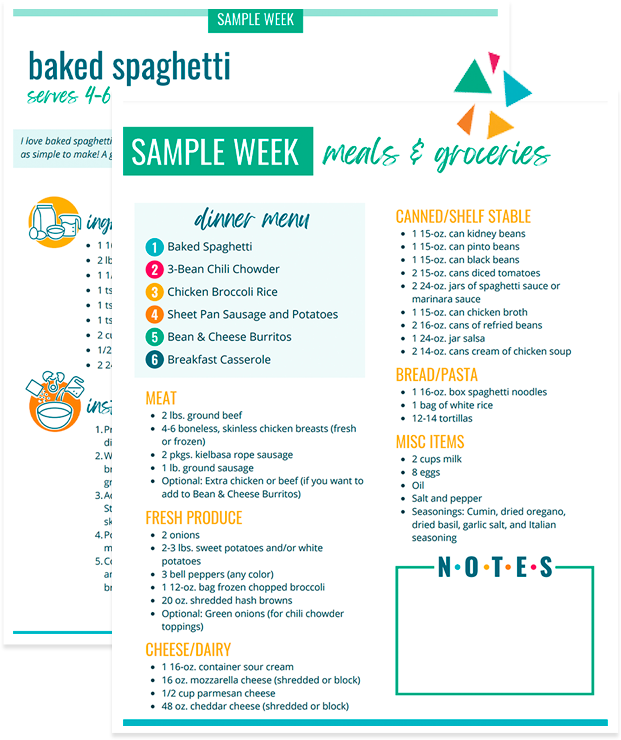
FREE One Week Menu Plan!
Done-For-You Dinner Recipes With Simple Ingredients and a Grocery Shopping List!






 German Chocolate Fudge Bites I made last week–so good! {And yes, I added mini chocolate chips. Why, of course! :)}