Reading aloud with your child can be a magical bonding experience—discover creative, age-appropriate ways to make story time something they’ll look forward to every day.
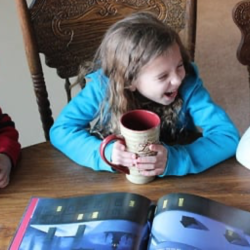
Reading aloud with my children has given me some of the sweetest, most meaningful memories. When my older kids were little, we’d pile onto the couch or gather around the table with a snack and a stack of books, sometimes only getting through a few pages before someone interrupted or wandered off. It wasn’t always calm or picture-perfect, but those imperfect moments added up to enduring memories and a lasting love of books.
Now that I’m in the “little years” again with my younger kids, I’m reminded how special it is to savor stories together, to hear them laugh at silly voices or ask endless questions about what might happen next, and to bond over books.
If you’re trying to make reading aloud a habit in your home, some simple tips can help.
Tips to Help Children Enjoy Read-Alouds:
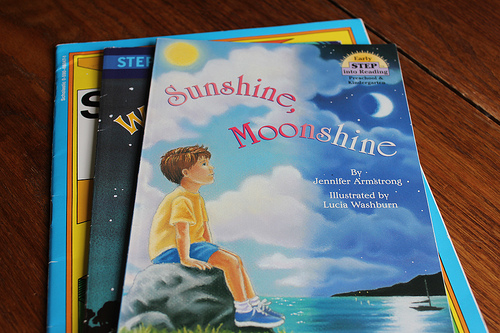
1. Start (& Continue) with Picture Books
When you’re first starting to read aloud together, don’t jump straight into chapter books. That’s akin to asking your six-year-old to skip elementary math and leap right into algebra.
Instead, start with picture books — reading just a little more each day to help your children’s attention span to grow over time.
Even once you’re reading chapter books, make sure that you also include a regular diet of picture books, especially for younger ones. We often begin our read-aloud time with one or two picture books that everyone crowds around to listen to and then we pick up our chapter book once I’ve finished reading the picture books.
In this way, we’re making sure that read-aloud time offers a little bit of something for everyone — and it helps provide some variety, too.
2. Ease into Chapter Books
While I do love picture books, I think it’s also good to work toward reading books that are a little bit above a child’s level to help them think and learn to analyze, and to expand their vocabulary. This is especially helpful to keep in mind if you have a range of ages listening to you read aloud — I’ve found that when I read at the level of my older child, my younger kids often understand much of what I read and get into the story, too!
I, of course, avoid inappropriately mature content with my younger kids, but I’ve found that kids often understand more complex stories and vocabulary than I might have expected and it’s worked well for me to read at the reading level of an older kid when I have younger kids listening too.
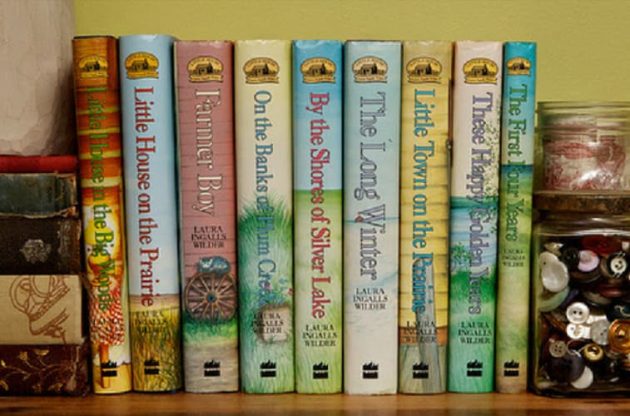
But, I recommend that you slowly work up to these more complex chapter books. Once you’re reading your children picture books regularly, gradually introduce some short chapter books. Look for chapter books that have pictures at least every few pages and that have chapters no longer than a few pages.
Here are some chapter books and series I recommend for this:
3. Stretch Story Time
Just as you want to gradually increase the complexity of what you read, you’ll also want to gradually increase how much time you spend reading together.
If you’ve never done much read-aloud time before, I’d recommend starting with just five or ten minutes and working up from there. For those who have young children, starting them on chapter books by reading while they are eating breakfast or lunch is a great way to introduce them to good read-alouds while their hands are already occupied and their bodies are still.
With some practice, you’ll probably find that your children are engaged for longer stretches and they may even be begging for more after you’ve already read two or three chapters.
4. Become Best Friends With the Library
I’m a champion of local libraries as they can provide a steady stream of great book options — all for free! What I love about the library is that I can check out literally dozens of books each week and then go through them to decide which ones will be best to read. If I bring some books home that don’t end up being a good fit, I can easily return them — without any guilt because they were free!
Help your children learn to love the library, too, by regularly bringing them with you to the library and helping them find good books to check out.
5. Choose Quality Books
There are so many book options available and it can be hard to navigate even the children’s section at the library. For book ideas, I consult book lists from:
- Our My Father’s World curriculum
- Honey for a Child’s Heart
- Hand That Rocks the Cradle
- Read For the Heart
- Educating the Whole-Hearted Child.
Resource books like Honey for a Child’s Heart can help you choose what to read to your children according to their age, reading level, and even interests or seasons, whether that’s animals, vehicles, or “picture books about grieving.”
6. Choose Books That Will Interest Your Child
Do you like to read books that are boring and on topics that don’t interest you? I’m guessing you don’t! So why would you expect your children to get excited about listening to books on topics that aren’t their cup of tea?
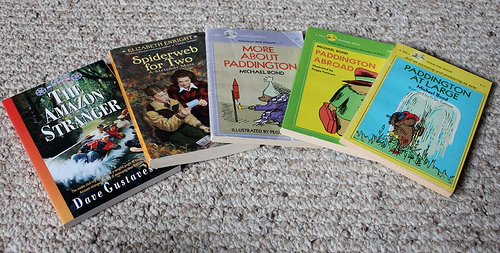
I love to choose books for my children that I think they will really love. For instance, my children are really into books that involve mystery and adventure. So books like Snow Treasure, Spiderweb for Two, and Mrs. Frisby & The Rats of Nimh are ones they have lapped up.
Some of our other favorite books that I think any child would enjoy have been:
- All-of-a-Kind Family
- The Cricket in Times Square
- James and the Giant Peach
- A Bear Called Paddington
- Wonder
- The Golden Goblet
- Johnny Tremain
- Carry On, Mr. Bowditch
- Childhood of Famous Americans Biographies
- Youth With a Mission Biographies
It is so fun to read together when you’re all engaged and completely interested in the topic and storyline. Plus, there’s nothing better than getting to the end of a chapter and having everyone begging, “Please, please, just one more chapter!”
7. Be Enthusiastic
Enthusiasm is contagious. If you’re excited about a book, your children usually will pick up on your excitement and join in.
When we’re getting ready to start a new read-aloud, I usually preface it by telling my children why I’m looking forward to reading it, giving them a little teaser as to what it’s about (this is often just reading the back of the book — which usually has some good teaser material on it), and why I think they’ll enjoy hearing me read it. After my little pep talk about the book, my kids are usually begging me to hurry up and start the book already. 🙂

8. Make Reading Time Fun
Want to make reading time even more fun? Get a little creative in what it looks like every day.
Maybe some days you read outside on a blanket spread out over the grass. Or, you all head out to the sandbox and you read while your children play in the sand.
How about making some hot cocoa and snuggling under a blanket? For a really special memory, set up your tent in the backyard (or create one in your basement with blankets!) and huddle in together and read with a flashlight.
If things seem a little dry in portions of a book, I’ll sometimes use funny accents or totally dramatize things just to make it fun and exciting. If my children are intently listening and then beg for more when it’s time to stop, I know that I’m accomplishing my goal of making read-aloud time something they love.
9. Don’t Expect Your Children to Sit Perfectly Still
Speaking of making reading time fun, one of the biggest things we’ve done is to not expect our children to sit still and just listen. While I know some people expect that read-aloud time means everyone sits with their hands in their lap while mom reads, that’s not at all what happens at our house. In fact, I’ve found that often my children listen better when their hands are busy.
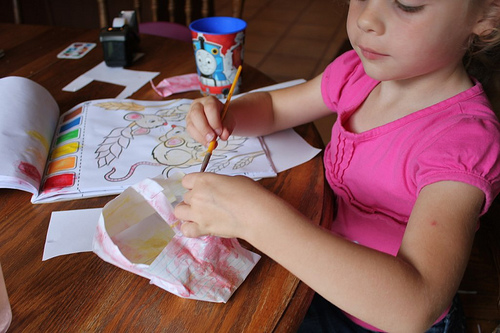
So I encourage my children to play with Legos, or draw, or color, or do some other quiet activity while I’m reading. They seem to enjoy it a lot more — and the time flies!
We also often read as part of our meal times. It’s a great way to get in a few pages or a few chapters — while your children’s hands and mouths are busy eating!
10. Engage Your Children
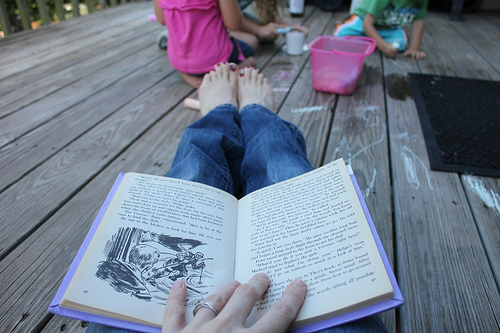
When you’re reading, stop and ask questions along the way. “Why do you think they did that?” “Was that a good response or a poor response?” “What would you do if you were in that situation?”
Get your children’s minds turning and their creativity flowing. Some of our best discussions have come as a result of a book we’re reading.
Also, take time to answer their questions. It can get tiring to continually be answering question after question. But if you’re willing to take the time to listen and really respond to what your child is asking, they’ll not only learn a lot, but you’ll probably be blessed by some of the conversations this leads to.
As you’re reading, stop and locate where a country, state, and/or city is that the book mentions. My children have learned so much geography just from this simple activity.
If you encounter words that they are unfamiliar with, I love what my friend Sally Clarkson told me that she would do with her children. She said she’d stop, explain what the word meant, and then have each of her children use that word in a sentence. Talk about a great hands-on way to increase your vocabulary!
11. Don’t Be Afraid to Stop a Book If It’s Not Working
I wanted to end with this encouragement: if a book just isn’t working, don’t feel like you have to keep slogging through it. There are plenty of excellent books out there, so there’s no need to waste time on books you just aren’t enjoying at all.
Give yourself grace, chuck your guilt, and move on to a better book!
Bonus Tip: Model A Love of Reading
Like all things parenting, sometimes modeling is the best way we can encourage our kids to follow the path we want them on. I think it’s really helped our kids love reading to see me and Jesse reading in front of our kids and talking about books together!
So, I encourage you to take some time to read books yourself and use these tips to create shared memories around books with your children while instilling a habit that will impact them for life!
Related Links:
- Five Ways to Get Books for Free
- How to Find More Time to Read
- Change Your Life and Challenge Your Mind By Making Time for Reading Good Books
- Q&A: How do you choose what books you read?
- 15 Must-Read Children’s Books
- 5 Books I Finished Recently
- 50+ Frugal Screen-Free Activities for Kids
What are your best tips and suggestions for enjoying read-alouds? What are your family’s favorite read-alouds? I’d love to hear!

Want your kids to read more this summer?
Download our FREE Summer Reading Printable Pack!



 A testimony from Abbygail



 Do you have a fun and frugal DIY idea to share? I’d love to hear about it! Read the submission guidelines and submit it