Recently we asked this question on Facebook:
“What’s something you do to save money that others might find unusual?”
And wow, you all delivered. If you missed it, you can read through the full thread here (it’s gold!).
This post is a compilation of some of the BEST ideas shared. These slightly quirky, sometimes overlooked, but very effective strategies can help families stretch their budgets further.
Some of these might make your friends raise an eyebrow. But your bank account? It’ll thank you.
Let’s dive in.

Clever Ways to Save Money:
1. Cut Open Bottles to Get Every Last Drop
Is the toothpaste tube or lotion tube almost gone? Cut the end off with scissors and you can get quite a bit more out!
I do this for my face moisturizer and face wash and I can usually get a full extra week’s worth of uses just by this simple hack.
In addition to toothpaste and lotion, this works for sunscreen, foundation, and even ketchup or other sauces!
How to make it work:
- Use sharp scissors and store the cut portion in a small container.
- For toothpaste or creams, use a binder clip to seal it or simply store it in a ziptop baggie so it won’t dry out.
- Make it a habit before throwing anything away.
It feels small, but doing this consistently across products can easily save $100+ per year.
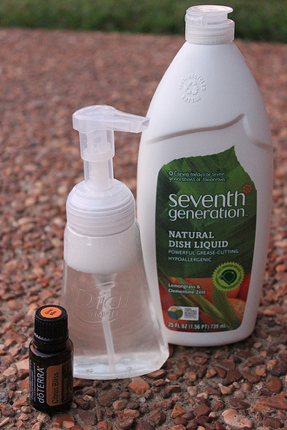
2. Make Your Own Foaming Hand Soap
Foaming hand soap is fun and convenient, but refills can get pricey… and, did you know it’s mostly water?
Instead of buying special refills, reuse the foaming pump:
- Fill the bottle mostly with water.
- Add a small squirt (about 1–2 teaspoons) of regular liquid soap.
- Gently shake to combine.
That’s it. It takes literally less than 60 seconds to make and is so much less expensive than buying foaming hand soap or hand soap! One standard bottle of liquid soap can refill a foaming dispenser multiple times, cutting your cost per use significantly. Here are the super simple details on how to make foaming hand soap.
3. Add Water to Nearly-Empty Bottles
When a bottle of shampoo or body wash starts sputtering, add a little water, shake it up, and keep using it. There’s often quite a bit clinging to the sides that you can stretch out for several more washes.
This works well for:
- Liquid hand soap
- Dish soap
- Laundry detergent
- Body wash
Just don’t over-dilute. You still want it to work effectively.
It’s a small habit, but when you consistently use products fully instead of replacing them early, you reduce how often you need to buy replacements and accumulate savings.
4. Ask for a Discount (Yes, Really)
This might feel uncomfortable, but simply asking can save a surprising amount.
Vanessa commented: “I ask service providers (mechanics, plumber, air conditioner repair, etc.), ‘Is that the best you can do?’ Almost always, they knock some money off the bill.”
Before paying a bill or signing up for a service, try asking:
- “Are there any promotions available?”
- “Is there a loyalty discount?”
- “Can you match this competitor’s price?”
- “Is there a discount if I pay in full?”
This works particularly well for:
- Internet and cable
- Insurance policies
- Medical bills
- Subscription services
You’re not being difficult with this approach; you’re being proactive. And companies often have flexibility that isn’t advertised upfront.

5. Think in Terms of Hourly Wage
To determine what money-saving strategies are worth your time, it’s helpful to analyze how much money it will save per hour.
For instance, let’s say that by making my own foaming soap it takes one minute to make and it saves me $1 from buying a container of foaming soap. That’s like saving $1 per minute or $60 per hour — which is a really good hourly wage. Plus, it’s tax-free money! So, it’s totally worth my time.
But, on the other hand, let’s say there’s another money-saving tactic that would only save me $1.50 for 15 minutes of work. That’s like saving only $6 per hour — which, depending upon your season of life and bank account — may or may not be worth your time.
6. Make Your Own Cleaners
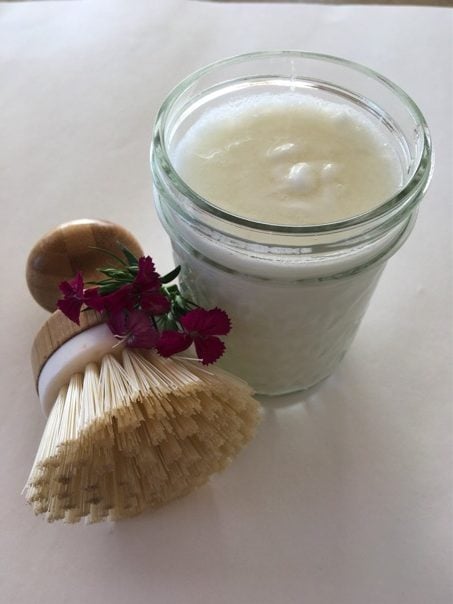
Most of us have a different cleaner for every surface — all doing the same thing, all adding up at the checkout. The good news is you can replace all of them for just a few dollars. A spray bottle filled with diluted white vinegar, some baking soda, and a bit of Castile soap can handle the vast majority of your household cleaning. Beyond that, there are homemade cleaners that are just as effective as the expensive branded ones but that only cost a couple minutes and a few pennies to make.
Jerica says: “Soap, vinegar, bar keepers friend, and bleach pretty much cover everything I need, and are all extremely cheap.” (Check out this post for some homemade cleaner recipes.)

7. Skip Paper Towels (Almost Entirely)
Several readers shared that they switched to reusable clothes, cut-up old t-shirts, or inexpensive washcloths instead.
We stopped buying paper towels many years ago. It’s such a simple thing, but it does add up to a lot of savings — and we don’t really even notice that we don’t buy or use them! (Except when we have guests over and they ask for a paper towel!!)
I share more details here on what we use instead of paper towels.
How to transition without overwhelm:
- Keep a small basket of clean cloths on the counter.
- Use them for spills, wiping counters, and cleaning.
- Toss used cloths into a small laundry bin.
- Wash with regular towels.
You can still keep paper towels for truly messy jobs, but reducing everyday use alone can save $15–$25 per month. Over a year, that adds up to significant savings.
8. Don’t Use Dryer Sheets
Just like we don’t use paper towels, we also don’t use dryer sheets. If the thought of not buying dryer sheets just isn’t your thing, a simple way to save is by cutting them in half instead of using a full sheet per load. I’ve heard that it works just as well.
9. Stay Home More Often
One reader said her most unusual way to save money is simple: She stays home.
It sounds almost too basic, but it works. Not only does staying home save you time and decrease wear and tear on your car, but every outing has potential spending attached:
- Gas
- Coffee stops
- “Since we’re here…” purchases
- Impulse buys
- Add-ons
Try designating intentional “home days” where:
- You cook from scratch.
- Tackle a home project.
- Have a movie night.
- Read or play board games.
Fewer unplanned trips usually equals fewer unplanned expenses.
(If online shopping is a temptation to you, set some good boundaries — like unsubscribing from emails or avoiding sites that tempt you to spend money you don’t have or haven’t budgeted for that purpose!)
10. Scan Your Receipts for Cash Back
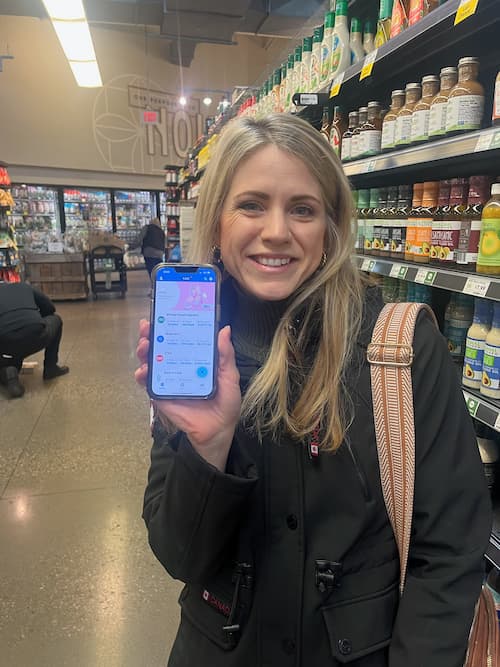
If you’re already buying groceries and gas, you might as well get a little something back. Receipt- and grocery-scanning apps allow you to scan items in store or upload grocery receipts in order to earn points that convert into gift cards or cash back.
To learn more about these cash back sites check out my full review of each at these links:
With each of these apps, you’ll earn points when you scan a receipt and you can then cash in those points for gift cards!
To maximize this:
- Scan receipts right away so you don’t forget.
- Stack rewards with sales and coupons.
- Redeem for stores you already shop at.
It won’t replace your income, but it can cover a few groceries, household items, or even a holiday gift over time.
Psst… if you want to learn even more about how to earn extra money with easy apps, check out this free printable!
11. Learn Basic Fixes on YouTube
Christy says: “YouTube is the real MVP though. I’ve saved thousands over the years by simply looking up the issue and learning if it’s within our skill set, rather than hiring a professional.”
Before calling for repairs, search first. YouTube is full of step-by-step tutorials for common household fixes like:
- Replacing a toilet flapper.
- Fixing a dripping faucet.
- Installing a ceiling fan.
- Cleaning appliance filters.
Not every repair is DIY-friendly, but even handling one or two simple fixes per year could save hundreds. Start small and build confidence.
12. Repurpose Old Clothes
Before throwing away worn-out clothing, ask: can this serve another purpose?
Ideas include:
- Cleaning rags
- Dust cloths
- Garage towels
- Craft materials
- Reusable napkins
It’s not glamorous, but it extends the life of items you’ve already paid for and reduces the need to buy disposable alternatives.
13. Use Gift Card Promotions to Earn Extra Fuel Points
This one is strategic, and it can really pay off if you’re disciplined.
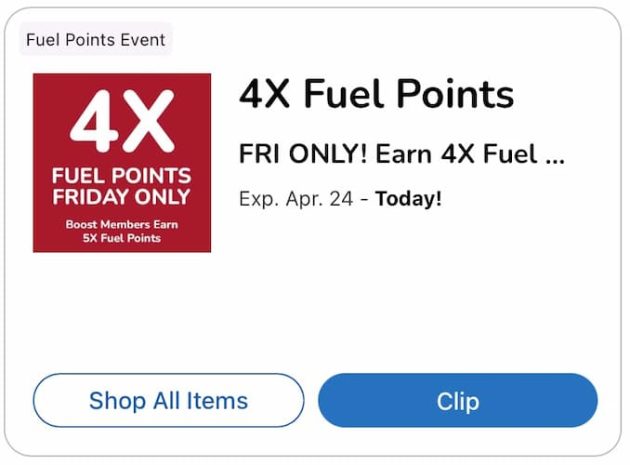
One reader shared that she buys gift cards (especially when Kroger runs 4x fuel point promotions), then uses those gift cards like cash for regular spending.
Here’s how it works:
Kroger fairly often offers 4x fuel points when you purchase gift cards including Visa gift cards. Since Visa gift cards can be used almost anywhere, you’re essentially pre-paying for expenses you were already going to have.
For example:
- Buy a $100 Visa gift card during a 4x fuel promotion.
- Earn 400 fuel points.
- Use those points to get discounted gas.
- Use the gift card to pay for groceries, bills, or everyday expenses.
On top of that, she uses a cash-back credit card to purchase the gift cards, then pays the full balance immediately.
That means no interest, cash back rewards, and fuel point savings. It’s stacking rewards on rewards.
14. Double-Check Medical Bills
Medical billing errors happen more often than many people realize.
Always request an itemized statement, and compare it to your Explanation of Benefits from your insurance company. You can also ask about prompt-pay discounts and inquire about financial assistance programs.
It may take a few phone calls, but correcting even one mistake can save significant money.
15. Eat from the Pantry
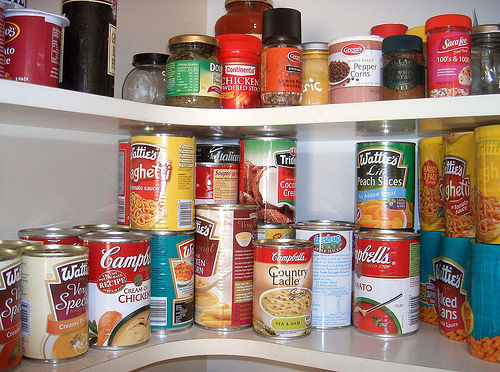
Challenge yourself once a month, or once every few months, to skip going to the grocery store for a few days longer than normal and eat up what you already have on hand instead. You might be surprised at how creative you can get with what you already have… and maybe you can make it longer than you think without going to the store!

Small Habits Can Lead to More Financial Breathing Room
Some of these ideas may feel “extra.”
But here’s the thing: building margin isn’t usually about one dramatic change. It’s about small, consistent habits that compound over time.
Unusual doesn’t mean extreme. It often just means intentional.
More Money-Saving Inspiration:
- 14 Smart (and Slightly Unusual) Ways Our Readers Save Money on Food
- 25 Ways to Save On Pet Costs
- 30 Creative Ways to Save On Gas With Rising Fuel Prices
- Where to Buy Cheap Books (So You Can Read More Without Spending a Fortune)
- Where to Get Books for Free (Yes, Really!)
- Walgreens 101: How to Save on Everyday Essentials
- My 25 Favorite Things to Buy at ALDI
- 25 Ways to Save Money on Groceries
What’s something “weird” you do to save money? I’d love for you to add your ideas to my list in the comments!

Ready to finally stick to your budget once and for all?!
Tracking your budget doesn’t have to be overwhelming or complicated! Use these FREE Budget Spreadsheets to easily plan and track your spending each month!
When my bar of soap is small, I attach it to new bar. It sticks together, when it’s wet. I have been doing it for years, with no problems.
I flush every other time I pee.
Library for books and dvds.
Poshmark for clothes, videogames, board games.
I ask for a price adjustment at Costco if something I bought in the past 30s in on sale.
We use Facebook Marketplace often for free or low cost items that we need. We also use Habitat ReStore to check for home replacement and/or repair items.. It’s a fraction of the cost of what a home improvement store would charge. Barter, we’ve bartered for numerous items and have been pleased with the exchange. I make homemade kefir and homemade yogurt, and it’s so cheap to make at home. Right now whole milk is $2.99 per gallon, and I make a half gallon of kefir for $1.50. Yogurt is a little more effort, but still very easy and cost effective. We hang up our laundry, either outside or inside on on racks, and hangars during bad or cold weather. At the end of the day for a farmers market, we’ll ask how much they want for the produce if we take it all, it’s a large discount so they don’t take it back home. I buy the whole grains and use my grain mill to make baked goods. Our Kwik Trip gas station advertise things like eggs, bananas, onions, potatoes, bacon, butter, for a low, low cost and we stock up. We get gas, use our loyalty card outside and use it inside for the sale items, and also can exchange the accumulated visits for things like a pound of 80/20 hamburger from the visits accumulated. I also watch a daily video to accumulate visits for free. The visits can be exchanged for fruits and vegetables too.
When groceries are running low, chatGPT most of your remaining ingredients (both from fridge and pantry) and ask it to create a meal based upon your ingredients. It is amazing how it will take all of your leftovers and blend them together into delicious meals. I do this all the time and it helps me to use my leftovers and random items from the pantry.
When groceries are running low, chatGPT most of your remaining ingredients (both from fridge and pantry) and ask it to create a meal based upon your ingredients. It is amazing how it will take all of your leftovers and blend them together into delicious meals. I do this all the time and it helps me to use my leftovers and random items from the pantry.
I starting cutting my own hair and my kids and husbands hair and everyone looks great and we save a ton of money
I cut parts of sleeves and legs from fall/winter pajamas(for my kids) to make their spring/summer pajamas using fabric scissors. Long-sleeved to short-sleeved in less than a few minutes. I do not sew anything. I got this idea from Andrea Dekker’s blog post on her site(which I found from your site!). I’ve done it with regular shirts and pants where there was an obvious seam separating long-sleeve from short-sleeve shirts and pants from shorts. I started buying my kids’ clothing a little bigger, so it would for sure last at least one whole year. The sleeves and legs that are cut off can be rags. My younger son wears the hand me down of a pair of Nike shorts that used to be Nike pants from his older brother. 😆 I have found you cannot do this with all material, though.
I do this too! Love it! When boys get too old to fit into children’s jammies, I get them loose fitting plainwhite T’s and loose boxer shorts. They fit for years, and they find them so comfortable.
I spend most of our money at Aldi’s. Do any of the cash back apps cover them?
Ibotta
Yes! Fetch works at almost every store!
I’m surprised “hanging up laundry to dry instead of using the dryer” isn’t on the list. Dryers are one of the biggest energy users in the house, and laundry lasts much longer when it’s line dried vs. dried in the dryer.
I live in a cold climate so can’t hang laundry outside at least 6 months of the year. During that time only towels and occasionally sheets go in the dryer and everything else gets put on a clothes rack or hung on hangers around the house. An added bonus is that it adds moisture to the dry winter air in the house and we don’t have to run our humidifiers as much on laundry days. In the summer everything goes on the clothes line.
A lot of places in the world, even first-world countries, don’t use dryers. I lived in Australia for years and didn’t even have a dryer. Everybody in my apartment block used the communal clothes lines in the gardens.
We used to always line dry clothes growing up. Surprisingly, pretty much no one mentioned that on the Facebook Post (there were hundreds of comments/suggestions but many of them were the same!) and it’s not something we do for a long list of reasons, so that’s why I didn’t include it.
Don’t replace stuff. If your spatula breaks, use a wooden spoon for awhile and see if you really need the spatula. If the markers all dry out use crayons. My blender died a year ago and I haven’t replaced it yet 🙂
You and I are so similar! 😉
Paper towels are fairly cheap and after you factor in the cost of water and detergent as well as the electricity to run the washer and dryer, plus the time involved in the process, I doubt that there is much of a savings. As far as the environment goes, yes there is less waste, but you are using more energy (dryers are one of the biggest energy using appliances), and water. Not everyone can afford the very expensive energy saving appliances and many people still have to transport their dirty laundry to a laundramat for washing.
We maybe only have 1-3 small towels added to our laundry per week by not buying them so it’s pretty much the same amount of laundry we’d do regardless. 🙂 Usually, we’re just using a kitchen washcloth/cloth to wipe things up (countertop, etc.) that we then rinse and re-use over and over again and it’s a cloth we’d already be using whether we bought paper towels or not. Now, if we were replacing buying paper towels with doing an entire load of towels/rags each week, that’d be a different story. But I’ve been shocked at how we just don’t need them nor are we really washing/drying any extra laundry as a result.
Hi, we have gone without paper towels before. The biggest problem we had was what to use to drain bacon and fried tacos those kind of things. Washing cloth napkins with grease in them was ineffective. Any suggestions? Thank you
We don’t ever fry things, so that probably helps. We make our bacon in the oven and put it on a cooking rack with a pan underneath it.
We try to use cloth but keep paper towels for greasy messes like bacon and ground beef, but now I want to know how you clean up the bacon grease! I do the oven method too, but I don’t want any grease going down the drain. I used to line the pan in foil, but now I don’t; so there is some grease residue to clean up.
I reuse a old coffee can or jar or can. Put a colander over top and pour into the colander and let drain
I haven’t tried it with grease yet but I’m trying to use cut up old t shirts for rags. Stuff that has holes in it that I wouldn’t donate or sell. If the rag is really yucky, I just pitch it. So I think you could use that for grease too. I have four boys so I have a decent supply of destroyed clothing. If the rags are mostly just wet then I wash them but I don’t feel bad pitching them either.
I keep a container by the sink and whenever I need to run water to get it warm, I collect the water in the container. I use the water I’ve collected in my washer the next time I run a load (check your washer to make sure it allows for this). This saves on the water and sewer bills.
That’s a creative idea!
I do that to water my plants in the kitchen and by the front door.
I’m not sure how much money it saves, but I hate wasting anything, so I “rinse” chocolate syrup bottles with milk. It uses up the last of it and someone gets a glass of chocolate milk, which I never buy.
That’s definitely a practice I can get behind! 🙂
I always do this too!!
This is really cheap. Save the end slivers of bar soap in a container. Can add liquid soap rinsed with water. When you have accumulated at least 10, add water and melt in pan on stove. Pour into a container. Remove when solidifies and use.
Thank you for sharing!
To save on medical bills, I literally have to call my insurance company to see if they ever received a claim from the provider.
What I am finding is that you have to call the provider to file the claim to your insurance and then call your insurance company to see if the claim came in and you might have to follow up on a few more times and then thankfully the bill will finally stop coming.
Secondly, you may want to talk to your pharmacist about how may the prescription price be reduced. Strangely enough, I had a prescription that would have cost $100. I told my pharmacist that I was told by the doctor I could get it at a different pharmacy for around $40. Lo and behold my pharmacist matched the price.
Never hurts to ask for a discount or to keep making sure that your claims are being filed with the insurance company.
Thank you for sharing!