
Shared Apr 18, 2011
comment

Saving Families Money Since 2007
Guest post by Carrie Hurst at My Favorite Finds
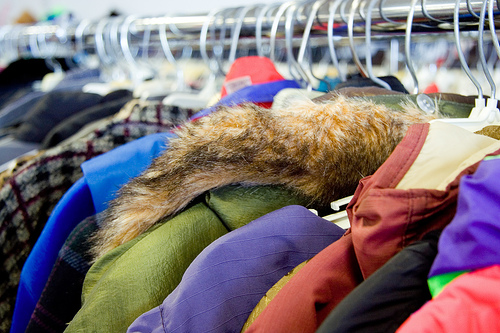
For about four years, I have been cleaning out my closet every season with the goal of taking items to our local consignment shop. At first, I thought it was cool that I could go in there with a lot of stuff I didn’t want, maybe make a little bit of money and they would donate for me what wouldn’t sell. It was a win-win situation.
Within the last two years or so, I’ve become more serious and focused on what I take to our local consignment shop or our local kid’s consignment sale and what I donate so that I can get the best value for my time and money. Here are some ideas if you are considering consignment:
I sort our clothes (kids and adults) in three ways: a) To sell, b) to donate and c) to throw out. I don’t wait until the end or beginning of a season to sort clothes into the above three categories; I do this on an ongoing basis.
I am also fairly realistic with my clothes. If I haven’t worn it at all that season or if it doesn’t fit right, I don’t keep it.
I keep a bin in my daughter’s room for things which will go to the yearly consignment sale. Anytime the kids outgrow something, or it is out of season, it goes in the bin if it’s able to be sold. I keep a garbage bag or a big shopping bag in the laundry room for the clothes I donate to our local thrift shop. Finally, I also keep a storage bin in the laundry room for the adult clothes that I take to the consignment store.
When I walk into Worth Repeating, the local adult consignment shop I sell my extra clothes to, the lovely ladies there know me by name. They also know that I want to know what my store credit is, and they know that I’ll probably saunter through the kids’ section and probably find something. I love that. I am also signed up for their email list and their Facebook page. That way, I know for sure when they are taking items. Since I typically have a few things sorted and ready to go, I can easily take them with me and drop them off at Worth Repeating when I’m out driving.
If I’m going to make an investment in my clothes, I’m going to get my money’s worth. That also means that when I buy something, I consider the brand and quality of the item because chances are, it’ll end up at the consignment shop in a few seasons.
This is especially true of my kids’ clothes. I have learned that the brands such as Carter’s, Gymboree, GAP, Children’s Place, etc., not only yield more at the consignment shop, they also sell faster. That doesn’t mean I pay full price at these stores — I shopped at the Children’s Place last summer and bought a few things for my daughter during their Monster Sale for $0.99. I am sure that I can easily sell those items and gain $3 at least at Worth Repeating.
Also, I don’t take the tags off of something until I know for sure my children or I am going to wear it. Clothes with tags attached yield more because they are “brand new”.
I consider if I would buy the item or not. I make sure the zippers work, the buttons are buttoned and that most of the clothes are on hangers. Not only is the consignment shop trying to make a profit, but so am I. The better condition the clothes are in, the higher they’ll price the item, making it more profit for me.
I don’t consign my items to make additional income. If I get a month’s worth of weekly Starbucks visits out of the deal, I’m happy.
I don’t like having or going to garage sales — so I have the ladies at Worth Repeating do the job for me! Thankfully, they’re honest and will tell me what will sell and what won’t and I have learned to be okay with that.
I will call them about every two weeks and ask what my store credit is. Sometimes it’s $12, sometimes it’s $30. It just varies.
When I get an email or see on Facebook that Worth Repeating is accepting items for the upcoming season, I’ll be ready within a few days to drop the bulk of my items off. I consider the fact that my items could spend a few days to possibly a week — depending how much they have to sort through and price — in the back room before it reaches the floor.
I want to get it there ASAP so that they can get it out and hopefully it can sell soon. They are on a 90-day consignment. So, after 30/60/90 days, the price is reduced.
If I take a lot of summer items in mid July — even though they’re still accepting them — more than likely I’ll get them back because they didn’t sell. Ninety days from mid-July is mid-October. By then, my items could be supremely discounted and people aren’t shopping for summer clothes anymore.
At Worth Repeating, they’ll either donate them to a worthy local cause, or they’ll give them back to you. I decide based on the group of items I have dropped off if I want them donated or returned.
Most of the time, I have the kids’ clothes returned so I can possibly sell them at the local consignment sale. I usually have the adult clothes donated. I figure that if I didn’t want to wear it so much that I was hoping to consign it, or if it didn’t fit, I don’t want it back. But since I have a possibility of selling the kids’ clothes at the consignment sale or at the consignment store the next season, I go ahead and take them back to hopefully sell later.
As I weed out what my children will be able to wear next fall/winter, I store the out-of-season clothes in plastic bins with lids. I wash, dry and neatly fold their clothes that are going to the consignment shop next fall and put them in a stack in the basement. I won’t remember what’s in those containers two weeks from now, let alone next fall. So, I make sure they are folded and ready to go when the season rolls around to take them to the shop.
My name is Carrie. I am a pastor’s wife, mom to twin boys and an 18-month-old daughter. I also work full-time outside of our home. I love to find ways to save money, be a better parent and a better Christian example to others. I’ve been a MSM reader/follower for over a year, and I’ve learned so much. If you have a chance, I’d love for you to visit my blog, My Favorite Finds.
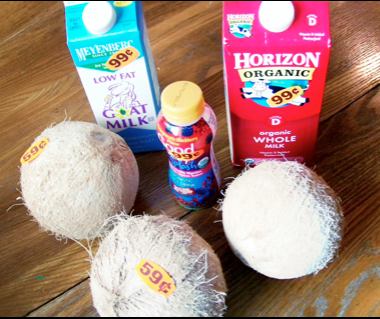
Other than a stop at the health food store to purchase the above (I was so excited to get coconuts for $0.59 each!) and peanut butter at Aldi (we were hoping to get some $0.99 strawberries and $0.99 pineapple, but they were completely cleaned out!), we didn’t do any other shopping this week. Our pantry and freezer still have plenty in them so I’m curious to see if we can make it to the end of the month on this minimal shopping.
It also helps that we’re sticking to super simple meals which can be made in around. Dinners have been mostly marinated chicken, fish or steak with frozen veggies, toast and fruit. Yes, super, super simple, but no one is complaining yet. We’re also having a lot of peanut butter and honey sandwiches — even having them for breakfast a lot of mornings (weird to some people, I’m sure, but the children actually love them and it seems to keep them full until lunchtime!). I have missed baking and creative tinkering in the kitchen, though, and I’m looking forward to having more time in a few weeks (once my manuscript is turned in) to resume more varied meals. 🙂
In other shopping news, I also went to a kid’s consignment store on Thursday. I had a $15 Groupon to use (that was only $7 to buy) and was hoping I could get at least 10 items with it. I guess I was a bit naive and didn’t realize how much more expensive some consignment stores are than Dollar Days at the thrift store! When I pulled out the first item and looked at the price tag and saw $6.99, I just about had heart failure. I try to pay no more than $5 or $6 per item brand-new at retail stores, so paying $6.99 for used clothing seemed crazy.
I ended up only getting four items with my $15 Groupon and I still had to pay $10 out of pocket. They were all in great, like-new shape and one was even GAP brand, so I figured that it wasn’t the world’s worst deals ever. But I’m certainly not impressed with that particular consignment store’s prices. I’m going to try some other consignment stores in our area to see if they have any better clearance or regular prices. If not, I may just stick with shopping at the clearance racks at Target and Old Navy, as well as going to consignment sales, as that seems to be working fairly well for buying children’s clothes inexpensively.
______________
Did you snag any great deals or bargains this week or save money in other ways? If so, be sure to post about them on your blog and leave your link below. Please remember that this weekly round-up is to share deals you personally got and/or money you were able to save this week. In order to keep this weekly round-up focused on helping and inspiring others in their efforts to save money, links which have little-to-no content other than promoting affiliate links, etc. will be deleted. Also, to make it easy for everyone to navigate quickly through the links, your link must link directly to your Super Savings Saturday post.

I loved this money-saving idea from Alice of Farewell, Office:
While I realize that not everyone has the space to do this, we save a lot of money (and earn a little, too!) by owning four laying hens.
Initially, we didn’t know how well this would work and so we went for minimal investment. We bought four chicks for $2 each and set them up in an unused dog kennel and an old dog house with straw inside for a nest. Now that they are full-grown, each hen lays an average of one egg per day and, because we have mild winters, they lay year-round. We get an average of two dozen eggs per week from our hens. We keep a dozen for our family and sell a dozen to friends or family for $2 per dozen.
This gives us $8 per month to pay for feed to supplement their diet, in addition to the scraps we feed them. This means that we pay essentially nothing for having free-range eggs year-round, saving us a good $100 per year.
This has worked so well that we just bought four new chicks, and next year we are going to add four more. Taking care of 8 – or 12! – isn’t any harder than taking care of four. You just throw them a cup of feed every day and collect the eggs. This is a perfect chore for my 7-year-old and we’ve decided this is going to be his job and business, with his savings portion going to his college savings account. -Alice

A testimony from Angela
My husband and I got married in February of 2010.
From the start of our relationship, we decided we wanted to plan a wedding and honeymoon that would leave us debt-free. We decided it was more important to go into our marriage free of debt, so we could save for a home and a family, than it was to have a large, elaborate wedding.
We were able to save a total of $5,000 in just nine months. This was our Wedding Budget.
We planned a wedding for $5,000.00 and a 10-day honeymoon for $3,000.00. Here’s what we did:

We knew we wanted a long honeymoon somewhere warm. We decided to go to an all-inclusive resort to save on food and drink costs, and went for the smallest resort we could find. We were able to go to Jamaica for 10 days — flight, food, drinks, hotel and entertainment all for under $3,000.00.
It took a bit of work and imagination to create the wedding of our dreams on such a tight budget, however, the pay off was worth it. We are now planning and building for our future, debt-free!
Angela and her husband, Michael live in Western Washington where Michael is a Chiropractor. Angela works in Telecommunications and has a passion for providing her family whole, natural food, while being the best steward possible of the financial blessings the Lord has trusted them with.
Have you saved up and paid cash for something — large or small? Submit your story for possible publication here.
Lisa submitted the following tip:
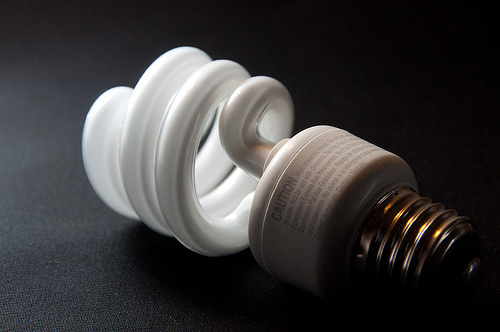
We recently switched to a “Time of Use” plan with our energy company. Rather than a flat rate for electricity, our rate now varies depending on the time of day. The rates for off-peak times are one-third of what they used to be, while the rates for peak times are twice as much. Programs vary, but our peak times are Monday through Friday from 10AM to 9PM. Everything else (plus designated holidays) is considered off-peak.
If you can shift 65% of your electricity usage to off-peak times, you will start to save. We now only do our big ticket energy activities (laundry and dishwasher) during off-peak hours. We’ve also shifted many other activities like charging the laptop and baking to help the savings grow. Note that this program is for electricity only, so our gas rates (which is how we heat our home) remain the same.
We also find that we’re more likely to play a family game rather than watch a movie or go for a walk rather than waste time on the computer. Regardless of the dollar savings, our family has definitely benefited from this program.
After three months, we have already saved 25% off last year’s electric bills. At this rate, the savings will be saving over $200 this year. -Lisa

Felicia from Mommy Excursions emailed in this tip:
The national average cost for a gallon of milk is $3.79, or $0.24 a cup. To make this stretch farther, we simply add four cups of water to half a gallon of whole milk. This will make an extra eight cups of milk per gallon resulting in the cost being $0.16 a cup. We use, on average, two gallons of milk each week so this method saves us around $133 a year!
If you are interested in trying this, I recommend that you always buy whole milk and always add the water before first drinking any milk from the container. Lastly, it can be hard to get used to. I recommend starting out slow by adding a half cup to one cup water per half gallon milk for a week or two, then go to two cups and gradually work up to adding four cups of water per half gallon. -Felicia
Shauna sent in this interesting tip:
My husband wears a dress shirt every day of the work week, and after we married, I quickly realized how much he was spending on dry cleaning each month. After some online research (argostarch.com was helpful), I found that I could starch his shirts at home using this method:
1. Wash dress shirts in hot water. Do not dry.
2. Boil some water in the teapot.
3. Meanwhile, mix a half cup cornstarch with one cup cold water.
4. Mix the boiling water with the cornstarch mixture in a large bowl,
and then pour the whole thing in the washing machine (turned on to a
rinse and spin cycle only).
5. Add the freshly-washed shirts.
6. After the rinse and spin cycle is complete, hang the shirts up until
they are slightly damp and then iron.Not only are we saving hundreds of dollars a year (We save approximately $2 per shirt and he wears five shirts per week which equals $10/week in savings or $520 in savings each year), this method seems to keep his shirts in better shape than dry cleaning does. Corn starch is also a safer, more natural choice over the chemicals used in dry cleaning.
I purchase my corn starch in a 35 oz. container at Sam’s Club for less than $3, and this lasts me several months.
-Shauna
Here’s this week’s 31 Weeks to a Better Grocery Budget Video. Enjoy and my apologies ahead of time about the poor lighting/picture. We’ve been experimenting with different things as far as lighting goes and, so far, none of them are working. We’ll hopefully get the hang of this whole video blogging thing one of these days! 🙂
Michelle from The Willing Cook emailed in the following tip:
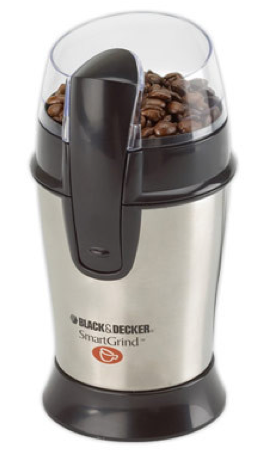
When my husband tested positive for a wheat allergy a few years, I thought about trying the pre-packaged flours, but couldn’t come to terms with the price. We decided to start experimenting with making our own wheat-free flours. Instead of investing in an actual grain mill, we had a small coffee bean grinder that we thought might work well for grinding up whole grains.
We first tried old-fashioned oats ground in our coffee grinder as a substitute for wheat flour in a dessert recipe. We were amazed at how well the substitution worked and how delicious the outcome was!
Next, we tried grinding white rice for breading on fish. The flavor and crispiness were great!
We have since ground brown rice, chickpeas, tapioca pearls, blanched almonds and even Rice Chex! An old dusty coffee bean grinder and a little experimenting opened a whole new world for our frugal allergy family.
While the coffee bean grinder has worked well for us, one of the drawbacks is that the grinder we use is only a 1/2 cup size. If you need a large quantity of flour, it’s a little time-consuming to only be able to grind a half cup at a time. Also, if you use the coffee bean grinder for coffee beans, as well, you’ll want to make sure that you clean it really well when switching between grinding coffee beans and grinding flour.
The savings in grinding your own flours versus purchasing them pre-ground are significant:
- Old Fashioned Oats purchased at Aldi and ground yourself are around 47 to 80% less expensive than purchasing pre-packaged Oat Flour from Amazon.
- Rice purchased at Aldi and ground yourself is around 50% less expensive than purchasing pre-packaged Rice Flour from Amazon.
- Whole Chickpeas purchased at an Asian Grocer and ground yourself are around 90% less expensive than purchasing them pre-ground from Amazon.
Guest Post by Sarah Jones from Delivering Grace
The UK has been hit, like many other countries by the economic downturn. Here are some ways I’ve found to save:
Many of these are just as good as the more expensive names. Even the store economy brands are frequently reasonable quality. Look out for value chocolate digestives and canned tomatoes. There may be some that your family don’t appreciate but it is worth a try.
There are reductions through the day on products with “sell by” dates for that day. The percentage reduction increases as the day goes on. The reductions are marked with special labels, usually yellow.
Aldi, Lidls, Netto. I only regularly use Lidls. Lidls are good for cleaning products, bread mixes and chocolate. I find that the economy stores don’t sell everything I need, especially for baking, so I tend to go to them about once a month and do a big shop of the items with the greatest saving.
Many stores have these. Tesco Clubcard has points which are usually worth four times the face value mainly for treats. Zoos and other days out have queues of people clutching their Tesco vouchers. The points have to be redeemed for specific vouchers in advance. Nectar points (Sainsburys plus a few other stores) are similar although generally less good value for days out.
There are said to be thousands of pounds in various reward card points that are never spent. The best coupons often come with mailings from store reward cards, often money off or more points off basic items such as dairy products or fruit and vegetables. Stores tend to be strict about only accepting in-date coupons for precise items.
Both Tescos and Boots have baby clubs. These clubs send mailings with coupons off nappies and wipes. They have particularly good introductory offers. Tescos also have a group of parents testing baby products and completing surveys again for Clubcard points. The baby products tested are sent out free.
In my experience, the further from the main road and the more tatty the shop the better the reductions! The other advantage of farm shops is that the money goes straight to the farmer not to some middle man.
They can have value fruit and vegetables.
Councils have a big push on cloth nappies as they have targets for reducing the volume going to landfill. Many councils offer substantial discounts on cloth nappies. My local council gave us a coupon to the value of £40 off cloth nappies.
A very British habit!
Sarah Jones is a wife and mother of five who lives in England. She blogs at Delivering Grace.

In Part 1 of the 15 Ways to Save Money on Gasoline article, I suggested buying lower octane fuel as a way to save money. Well, Kristen would disagree with me and it looks like she’s done her research to back that up. Here’s what she emailed in:
We’ve heard that by upgrading your fuel octane lever, you can get better gas mileage. Since one of our vehicles is a truck, we are always looking for ways to cut back on our gas costs. We actually spent a month calculating the miles we got at octane level 87 and 89. We found that while 89 was on average $0.03 more per gallon, we actually get better gas mileage with it.
My husband gets 11.6 miles per gallon on our truck with 87 and 12.6 miles per gallon with 89. We have a 26-gallon tank, so basically we get one more mile per gallon when using 89. That means we get 26 extra miles per fill-up! Looking at our mpg, we save about two gallons’ worth of gas each time we fill up (the amount will vary depending on gas prices; it’s anywhere from $6-$8 per trip).
For example:
26 gallons at $3.50 per gallon of 87 = 301.6 miles for $91.00 ($0.302 cents per mile)
26 gallons at $3.60 per gallon of 89 = 327.6 miles $93.60 ($0.286 cents per mile)This might not sound like much, but when you purchase 100+ gallons of fuel per month, it adds up quickly. Depending upon gas prices and mileage, we will save at least $100 to $120 per year by using higher octane fuel.
I’m curious: have any of the rest of you calculated whether or not you save money by buying higher octane fuel?

The real measure of your wealth is how much you’d be worth if you lost all your money. -Author Unknown

I’m putting the final touches on my manuscript before it heads to the publisher for edits and I’d love to have you help me out. I’m looking for specific, practical ways that you save at least $100 per year.
I’m not looking for generic tips like “we use coupons”; I’m looking for tips like “We buy our eye glasses through ZenniOptical.com for $12 per pair instead of paying at least $150 per pair to buy them locally.”
Fill out the form here to submit your tip. The more creative and well-written your tip, the better chance you have of it making it into my book!
If your tip is something I’ve not already written about in the book and I end up using it, I’ll give you credit and send you a free copy of the book when it’s published. Please note that all submissions will be subject to editing.
If I don’t end up having space to use your tip in the book, I may use it on my blog in the future.
Thanks so much for helping me out with this. I can’t wait to see what brilliant ideas you share!
It was a busy week around here with the garage sale, family in from out of town and — of course! — working on finishing up the book manuscript.
The garage sale ended up being our best sale we’ve ever had; the traffic was amazing! I’m not sure what to attribute it to. We usually have great sales, but this was fantastic. We are blessed to have a good location, the weather was great and we had a lot of great stuff to sell between the six families who contributed stuff. We also followed all the tips I shared last year for having a successful garage sale.
Truth be told, I only probably spent half a day all combined helping to run the sale, since everyone else pitched in, too. (One of the blessings of having a multi-family sale is that there are lots of hands to help out!) I’m so thrilled to have the clutter cleaned out of my house and love the motivation a garage sale always gives me to clear it out!
In book news, God brought an incredible literary agent to me last week (it’s a long story how that all came to be!). Sarah was willing to take me on as her client this late in the game and it’s been a huge blessing to me. She has years of professional editing experience with large publishing houses and she’s been helping me revamp my manuscript to make it ten times better than I could have made it on my own.
I’m beyond grateful to her and all the hours she’s putting in to make this manuscript the best that it can be before I turn it into the publisher. I’m learning so much through the process and am indebted to her help. By the way, if anyone needs a good literary agent, I’d be glad to hook you up! 🙂
As far as grocery shopping, we bought lots of fruit at Aldi and bread at Dollar Tree and that was it. We’re continuing to eat up our extras from the freezer and pantry and stick with simple meals. So far, it’s working well!
 Did you snag any great deals or bargains this week or save money in other ways? If so, be sure to post about them on your blog and leave your link below. Please remember that this weekly round-up is to share deals you personally got and/or money you were able to save this week. In order to keep this weekly round-up focused on helping and inspiring others in their efforts to save money, links which have little-to-no content other than promoting affiliate links, etc. will be deleted. Also, to make it easy for everyone to navigate quickly through the links, your link must link directly to your Super Savings Saturday post.