Clear Out the Clutter Challenge

Simple Toy Storage Strategies and Solutions

by Crystal on April 27, 2010

Last week, we talked about how to cut down on toy overload. Once you feel like you’ve pared your toys down to an amount which works for your family, here are some ideas for storing them so you’re not constantly tripping over them:

1. Have a Designated Place for Toys

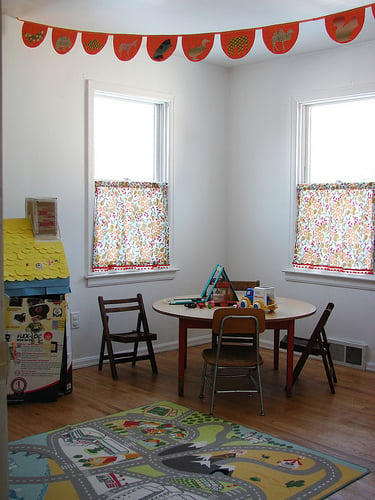
If you wonder why there are constantly toys all over your home, it just might be because you’ve never created a home for the toys. If you and your children don’t know where the toys are supposed to be put away in the first place, it’s hard to put them away. So not only does it help to pare down the number of toys you have, but it also is very helpful to designate places for the toys you own.

At our house, toys stay in the girls’ room and the basement. If toys are brought into the living room or kitchen, we encourage the girls to promptly return them to their places once they are finished being played with. We have a few shelves in the basement for books and toy tubs and then a section of their closet to put dolls and doll things. We store arts and crafts along with the rotating toy bins (see more on this below) in the school room closet.

Need help getting started designating a place for your toys? Check out Five Steps for a Pared Down Playroom.

If You Have More Than One Child

If you have more than one child, it might be helpful to have assigned areas for each individual child’s toys and then a place for toys that everyone shares. You might consider having a tub or shelf labeled with each child’s name. Perhaps this could also be a way to deal with toy overload as well: when the shelf or tub is full, you can’t get any new toys until you get rid of some that you already have.

See how Kate implemented this in her home.

2. Pick Up What You Get Out

Train your children from an early age to pick up their own toys and messes. It takes work, effort and consistency to teach children to be assets to the home rather than liabilities, but it does pay off.

Training is practicing doing something again and again and again in order to get it right. Don’t expect your children to be able to pick up all the toys and put them away perfectly the first time you ask them to. It’s going to take showing them what’s expected, helping them do it correctly, gentle encouragement and lots of practice. But, with time and practice (and patience!), your children can learn to pick up after themselves.

Set a Good Example!

Observe your own actions over the course of a week: are you often leaving things out instead of putting them away in their designated places? Do you pick up what you got out? If not, I encourage you to start working on the person you see in the mirror first. You can’t expect your children to pick up after themselves if you’re not setting an example of doing the same.

{Ouch! I’m preaching to myself here!}

Once you’ve pared down your toys, have a designated place for toys and are training your children to pick up what they get out, likely the majority of your toy organization problems may be solved. But here are a few ideas if you’re still looking for some practical suggestions:

::The Rotational System

If you feel like you have too many toys, but you don’t want to part with what you have, consider a rotational toy system. Put away half the toys for a month. After a month, put away the toys you currently have and get out the toys which were put away. You could even do this on a quarterly basis.

This method can help you to see what toys your children really like and use. It also might help encourage more contentment with you already have since your children will probably feel like they are getting “new” toys quite often–when really it’s just the same old toys they’ve always had being presented in a new way!

::Days-of-the-Week Tubs

This idea has so many variations, but the basic gist is to divide most of the toys in your home into seven groups and put them in seven different tubs labeled with the days of the week. Your children can then play with the appropriate tub each day. It keeps things rotated and fresh, while creating less mess. We’ve done variations of this in our home with great success.

See how Stephanie implemented this in her home.

::Friend Toy Swap

This idea came from The Bargain Shopper Lady:

My boys started a “friend toy swap” which is their idea of giving to their friends. Anytime they have a friend over to play, they let their friend choose one toy to take home. I approve all toys before the friend leaves just in case they are trying to give something away, such as “their brothers favorite toy” or something that they just got and is still pretty new. This method is great for us! We have friends over often and it really helps with the clutter!  My children are also learning that they really enjoy giving toys they don’t play with as often to their friends!

Always Remember: “The Best Things in Life Aren’t Things”

Amy from Amy’s Finer Things often says this, and it’s so true. I loved the example Kendra gave of making a cardboard laptop for her daughter. It doesn’t have to cost an arm and a leg to keep a child contented, happy and busy!

What strategies and solutions do you use in your home to keep the toys from taking over your life? Tell us in the comments.

photo credit: hownowdesign

10 Tips for Having a Successful Garage Sale

by Crystal on April 22, 2010

For those of you who follow me on Facebook and Twitter, you know our garage sale last week was a smashing success. In fact, all together, our family (along with my siblings and parents) made over $1000 in the 2 1/2 days we ran the sale. Considering that our highest-ticket items were $20 and the majority of our stuff was priced at $0.25 to $2, that’s a lot of stuff sold!

I’ve had a number of successful garage sales over the years and here are my top 10 tips for having a successful sale:

1. Collect Clutter Year-Round

I mentioned recently that I have an ongoing Garage Sale Stash. When I come upon something we no longer need or use and I don’t know anyone to pass it onto, I stick it in a box under the stairs. Once a box fills up, I start another. And another. Without much effort at all, by the time it’s the month of our annual garage sale, I usually have at least 8-10 boxes of stuff collected.

2. Have a Plan

A successful garage sale does not happen without organization. At least a week before the sale I go through my home from top to bottom and clear out clutter. At least 2-3 days before the sale, I take an afternoon to price everything and organize it. And then the day before the sale, I devote a few hours to final organization, posting an ad on Craigslist, getting the cash and signs together and so forth.

Do not wait until the last minute to pull off a garage sale. Either it will flop or you’ll run yourself ragged–or both. If you’re in a new location or you’re new to hosting a garage sale, I’d suggest that you start getting organized at least 3-4 weeks in advance.

Getting Organized for a Garage Sale

::How are you going to display items? Do you need to borrow or make a clothes-rack?

::Do you have enough table space? If not, check and see if you can borrow tables from friends or put together some makeshift tables out of plywood and boxes.

::What signs will you be using and how many do you need? Where will you be displaying the signs to best direct traffic to your home? Drive the routes people will be coming and decide on these locations so you’re not scrambling the morning of the sale.

::Who is going to put the signs out the morning of the sale? Designate someone for this ahead of time and let them know specifically where to place the signs.

::How much cash should you have on hand and how will you keep it in a safe location?

::Do you need to purchase a license for running a garage sale in your area?

::Do you have enough help?

3. Team Up

One of my best “secrets” for success when it comes to garage sales is that I never do them on my own. I always find friends or family to team up with. Not only does this arrangement mean you have more stuff to sell and more variety in sizes and types of things offered, it also means you have more help. Divvying up the responsibilities between 3 or 4 people makes a garage sale much more manageable. Plus, it just makes it more fun when you’re doing it with friends and family!

4. Location, Location, Location!

If you want to have a garage sale that flops, pick a location which is off-the-beaten-path and hard to get to. That’s a surefire way to lose a lot of business.

Don’t live near a busy intersection? Well, look for alternative locations like a friend or relative’s home.

This is probably the key to our garage sale success. We live right between two very heavily-trafficked streets. We put up some good signage and the crowds descend!

5. Timing is Everything (well, just about!)

I don’t advise planning a sale in the freezing cold Winter or the blazing hot Summer. Choose a time of the year when the weather will be very pleasant and try to check the weather forecast ahead of time to make sure rain is not expected when you’re planning your sale.

In addition, find out what days of the week are best for yard sales to run in your area. When we lived in Kansas City, I found people usually only held sales on Friday and Saturday. However, where we live now, Thursdays are a big yard sale day and seem to garner the most traffic.

6. Clearly Mark Your Prices

It’s easy to want to just stick a big sign on a table saying that everything on that table is a quarter, but, in the long-run, it is much more efficient to go ahead and put price stickers on everything. Instead of having to make up prices on the spot, people will know exactly how much something is. In addition, some people are too shy to ask the price of an item, so you’ll lose a sale if an item isn’t marked.

I’ve found it’s easiest to invest the few dollars it costs to buy pre-priced stickers for most of my items as this makes pricing a snap. I try to have variety in pricing with plenty of $0.25 or less items. I’ve found that when people pick up one thing to buy, they are more likely to pick up other things as well, so have lots of $0.25 items and it might help you sell some of your larger-ticketed items, too!

Since we pretty much always have multiple families involved when we run a garage sale, we just mark initials on all our price tags and then keep a tally sheet in a notebook as things sell. It adds a bit more time when customers are checking out, so it’s good to have at least two people working the money table–one to keep track of the tally sheet and one handle the money and making change.

7. Price Things to Sell

When I go to a garage sale, I expect to pay yard sale prices. Unless something is brand-new with the tags on, I am not going to pay more than a few quarters for it, if that. When I am pricing my own items to sell, I always try to price things at what I feel would be a good bargain if I were buying the item at someone else’s garage sale.

I’d rather price something on the low end and have someone actually buy my item, than to have 25 people pick up the item and put it back down on the table because it is too expensive.

8. Advertise well

The marketing of your sale is usually the number-one factor in how well your sale does. You can have great items, great prices and a great location, but if you don’t tell people how to get there, they won’t find it on their own. So put some time and effort into making a number of quality, clearly-readable signs which you put in conspicuous places to easily lead to your home. The brighter, bolder and bigger the sign, the better.

I have also found Craigslist to be the most-effective marketing tool for advertising a garage sale. And did I mention it’s free to advertise on Craigslist? I usually advertise the day before the sale and then re-post a revised ad each day of the sale. The more details you can put in your ad, the better. Tell specific items, brands and sizes.

When people search for items on Craigslist, if they are looking for what you’re selling–even if they aren’t looking at garage sales–your item will pull up in searches for them. So the more descriptive you can be in the listing and title, the better. Of course, don’t write a book; just focus on your hottest sellers. And please use proper grammar and spelling, too. Sometimes, it’s the little things that make a big difference!

9. Mark Things Down on the Last Day

Things are usually pretty picked over by the last day of the sale. That’s the perfect opportunity to get creative and hand out rock-bottom bargains! We found that running “Fill a Bag for a Buck” is extremely effective. Last week, we got rid of around 25 bags full of stuff in a few hours by doing this.

We’ve also done it where everything was half-price the last day. Or, if we have quite a bit of stuff left and we’re feeling ready to close up shop, we’ll just say that everything is free the last hour.

10. Don’t forget the cookies and lemonade!

What better way to teach your children entrepreneurial skills and let them earn a little money in the process than to have them set up their own little cookie and lemonade stands at the sale? Or, if it’s cold outside, try selling hot chocolate, coffee, and fresh cinnamon rolls. One yard sale, we even set up a pancake griddle and sold pancakes hot
off the griddle on Saturday morning.

Baked goods–like homemade cookies and bars–sell extremely well at our garage sales. In fact, my younger siblings made around $100 from selling cookies at our garage sale last week!

We also let Kathrynne (5) run her own little toy table last week. Everything was a penny and she had a great time interacting with customers and taking money. Best of all, it was a great learning experience for her about the value of money and how to conduct yourself in a professional manner with adults and others whom you don’t know.

Those are just a few things which I’ve found to be a great help in hosting a successful yard sale. What are your best tips for having a great yard sale? I’d love to hear!

photo credits: Louisa_catlover; Chiot’s Run

Clear Out the Clutter: The Children’s Rooms

by Crystal on April 20, 2010

While some of you found your kitchens the hardest to clean out, I found my children’s bedroom the hardest to clean out. Not necessarily because it was overloaded with stuff–though it definitely needed some serious purging!–but because it seems naptime or bedtime is my only time to get much cleaning done. So it took me a week to find an opportunity to work on it when they weren’t sleeping.

Now, I have to tell you something: I was really hesitant to share these pictures with you as I’m afraid I’m going to majorly disappoint pretty much all of you.

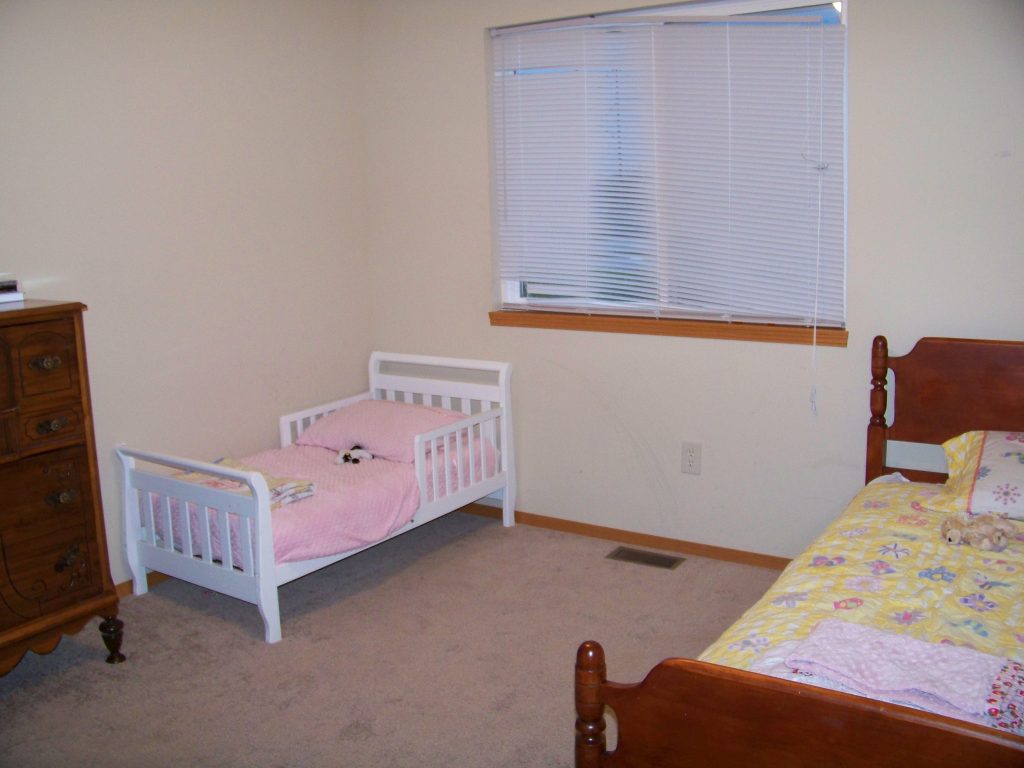
I am the farthest thing from an interior decorator that the world has ever seen. And these pictures will give complete credence to that. We don’t have a cutesy children’s room. It’s bare, it’s basic, and it’s well-worn. The walls need to be painted, the blinds are broken, and there’s quite a bit of my children’s “artwork” adorning the walls.

I was feeling embarrassed and wondering what everyone was going to think of me if I posted these pictures when I all of a sudden realized: What am I doing? Who cares what people think? Isn’t that my mantra? I don’t need to please people with my wardrobe or my house–or my children’s bare-bones bedroom. The girls are happy with it, Jesse and I are happy with it and that’s all that matters, right.

So, here are the pictures–as real and as authentic and as homely as they may be…

BEFORE

AFTER

(I love these closet organizers! I put the girls’ clothes away in them by outfit and it saves so much time and effort in picking out clothes in the morning. Plus, they learned the days of the week from them!)

Wall Art — might not win a prize for the Best Drawing, but I love letting the girls display their creativity on the wall–complete with the massive amounts of tape they use to get the picture to stay on the wall. Priceless!

Clear Out the Clutter Assignment #4

::Go through your children’s rooms (including the closet and dressers) and toys and ruthlessly clear out any and all clutter and unnecessary items you find. Consider passing on extra clothing and toys to friends or donate it to someone in need. Or, add it to your garage sale or consignment sale pile!

::Tally up the approximate amount of items you’re getting rid of and input it into the Items Decluttered Tally Form in order to be entered to win some fun prizes!

Are you blogging about your Clear Out the Clutter accomplishments and progress? If so, leave your direct link to your blog post below (with pictures, if possible!) so we can visit your blog, cheer you on and be inspired!

Dealing With Toy Overload – Part 1

by Crystal on April 19, 2010

When you come to our home, you might notice one thing right off: it’s bare. We don’t have many knick-knacks, we don’t have piles, and we have white walls.

It might seem utilitarian to some and extremely bland to others, but it’s the way we prefer to live. It saves us time because we don’t have to spend a lot of time looking for misplaced items under heaps of clutter. It saves us energy because we don’t have a lot of extra things to pick up or dust. And it saves us money because we’re content with keeping it simple.

Even though we have three young children, you won’t see many toys at our house. This is not because they are all stuffed in some closet or strewn about in a toy room. It’s because we just plain don’t have very many toys.

You see, when we got married and had our first child, we were living in a tiny basement apartment. Space was scarce so we had no choice but to stick to the basics. If it wasn’t essential, we couldn’t keep it because there wasn’t any room.

We grew to love living the minimalistic life and found that it made things so much easier to keep picked up and clean that we opted to continue living like this–even when we moved to a larger home. We figured at some point, our children would want to have more toys but we’d cross that bridge when we came to it.

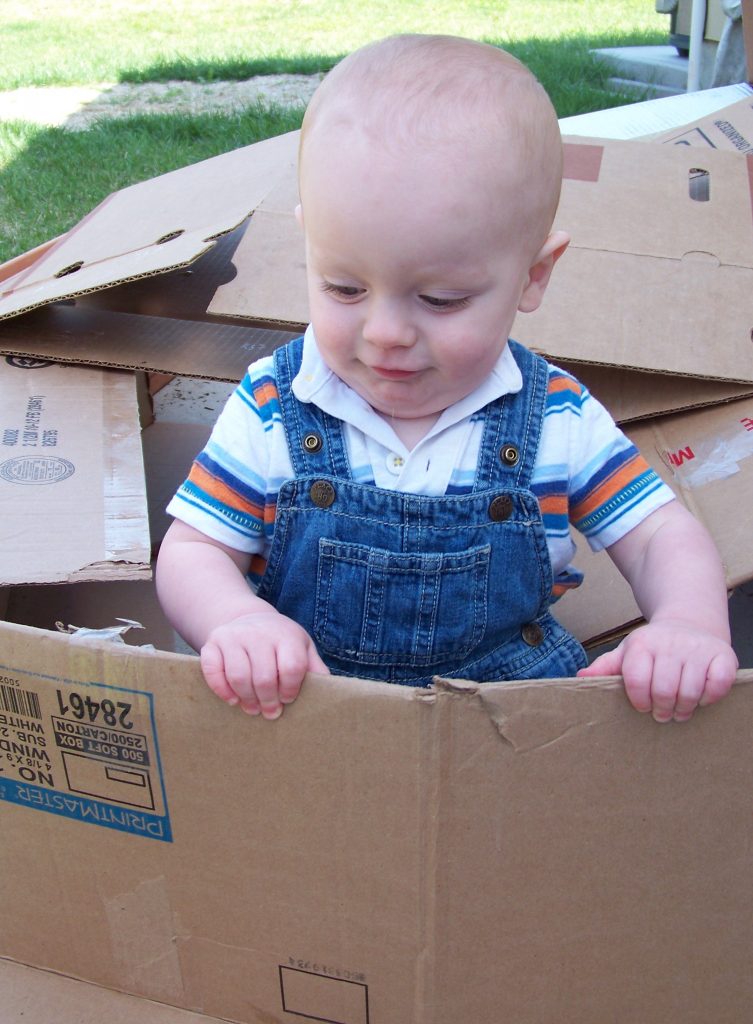
Well, so far, we’ve found that our girls really don’t need many toys. In fact, they are perfectly happy with a few quality, versatile toys. They’d much rather play with cardboard boxes or build tents with old sheets, folding chairs and couch pillows than have the latest and greatest gadgets and gizmos. The few bells-and-whistle toys we’ve had in the last couple of years served to entertain for a short while and then were abandoned for Legos, puzzles and creative play.

Tomorrow I’ll share some ways we’ve found to keep toys simple, organized and pared down at our house–including ideas for dealing with well-meaning relatives who are adding to the toy overload at your house.

5 Questions to Ask Yourself About Clutter

by Crystal on April 12, 2010

As we’re clearing our homes of clutter, here are five questions to ask yourself:

1) Do I Need This Item?

Need is the keyword here. Sometimes it’s hard to look at our own stuff objectively, but it’s a really good exercise to do so.

If you’re having trouble deciding whether or not you truly need something, step back and think, “Could I live without this? Is my survival dependent upon this item?”

I’m not saying that you can only have things you need in your home. Flowers are not a need, but I enjoy them so I buy them on occasion. But once you can discern between needs and wants, it helps you to be much more free to streamline what items you keep in your home.

2) Do I Use This Item on a Regular Basis?

As you’re going through your home, ask yourself: “How often do I use this item?” If the answer is less than a few times per year, it’s high time you consider getting rid of it. You can always borrow it from someone if you need to use it once a year or so.

There’s no point in having stuff take up space in our home if we’re not using it on a regular basis.

3) Do I Like This Item?

Sometimes I think we keep junk around our home just because we always have. It becomes a “part” of our home without us even realizing it.

If you don’t need an item, you don’t use it on a regular basis and you don’t like it, what on earth are you hanging onto it for? Pitch it and be free from excess stuff.

4) Is This Item Taking Up Space I Don’t Have?

If you’re short on space, you especially need to be ruthless about clutter, otherwise it will greatly hamper your productivity. Either you control the clutter or the clutter controls you.

5) Could I Bless Someone Else With This Item?

I find so much joy in blessing others with things I don’t need or use. Now, please don’t go dump off ten bags of junk at your friend’s house. They probably won’t see that as a “blessing”! However, if you have something  that someone else could find more use out of, ask them if they’d be interested in having it.

photo credit: Lori Greig

Finally, my cupboards are cleaned out!

by Crystal on April 10, 2010

So, I’m not doing so great on this Clear Out the Clutter Challenge. Well, or at least it seems like I’ve been as slow-as-molasses-on-a-very-rainy-day in getting it done. My garage sale starts on Thursday, so I better get my act together here!

I thoroughly impressed with all of you, though. You’ve been inputting your progress in the form here and I’m blown away! Hundreds of you have cleared out dozens–or even hundreds!–of items. One of you even said you cleared out a thousand items from your home this past week. Wow!

At any rate, I finally did get around to finishing up my kitchen and stockpile.

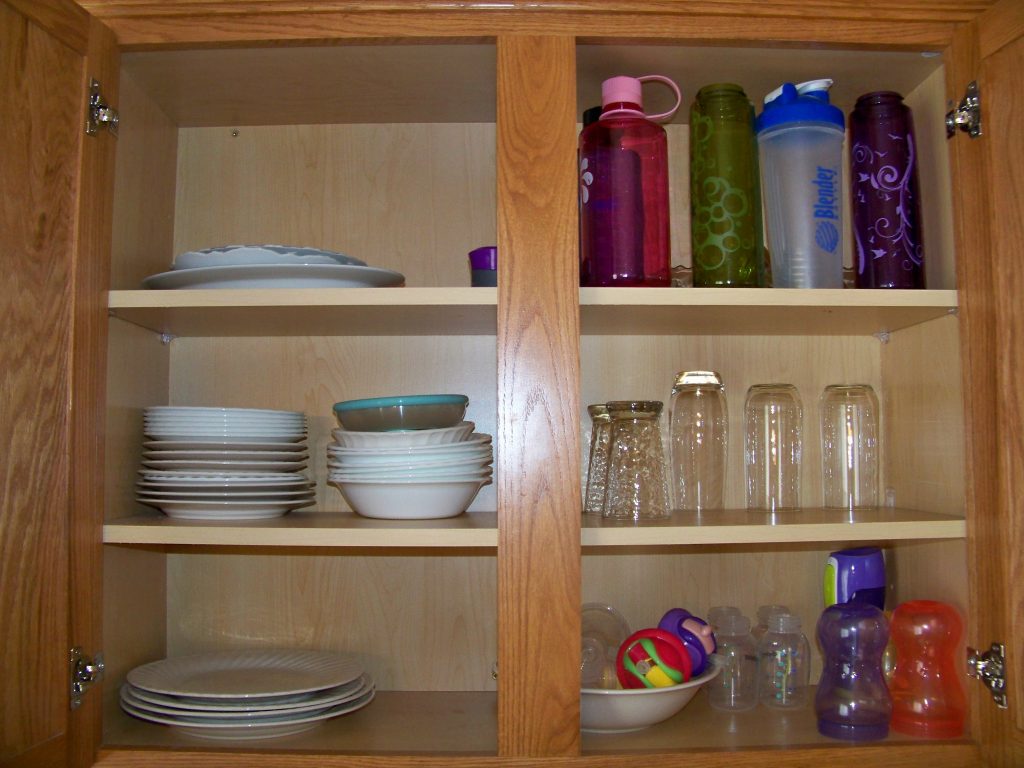
BEFORE — two of my cupboards and household stockpile closet:

AFTER — much better!

So far, I’ve collected three boxes of clutter to give away, throw away and sell. I’m thinking I’ll have gathered up around 15 boxes before my clutter war is over!

Assignments #3-5 in the Clear Out the Clutter Challenge will be posted on Monday through Wednesday of next week… and I’m going to try and work ahead today so that I actually am on track come Thursday morning!

If you’re following along with the Clear Out the Clutter Challenge, make sure to input your results in the Tally Form here so you can be entered to win a prize.

How’s the decluttering going at your house? We’re making good headway here!

Today’s assignment is a bigger one–at least for me! Take a few days to finish it, if you need to:

Clear Out the Clutter Assignment #2

::Go through your kitchen cupboards, pantry, under the sink, stockpile shelves and any other closets or cupboards which reside in your kitchen and then ruthlessly clear out any and all clutter and unnecessary items you find. Consider passing on extra food and household items to friends or donate these to someone in need.

::Tally up the approximate amount of items you’re getting rid of and input it into the Items Decluttered Tally Form in order to be entered to win some fun prizes!

I’ll post my pictures and accomplishments later on today–once I finish this fairly mammoth task! Looks like I have my work cut out for me:

Are you blogging about your Clear Out the Clutter accomplishments and progress? If so, leave your direct link to your blog post below (with pictures, if possible!) so we can visit your blog, cheer you on and be inspired!

Are you participating in the Clear Out the Clutter Challenge? If so, you can enter how many items you’ve decluttered in the form below in order to enter to win a prize!

Here’s how it works:

::Participate in one or all of the five Clear Out the Clutter Challenge Assignments I’m be posting over the next week.

::Get rid of stuff and tally approximately how many items you’ve gotten rid of.

::Fill out the form below with the number of items you’ve decluttered (you can enter up to five times per person since there will be five different assignments).

::Once the Challenge is over with, I’ll tally up the results and randomly pick five winners from all those who’ve entered.

The five winners will receive one of the following prizes of their choice, donated by me: a $15 iTunes e-gift card; a $20 Barnes & Noble e-gift card; or a $20 Target e-gift card.

Happy decluttering!

Five Ways to Cut Down on Clutter

by Crystal on April 07, 2010

You’ve heard the saying before: “A place for everything and everything in its place.

Now, as you can clearly see from my house, I’m not a perfect homemaker. I have three young children and I’m not always as self-disciplined as I’d like to be. However, I do make a concerted effort to keep my home clutter-free and organized.

Here are five things which help me:

1) Ongoing Garage Sale Boxes

I have a designated spot in our home for garage sale boxes. In our current home, this is under the stairs. As I find things we no longer need or use, I start filling up a box. When one box is full, I fill up another. And so on.

Instead of moving an item around from one room to the next when we aren’t using it anymore, I pitch it in the garage sale boxes and it’s out of our way. This method makes preparing for a garage sale quite simple since I already have a huge head start on collecting stuff to sell.

Thinking of having a garage sale? Check out my 10 tips for having a successful garage sale.

2) Annual Clutter Elimination

Once or twice a year, I go through my home from top to bottom and am ruthless about eliminating clutter. Every nook and cranny is cleaned out and every item is evaluated. By doing this on a regular basis, no area of our home ever becomes unmanageable. Rooms or closets might be messy or unkempt at times, but they never get so overwhelming that I can’t deal with them.

3) The No-Pile Rule

Except for my husband’s dresser and our laundry basket, we try to strictly adhere to a no-pile rule. I’ve found that a small pile quickly grows–without any effort. So if you don’t start a pile in the first place, you can avoid a lot of disorganization.

4) In the Door, In Its Place

Instead of piles of paper around from place to place until you have time to deal with them, take care of them immediately. When the mail or other papers come into our home, I go through it right then and there and throw out everything that we don’t have to keep.

Bills go on my husband’s dresser, magazines go in my top dresser drawer to await the next doctor’s appointment, freebies go in the household product stockpile closet, coupons go in my coupon box, and junk mail goes in the trash. Within just a few minutes, the mail is completely dealt with

5) Avoid Clutter-Collecting Furniture

I’m a minimalist, if there ever was one, and I’ve found my utilitarian nature helps avoid heaps of clutter. How? Because we don’t have furniture which tends to be clutter hot-spots for others. This might come as a shock, but even though I have a home business, I don’t have a computer desk. I have a top dresser drawer that I keep a few business-related items in and we have a small filing cabinet–and that’s it.

I’ve found that when there’s no place to collect piles, you are much less apt to make them.

What about you? What are some ways you cut down on clutter in your home?

photo credit: *Ann Gordon

So I made a big mistake… I told you all that I’d be posting the first assignment this morning.

I should know by now that having three little children means I can’t make promises like that. But I made the promise and then, when 10 a.m. came and went and I hadn’t posted, I started getting all sorts of worried emails from people.

Oops.

I promise I wasn’t sitting around eating bon-bons. Actually, I don’t think I did much sitting at all!

I went to bed late because we’d had “one of those days” yesterday (you know, the kind where you’re ready to turn in your mom badge at lunchtime? Please tell me I’m not the only one who has those kinds of days!), so then I got up late this morning. Which meant that my planned early morning blogging time didn’t happen.

And then the children woke up and there were diapers to change, meals to fix, baths to give, messes to clean up, and more messes to clean up. I love these children–yes, I do!–but recently they’ve been stretching me to my limits. Now I know why my mom used to say, “I thought I was a patient person… until I had children!”

We’re going to make it through this season, by the grace of God, but I’m not going to pretend that it’s super easy or that I’m floating through it completely unstressed all the time.

At any rate, it’s almost 6 p.m. and I’m finally getting this posted. Thanks for bearing with my tardiness. I must remember in the future not to make promises that might not be realistic.

The good news is, though, that I did get my living room, coat closet and hall closet cleaned out. Here’s proof:

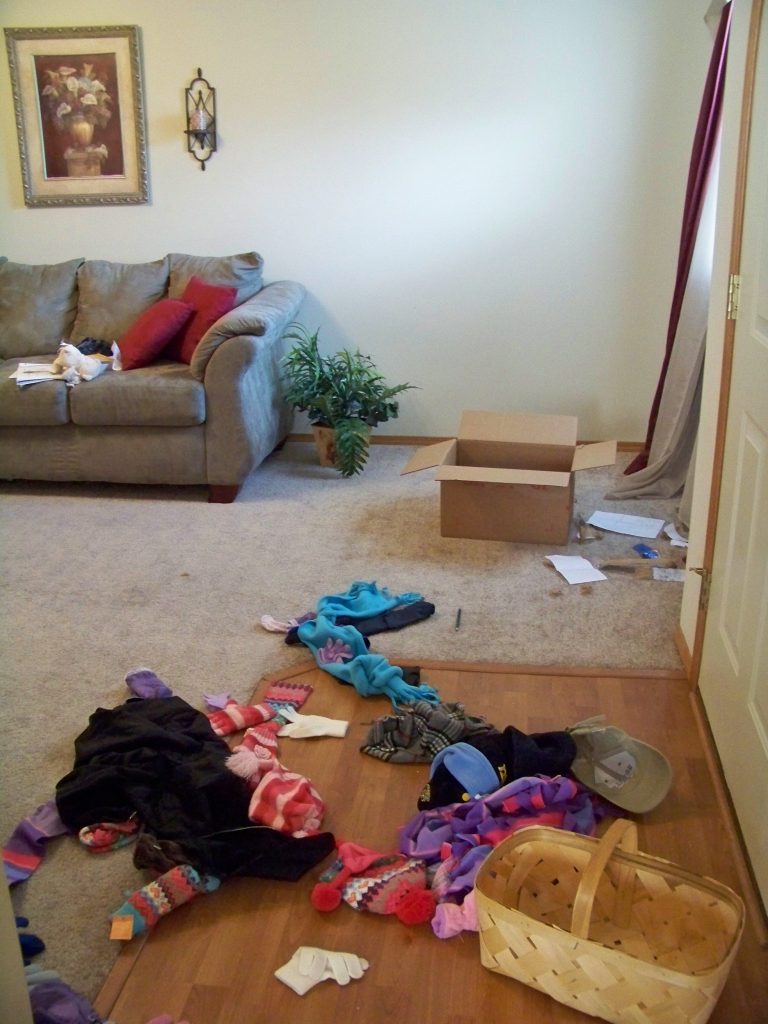
BEFORE PICTURES (Yes, I’m keepin’ it real!)

That’s what things look like when you give a  two-year-old the basket of hats, gloves, and scarves for a minute. We’re still working on learning to pick up what you get out; it’s a novel concept. :)

AFTER PICTURES:

(Yes, that’s writing on our walls. In addition to learning how to pick up messes, the children are also learning that walls were not made to practice their latest art projects on!)

And, when it was all said and done, I have a whole box full of stuff from those two closets to add to my garage sale pile!

Clear Out the Clutter Assignment #1

::Go through your living room, coat closet and hall closet (or any other closets or cupboards which reside in your living room area) and then ruthlessly clear out any and all clutter and unnecessary items you find.

::Tally up the approximate amount of items you’re getting rid of. You’ll need that number to enter the giveaway tomorrow!

Are you blogging about your Clear Out the Clutter accomplishments and progress? If so, leave your direct link to your blog post below (with pictures, if possible!) so we can visit your blog, cheer you on and be inspired!