Every week in 2013, I’m sharing a different way you can save $100 this year. If you do all of these things, you’ll be able to save over $5,000 this year alone! Many of these things will likely be things you’re already doing, but hopefully all of you will pick up at least a few new ideas or some inspiration from this series.

You can save at least 20% off the price of many staple products by buying them in bulk. If you’re going to be using the bulk amount of something over the course of a year and it can be stored for a long period of time, you might as well purchase it in quantity at a discount, right?

Where To Find Bulk Deals

There are many places to check for bulk deals, here are a few of the best places to look:

1. Warehouse stores

This is sort of the default, but it’s worth mentioning. I save around $27 per year by buying yeast from Sam’s Club instead of at the grocery store. However, I don’t find it is worth it to pay for the membership. Instead, I just go in on the get in free days that they have a few times per year.

Be aware that not all warehouse packages are a good deal. In fact, many times, you’ll pay more per ounce for buying the large package than you’d pay if you bought multiple smaller packages when they are on a great sale at the grocery store.

2. Local farms

You can often purchase large quantities of produce seconds for great prices from local farms (check LocalHarvest.org to see if there are farms near you that sell to the public). And if you like high-quality meat, you’re almost always going to save at least $1 per pound by buying it in bulk.

If you don’t have freezer space for large amounts of meat or products, consider splitting a bulk order with a few friends. That way, you all get the discount, but none of you have to buy a new freezer to store it in!

3. Azure Standard or Other Health Food Co-ops

If you grind your own wheat or eat a lot of oats, rice, beans, or other staple ingredients, check into the prices of nearby health food co-ops or Azure Standard.

3. Health food stores and grocery stores

If don’t find great sources for buying in bulk from health food co-ops and Azure Standard doesn’t deliver to your area, check and see if your health food stores or grocery stores would give you a discount for buying in bulk. It never hurts to ask!

You might also just buy in bulk by practicing the Buy Ahead principle — buying multiples of items at your grocery store when they are at their rock-bottom prices!

What To Buy in Bulk

What you should buy in bulk will vary from family to family. I recommend looking at what you already purchase a lot of that has a long shelf life or would keep in the freezer for six months and see if you can find sources for purchasing it in quantities at a discount.

These will usually be things like grains, beans, canned goods, and meat. But it could also include other items like toilet paper, diapers, or cleaning supplies.

When Not to Buy In Bulk

You can save a lot of money by buying in bulk, but there are a few pitfalls you want to be aware of:

1. Don’t buy things you won’t use up in time

There’s no point in buying a big bulk package of something if you’re just going to end up throwing it out because it goes bad. Kind of like my cappuccino mix. Ahem. :)

If you want to buy a big bulk purchase but you’re not sure you’ll use it all up, see if a friend or two will split the order with you.

2. Don’t buy things you don’t already know that you love.

If you aren’t 100% sure your family loves it, don’t buy a bunch of it. Because no matter how inexpensive it was, if you’re not going to use it, it wasn’t a good deal for you.

3. Don’t store your bulk items carelessly.

If you buy grains, make sure you store them properly and check them often. The last thing you want to do is find your big bag of oats is bug-infested!

And do not make the $614 mistake we did and buy a bunch of grass-fed meat from a local farm, stick it in your freezer in the garage, and then leave town for two weeks. That is a lesson we hope we never have to learn again!

Do you buy in bulk? If so, what do you buy and where do you but it from?

photo credit; photo credit; photo credit


Every week in 2013, I’m sharing a different way you can save $100 this year. If you do all of these things, you’ll be able to save over $5,000 this year alone! Many of these things will likely be things you’re already doing, but hopefully all of you will pick up at least a few new ideas or some inspiration from this series.

I’m going to be stepping on some toes here today… but I guess since I recently temporarily stopped drinking coffee and stopped eating gluten and sugar, I can commiserate with those of you who are addicted to soda pop (or pop, or soda, or carbonated beverage, or whatever it is that you call it in your part of the country!)?

Think How Much You Could Save

Drinking soda pop is addictive and expensive. If you drink one pop per day and you get it on sale with a coupon, that’s still close to $100 spent per year for one person. If you pay for drinks from a restaurant or vending machine and you drink one pop per day, it’s going to be closer to $150 to $250 or more spent in a year for your soda pop habit.

There’s No Real Redeeming Value in Soda Pop

There is almost no redeeming value in soda pop, except that maybe it tastes good and makes you feel good. {Though it does neither for me, but I also basically never drink it — because I’m weird like that! :) } The calories in non-diet drinks can wreak havoc on your weight and the chemicals in the diet drinks can wreak havoc on your health.

So, all that to say, I’d heartily encourage you to consider cutting back on the soda habit — or maybe even get brave and ditch it altogether? Here are a few ideas:

1. Order Water at Restaurants

Drinks are one of the most price-inflated purchases at restaurants. Learn to order water with lemon and you’ll cut calories and costs. Not to mention that water is one of the most healthful things you can drink.

Flavored water from The Yummy Life

2. Replace Your Sodas With Homemade Flavored Water

There are many fun ways to flavor water that are quick & easy, frugal, delicious, and all natural. Check out this tutorial on How to Make Homemade Flavored Water over on The Yummy Life.

Challenge yourself to replace 20% of your usual soda intake with water. Then, gradually work up to 50% and beyond. I can almost guarantee you that you’ll feel more energetic and have more zest for life by drinking more water and less soda. I dare you to at least try. :)

3. Get More Sleep

If you’re turning to caffeinated beverages for your afternoon pick-me-up, there’s a good chance you’re not getting enough sleep at night.

Make yourself go to bed 15-30 minutes earlier each night for a week. If you’re still tired in the afternoons, add another 15-30 minutes for a week. Keep extending your sleep like this until you find the amount of sleep you need to get to feel rested and refreshed all day long.

If you’re a mom who is getting up a lot at night with a baby or child or you work crazy shifts, this might not be an option for you, but most of us could get to bed at least a little earlier if we made some changes to our evening routine, shut the electronics down earlier, and/or just got more disciplined about it.

Have you cut back or ditched the soda habit? What has helped you?

photo from Big Stock


Every week in 2013, I’m sharing a different way you can save $100 this year. If you do all of these things, you’ll be able to save over $5,000 this year alone! Many of these things will likely be things you’re already doing, but hopefully all of you will pick up at least a few new ideas or some inspiration from this series.

We all know that it’s usually much less expensive to grow our own food, than to buy it at the store. But it’s also a lot of work. And time is money, too.

So if you have more time than money right now and you have the space for a big garden, definitely go for it. However, if a big garden is just not feasible, here are a few money-saving options that might work for you:

1. Plant an herb garden.

Fresh herbs are so delicious and nutritious. Best of all, they are easy to plant and care for, too!

Growing up, I had an herb garden for a number of years and loved experimenting with different herbs, different recipes, and different drying techniques. I recommend choosing herbs that you use often in cooking. Otherwise, you’re going to end up with a lot of excess herbs that you might not really have a use for.

Tip: Here’s a quick way to freeze fresh herbs.

2. Only plant a few things.

This might seem like a no-brainer, but I think we often can get ambitious with gardening and then end up biting off more than we can keep up with.

Instead of planting 27 different things, think about what vegetables you use the most and consider just planting your top 3-4 favorites.

Sure, you won’t be able to fix entire meals mostly from your backyard, but if you don’t have to buy lettuce, tomatoes, or onions all summer long, that will help cut down your grocery bill some.

Tip: If you’re short on space, you might also look into Square Foot Gardening.

3. Look into community gardening.

Want to have a big garden, but don’t have the space or hours of time to devote to it? Consider starting or participating in a community garden.

These are all run differently, but basically it’s just a group of people who all go in together and work together to plant and take care of a garden — and then split the produce that grows.

This might be something you could do with extended family or a few neighbors or friends. Or, you could see if your community already has a community garden project that you could participate in.


4. Have your children plant their own gardens and then pay them for the produce.

Growing up, one of our favorite things about summer was planting our own little garden plots. It never seemed like work and I loved watching my plants grow and produce.

If you have children who will have free time this summer, this might be something to consider. And you can offer to pay them a dime or some similar small amount for every item they grow.

This can be a win-win situation: you get to enjoy garden fresh produce for much less than what you usually pay for it at the store, your kids stay busy, and they have a way to earn money, too!

5. Barter with someone who plants a garden.

If you don’t have any space or desire to plant a garden, another option for inexpensive produce is to barter with friends who have big gardens. Maybe you bake bread for them, or babysit, or mow their grass, or fix their appliance (or whatever your skills are) in exchange for their extra garden produce. I’ve also heard that many people find free garden produce offers on Craigslist and Freecycle.

More Gardening Articles:

Do you plant a garden? Why or why not?

photo credit #1, photo credit #2

Every Monday in 2013, I’ll be sharing a different way you can save $100 this year. If you do all of these things, you’ll be able to save over $5,000 this year alone! Many of these things will likely be things you’re already doing, but hopefully all of you will pick up at least a few new ideas or some inspiration from this series.
This post by MaryEllen from last year was so good and helpful that I wanted to re-air it this week as yard sale season is starting to gear up again…

Guest post by MaryEllen at The Deal Scoop

The reader tip on stockpiling clothes is something our family has already been using to save an incredible amount of money each year. As I read through the comments on the post, I noticed some readers’ concerns.

There were some readers who don’t think they could find good enough deals at yard sales to make stockpiling clothing worth their while. Some felt that all they can find at yard sales is junk and that they would rather buy clearance items at the stores. Then there were those who admitted that they aren’t organized enough to know what they need and don’t need.

Here are a few tips on how to get the best prices at yard sales and how our family has been able to make stockpiling clothing work for us:

On Friday night, check your local paper or Craigslist.org ads for Saturday’s yard sales.

(Or if you live an area with a lot of Friday sales, check on Thursday night. Go whenever is best for the area in which you live.) Most people will list some specific items that they will be selling. Mark the ones that specifically have kids’ clothing listing and skip the rest. In my family’s experience, you will barely have time to make it to just those yard sales, and there is no sense wasting time and gas going to yard sales that don’t have what you’re looking for.

Plan your route ahead of time.

If you need directions to certain places, be sure you have them all printed out the night before so you can go from place to place quickly and use gas efficiently. The more gas you use, the more those yard sale clothes will cost you!

Go as early as possible in the morning.

Many people think there is only junk to be found at yard sales, but a lot of times that’s because there are high-quality items to be had for nearly pennies. The first ones at the yard sales find all the best stuff before it’s gone!

Set a target price and don’t be afraid to make deals in order to hit it.

This is probably the most crucial part to the whole game of stockpiling clothing, and I’ll be the first to admit that my husband is more skilled at it than I am. Our family’s personal target is $0.25 per clothing item, $1 for a pair of shoes and up to $1 for nice dresses for our daughter. That may seem like quite an ambitious goal, but my husband has proven to me that it is quite doable. Here’s what I’ve learned by watching him:

::If a seller has high quality items and is asking 50 cents each, pick out three things and ask if they will take $1 for all three. Nine times out of ten, they will. Although that is $0.33 per item and not the target $0.25, you can average it out later.

::Ask the seller if they will consider a bag special. If there are a good number of items in which you are interested, ask the seller if they will allow you to fill a shopping bag for a certain price. If they will sell you a bag of clothing for $3 to $5, you should be able to hit your target price. (This is especially true when you’re buying smaller sizes because you can fit more pieces into the bag.)

If they charge $5, you’ll need to fit at least 20 pieces into the bag in order to hit $0.25 an item. (It’s amazing how many pieces will go in when they’re folded neatly!) If they charge $3, you need to fit at least 12 pieces in the bag in order to hit your target.

Then, there are always the sellers who surprise you by saying, “Sure, fill a bag for $1!” It happens, and those are the times that help you bring your average back down to the target price when you’ve paid a little more for something you really like.

::If a seller is asking $1 for a pair of shoes, ask if they’ll take $0.50. The worst they can say is “no”, and if they say “yes”, you’ve just brought your average price per item down. If they’re asking $2, ask if they’ll take $1. Then you can get the shoes at your target price.

Skip the junk.

Don’t buy something just because it happens to be your target price. If you don’t like it or it’s worn out, skip it. You’ll find something else later.

Buy only classic styles and colors.

Remember, by the time your children wear the clothes you find, it may be a couple years down the road. Trendy things go out of style very quickly and you’ll end up not using them and wasting your money.

Keep a detailed list of what you have and what you need.

I don’t think it makes sense to buy another pair of pants, even if they are only $0.25, if our son already has enough pairs in that size. On the other hand, if the end of yard sale season is approaching and we see that he still needs pants for the upcoming winter, we can up our target price for that item. I’d rather pay $0.50 or $0.75 for the pants instead of waiting until we get out the winter clothes only to find out we have to run to Walmart and buy a couple pairs at full price.

Spreadsheet Tip:

Our family uses two spreadsheets, one for boy clothes and one for girl clothes. Each spreadsheet includes every size from birth through several sizes beyond what our children currently wear.

There are categories for every different item, such as play shirts, shorts, dress pants, dress shirts, etc. We also include every size of shoes.

Every time we come home from yard sales we immediately wash everything and add it to the spreadsheet. The next time we find something at our target price we can check to see if we already have enough of that item in that particular size. We keep a copy of our spreadsheets on the computer, and carry a printed copy with us to the yard sales.

Properly organize all the clothes you have stockpiled.

It’s no fun to know you have clothes available when your child has a growth spurt, but you can’t find them anywhere! I like to keep everything in airtight tubs that are labeled by size and gender. I haven’t figured out a better way to do shoes, so everything just gets thrown into either a “boy’s shoes bin” or a “girl’s shoes bin”.

When one of our kids outgrows their shoes, I just look on the spreadsheet to make sure we have the next size for them. Then I can rummage through the bin to get their next size shoe. I love being able to make a trip to the attic when our kids have a growth spurt instead of making an emergency trip to the store!

We Save Over $140 Per Year By Stockpiling Clothing and Shopping at Yard Sales

If you’re still not convinced that stockpiling clothing from yard sales would be worth it to you, here are a couple rough figures of how much money we save this way. Let’s say my little girl needs a minimum of five tops, five bottoms, three Sunday dresses and three pairs of shoes for each season. If we buy the five tops and five bottoms at $0.25, the three Sunday dresses for $1 each, and the three pairs of shoes for $1 each, we end up spending $8.50 for an entire season’s worth of clothing.

If we found some really great sales at Target or Walmart and bought the same amount of clothing for $5 a piece, we would spend $80. So we save at very minimum $71.50 per season, or $143 a year per child.

The more children you have, the more your savings will multiply. Plus, though I have nothing against clothes from Target or Walmart, our children are wearing Children’s Place, OshKosh, Gymboree, and Carter’s clothing instead. Many times the clothes and shoes we find are brand-new with the tags still on.

I do understand that this method of saving on children’s clothing is not going to work for 100% of you due to lack of storage space or because you may live in a rural area with very few yard sales. However, I do hope that those of you who have the means to do so will give some of these tips a try. You may be surprised at how well you can do!

MaryEllen Bream is a stay-at-home mom who is always looking for more ways to stretch her family’s budget. When she’s not playing with her kids or shopping yard sales for their clothes, she can be found sharing deals and money-saving tips on her blog.

photo credit


Every Monday in 2013, I’ll be sharing a different way you can save $100 this year. If you do all of these things, you’ll be able to save over $5,000 this year alone! Many of these things will likely be things you’re already doing, but hopefully all of you will pick up at least a few new ideas or some inspiration from this series.

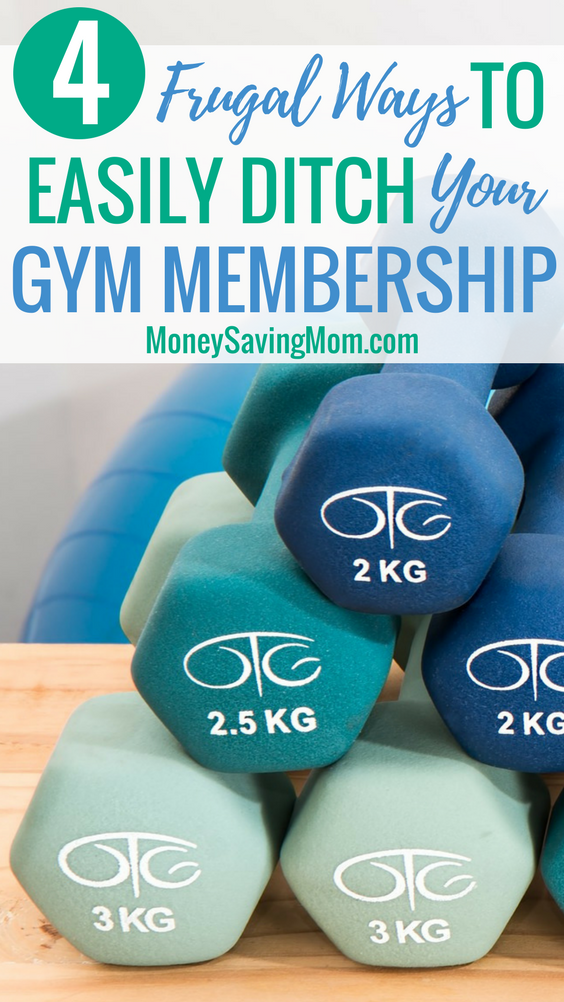
How many of you have a gym membership that you aren’t using regularly? If you’re not using it, that’s just money going down the drain every single month!

And even if you are using it occasionally, it could be really pricey for each visit. For instance, if you’re paying $40 per month for your membership and you only go once a month, that’s $10 per visit!

What if you cancelled your gym membership and committed to try other much more alternative options? Here are some ideas that have worked for me:

Inexpensive Gym Alternatives

1. Buy Some Used Exercise Equipment

We have gotten great deals on workout equipment on Craigslist. If you wait until midyear — when everyone has long since forgotten their New Year’s resolutions — you may be able to get a fantastic deal on an almost-new treadmill or elliptical that someone just wants to get out of their house.

Garage sales are also great places to check for workout equipment. Know what you’re looking for, have patience, and you’re bound to find a deal.

2. Watch YouTube Workout Videos

YouTube is a treasure trove of free workout videos. I personally haven’t used a whole lot of them, but one I am very familiar with is Clare from Peak313.com. She has all sorts of fantastic workout videos, workout routines, and great fitness ideas on her blog — all for FREE!

If you have YouTube workout channels you recommend, would you post the link in the comments for us? Thanks!

3. Check Out Some Workout DVDs

You can find dozens — or even hundreds — of workout videos at your local library. I love Jillian Michael’s DVDs — especially her 30-Day Shred. If you are wanting something a little more low impact, try Leslie Sansone.

If you find a DVD you especially like, it’s probably worth buying it instead of constantly renewing it at the library. :) But I love how you can “try before you buy” via the library.

4. Get Outside & Get Your Heart Pumping

Getting outside and exercising — whether running, jumping rope, chasing your kiddos around playing tag, or taking your baby out in the stroller for a brisk walk — is one of the best ways to exercise. Not only do you not have to mess with purchasing exercise equipment or DVDs, but you get fresh air and sunshine at the same time!

More Fitness on a Budget Ideas:

Family Fitness for Less

3 Inexpensive Ways to Make Exercise Fun for Your Children

7 Ways to Save Money and Stay Motivated While Getting Fit

6 Tips for Losing Weight on a Budget

Three Ways to Stay Consistent

Now, it’s great to have these gym alternatives. But you actually have to follow through with them to make them worth anything! So here are three suggestions I have for staying consistent with exercising:

Have a Specific Plan

Make a plan and write it down. It could be as simple as saying you’re going to take 3 15-minute walks this week. Or that you’re going to complete 4 days of the Couch to 5K program.

And don’t just plan what you’re going to do. Plan when and how you’re going to do it as well. Will you take your kids on a bike ride after school? Or will you hop on the treadmill first thing in the morning?

Knowing what you’re planning to do and how you’re planning to do it will be a huge step in the direction of success.

Find an Accountability Partner

If you’re struggling to stick with your exercise plan, I highly recommend getting an accountability partner. Find someone to run with every morning or to come over and do a workout DVD with you three times per week.

Or, just ask a friend if she’ll be willing to keep you accountable every day to following through with exercising. This means that you’ll text her, call her, or email her to let her know what you did. It’s amazing how motivating accountability can be!

Track Your Progress

It’s very encouraging to keep track of your exercise each week — and to see the progress you are making over time. You can use something like Nike+ or log your exercise on a site like SparkPeople. If you’re more of a pen and paper person, you can use one of these free Fitness Planning Printables.

What are your best tips and ideas for staying fit on a budget? I’d love to hear!

Every Monday in 2013, I’ll be sharing a different way you can save $100 this year. If you do all of these things, you’ll be able to save over $5,000 this year alone! Many of these things will likely be things you’re already doing, but hopefully all of you will pick up at least a few new ideas or some inspiration from this series.

A very simple way to cut your bill is to get comfortable and experienced with asking for a discount. My philosophy is that you never want to short-change someone, but it never hurts to politely ask. The worst they can say is “no”. :)

Here are three ways you can often get a discount just for asking:

1. Ask for a Discount If You Buy In Bulk

If you buy a lot of a particular item, you can often get a discount if you buy in bulk. If you’re going to be using a lot of something over the next four months and you can freeze or store it for an extended time period, see what kind of discount you can get if you buy enough to last you for three to six months.

For instance, if you go through a lot of organic butter, ask the health food store you typically purchase them from if they could give you a discount if you purchased a case of butter. If they say “yes”, buy the case and store it in the freezer to use as needed.

My dad did this when we were building our house when I was growing up. He went to the local lumber stores and told them he was going to be buying a lot of supplies for building our house and what kind of discount could they give him if would buy all of the items from their store. If I’m remembering correctly, one store almost immediately offered him 15% off everything he purchased from them over the next six months. That simple step of asking saved us thousands of dollars!

2. Ask for a Discount on Almost-Expired Groceries

Many stores are happy to give you a discount on almost-expiring groceries. All you have to do is ask.

One of my friends discovered that her local grocery store will give her $1-2 off each gallon of milk if it’s within 3-5 days of its expiration date. So when she shops, she looks at all the expiration dates, finds some milk that’s going to expire within 3-5 days, and asks them to mark it down. (By the way, you can freeze almost-expired milk to use in baking.)

One time, I found some bananas that were past their prime at Aldi. I went and asked if they’d give me a discount on them. They did better than that; they said I could have them for free!

3. Ask for a Discount on Memberships and Monthly Bills

If you have a membership to a local gym or other club and it’s something that you are regularly using (if you’re not regularly using it, cancel it today, okay? There’s no use in paying for something you’re not using!), ask them if they have an discount opportunities. If you volunteer once a month or help with a certain project, you might be able to get a sizable discount.

When it comes to your monthly bills, always call and try to re-negotiate fixed rate bills at least once per year. Things like internet and phone packages are often negotiable — and we’ve saved hundreds of dollars over the years by asking annually if they have a better rate they can give us.

So take the time to make that simple phone call. Schedule it on your calendar or just go do it right now. It could result in savings of $100+ per year — just for taking the time to ask!

Have you asked for a discount on something before? If so, tell us about your experience(s).

photo credit

At the beginning of every week in 2013, I’ll be sharing a different way you can save $100 this year. If you do all of these things, you’ll be able to save over $5,000 this year alone! Many of these things will likely be things you’re already doing, but hopefully all of you will pick up at least a few new ideas or some inspiration from this series.

One of the ways my husband and I have saved a lot of money over the years is by having at-home movie nights instead of going to see a movie at the theater. On the rare occasions when we do go see a movie, I always choke at the prices they charge.

$8+ per ticket? That adds up quickly!

We love a good movie as much as the next person, though, so we’ve found creative ways to enjoy the occasional movie on the cheap. Here are some of those ideas:

The Library

When Jesse was in law school, we lived in Topeka, KS, home to one of the best libraries in the U.S. (yes, I’m a little biased and oh how I miss that library!). Not only did we check out dozens of books each month, we also frequented the DVD section for our at-home movie dates. You can’t beat FREE DVD rentals!

Not all libraries offer free DVD rentals, but if your library does, take advantage of it! Our kids especially love checking out old TV series to watch during movie time each day.

Redbox

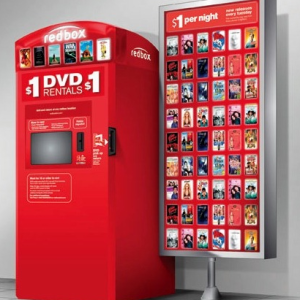
Sometime near the end of law school, Redbox came to town and we switched to getting most of our movies from the Redbox kiosks. Back then, they gave away free movie codes like they were going out of style so whenever we wanted to get a free movie, we’d just check Inside Redbox for a valid code.

Now, the codes are a little less frequent, but they still release them on occasion. Coupon Dad keeps a running list of free Redbox rental codes and I also post any that I find as they are valid. (There’s a free Redbox code available through May 8, 2013).

You can use one free code per card, so if you have multiple cards, you can use the free codes more than once. If you have a texting plan, you can text SIGNUP to 727272 and you’ll get a free rental code the first Monday of every month, plus Redbox coupons and occasional free rental codes throughout the month.

Amazon Instant Video Rental

Thanks to Swagbucks, Amazon is becoming more and more our go-to place for renting movies. The Amazon Instant Video library contains thousands upon thousands of movies, TV shows, and more.

They occasionally release free Instant Streaming credits that we use to download movies and they also often have $0.99 rental specials. The thing I love best about the $0.99 rental offers is that you have 30 days to start viewing them. So I can purchase one and save it for a movie night later in the month. Once you start viewing the video, though, it’s only available in your account for 48 hours.

I use a few of the Amazon gift cards I earn through Swagbucks each month to pay for some Instant Video library purchases from Amazon. We’ve been very happy with Amazon video rentals and we love that we don’t have to mess with going out and getting a video or the possibility that they might be all rented. In addition, if we’ve had any connectivity issues with a movie playing, Amazon has always refunded our money all on their own — even when the connectivity issues weren’t anything major.

There are also other options like NetFlix, Hulu, and watching shows online, but the library, Redbox, and Amazon Instant Video are our top three favorites.

How Much Can You Save?

If you go to a theater once a month and spend and average of $20 (two movie tickets + popcorn), you’ll save around $240 per year by having at-home movie nights. That’s fairly significant!

Plus, you don’t have to mess with finding a sitter and you can make your own snacks — which are much better than most of those icky movie theater options (can you tell I’m not a soda pop and candy bar girl?!).

Do you like at-home movie dates? What are your favorite alternatives to paying for movie tickets?

photo from Big Stock

At the beginning of every week in 2013, I’ll be sharing a different way you can save $100 this year. If you do all of these things, you’ll be able to save over $5,000 this year alone! Many of these things will likely be things you’re already doing, but hopefully all of you will pick up at least a few new ideas or some inspiration from this series.

I have saved a tremendous amount of money over the years by using just about every nook and cranny of my freezer space. I use my freezer to store extras of great marked-down deals I find at the grocery store. I use my freezer to freeze almost-expiring groceries (such as milk) so that I’m able to save it to use later. And, as you all well know, I use my freezer to bake and cook food to have on hand for busy days.

There’s no telling how much money I save thanks to my freezer, but it is well, well over $100 each year. For those of you who want to maximize the mileage of your freezer, here are some suggestions to get you started:

1. When In Doubt, Don’t Throw It Out

If you have almost-expiring milk or bread, instead of dumping or tossing it, freeze it. You can use the milk in pancakes or waffles and you can save the bread and when you have a bag of it, make homemade croutons.

Save the bits of meat and veggies and stick them in the freezer to make soup or homemade vegetable broth in the crockpot.

2. Check Your Freezer When Planning Your Menu

It’s important that you don’t just freeze stuff, but that you also regularly use the stuff in your freezer. Otherwise, it’s kind of pointless to mess with freezing things!

I consult my freezer when planning my menu as there are often things in there that I’ve forgotten I had. You can use the ingredient search feature on AllRecipes.com to help you find menu inspiration for what you already have on hand.

Brown Bag Burritos

3. Take An Hour Each Week to Prep Food For Your Freezer

Having food at-the-ready in my freezer has been such a huge help — and it’s saved us countless trips through the drive-thru lane, too. It’s not hard to make eating at home a priority when you already have food prepped in the freezer

If this idea sounds appealing but you can’t imagine finding a few hours in your schedule to actually pull off freezer cooking, consider just devoting 30 minutes to an hour on the weekends to baking and cooking ahead. Every little bit helps. (See some of my one-hour freezer cooking sessions here.)

You can also double meals you’re already making and serve one for dinner and stick the other in the freezer. It doesn’t take much more time now and will save you a lot of time later — plus, you won’t have to do dishes!

Do I Need to Get a Deep Freeze In Order to Save Money?

A deep freeze is wonderful, but I don’t recommend investing in one until you are absolutely sure you will use it. Use every single inch of your over-the-fridge first before looking to invest in a deep freeze.

And by the way, you can fit a lot into your over-the-fridge freezer. Here’s picture proof. Also, if you freeze things flat in freezer bags, you can turn them sideways and store them like file folders to save space

Does the Cost of Running a Freezer Outweigh the Savings?

Trent from The Simple Dollar did extensive analysis and he concluded that it costs about $11 per month to run a deep freeze. So in order to actually save money with a deep freeze and make it worth it, be sure you’re saving at least $25 per month by running your deep freeze. If it’s primarily empty, move what’s in it to your over-the-fridge freezer and unplug it!

Simple Things You Can Prep Ahead and Stick in the Freezer

Bananas

We peel, chop, and freeze bananas that are too ripe to use in smoothies. You can also peel them and freeze them whole to use in banana bread or muffins.

Frozen Carrots

Shredded Carrots

If you make carrot muffins on a regular basis, it’s much more efficient to shred a big batch of shredded carrots all at once. Just divide into one-cup baggies and store in a freezer bag to use as needed.

Chicken

Cooking up chicken and then chopping and freezing it can save you a lot of time in meal preparation later. I like to bake my chicken breasts, as they seem to be a lot more moist that way. You can see how I do it here.

You can use the chopped chicken in homemade pizza, chicken casseroles, to sprinkle on salads, to throw into soups, or to just eat plain–as my children love to do!

Ground Beef

Having pre-browned ground beef in the freezer to stick in soups, on pizza, or put in casseroles is a big time-saver. Or, you can do what I often do and go ahead and just add onions, beans, and taco seasoning to the meat to make taco meat. You can always use the taco meat in soups or chili, if need be.

Baking Mixes

Do you make pancakes, waffles, or muffins on a regular basis? Save yourself some of the prep time by mixing up a quadruple batch of the dry ingredients and then portioning them into freezer bags.

Freezer-Friendly Whole Wheat Chocolate Chip Cookies

Cookie Dough

Most cookie doughs can be made ahead and then frozen for later use. You can rolls the dough into balls to freeze, freeze it in logs, or freeze the dough in a tub and scoop it out to use. The only issue is that you might want to hide it at the bottom of the freezer–especially if you actually want to be able to make any Chocolate Chip Cookies with the dough! :)

Recommended Freezer Cooking Links:

Crockpot Freezer Cooking Recipes

9 Tips to Simplify Freezer Cooking

A Beginner’s Guide to Freezer Cooking

Freezer Cooking in an Hour Recipes & Pictures

4 Weeks to Fill Your Freezer

Some of My Favorite Freezer Cooking Recipes

Do you have a deep freeze? How do you save money by using your freezer?

photo credit

At the beginning of every week in 2013, I’ll be sharing a different way you can save $100 this year. If you do all of these things, you’ll be able to save over $5,000 this year alone! Many of these things will likely be things you’re already doing, but hopefully all of you will pick up at least a few new ideas or some inspiration from this series.

We talked about eliminating disposable products earlier in this series, but I wanted talk more extensively about cloth diapering in a stand-alone post. Why? Because you can fairly easily save $100+ per year just by eliminating disposable diapers completely — or even just partially.

However, making the switch to cloth diapering is a big decision and not one to rush into without some thought and research. It’s a commitment of time and energy and it’s also usually a financial commitment. But it can pay off in fairly big dividends.

Our Cloth-Diapering Story

When Kathrynne was born, Jesse was in law school and our budget was extremely tight. I had wondered how we were going to afford diapers.

Well, we didn’t end up having to worry about it at all because shortly after Kathrynne was born, some good friends of ours called us up out of the blue and generously said they wanted to give us an entire set of Fuzzi Bunz diapers. We were overwhelmed at their kindness and enthusiastically accepted their offer.

We exclusively cloth-diapered Kathrynne and loved it… plus, we saved so much money. In fact, I don’t know how we would have ever afforded to buy disposable diapers since there were many weeks in those days when we struggled to just pay for our food and rent.

When Kaitlynn was born 2 and 1/2 years later, we planned to cloth diaper her as well. However, she was extremely allergic to every cloth diaper and diaper we tried. I was determined to make it work, but after a few months and many, many severe diaper rashes, I finally concluded that she could only use Pampers.

Gratefully, by this time, I had discovered the Drugstore Game and was able to work in Pampers purchases to my overage (that was back in the good old days when overage was a whole lot easier to come by at CVS!).

What Are the Cloth Diapering Options?

There are many, many different cloth diaper options out there. I recommend researching them all so you understand the lingo. For a basic primer, check out these two articles: Having a Baby Without Breaking the Bank: Cloth Diapering and Cloth Diapering 101.

There are many different ways to build your cloth diaper stash other than buying them brand-new yourself:

Ask for Cloth Diapers for Gifts — If you’re a first-time mom and you’re planning to cloth diaper, asking for cloth diapers as gifts for your baby showers might be an option for you.

Buy Used — Check Craigslist, garage sales, eBay, and online diaper forums for used cloth diapers. This might not be appealing to some people, but it is an option.

Make Your Own — If you’re handy with a sewing machine (unlike me!), I’ve heard it’s fairly simple to make your own cloth diapers.

Get Creative — Willing to think outside the box a little? Check out these two articles: How to Cloth Diaper for Practically Free and Start Cloth Diapering at Home for $20 (no sewing required).

How Much Can You Save?

How much you save by cloth-diapering will vary a great deal depending upon how many children you have, what kind of diapers you buy, how much you’d usually pay for disposable diapers (if you read this blog and print coupons, you likely pay a lot less per disposable diaper than many people do!), how much your water and electricity costs, whether you line-dry your diapers or not, and so forth.

However, regardless of your situation, I can fairly safely say that you will save at least $100 per year by using cloth diapers at least half the time. And there’s a good possibility that you’ll save significantly more than that if you cloth diaper exclusively, don’t have high electricity and water costs, and use your diapers for more than one child.

BabyWorks has some interesting statistics and stories on how much you can save by cloth diapering. You can also read some of my readers’ answers to this question. And here’s a breakdown of a number of different diaper costs from Diaper Decisions.

Save Even More By Making Your Own Cloth Wipes

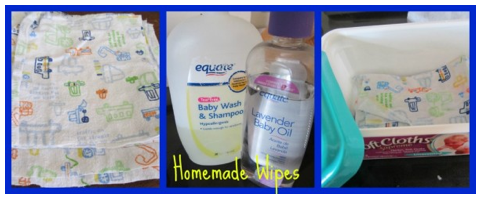
If you’re already cloth-diapering, it’s really simple to use cloth wipes, too. With Kathrynne, I just used baby washcloths and water. However, if you want something a little more handy, you can Make Homemade Reusable Baby Wipes.

Related: My Journey to Cloth Diapers

Have you tried cloth-diapering? If so, what tips and suggestions do you have to add to my post?

photo credit; photo credit; photo credit; photo credit

At the beginning of every week in 2013, I’ll be sharing a different way you can save $100 this year. If you do all of these things, you’ll be able to save over $5,000 this year alone! Many of these things will likely be things you’re already doing, but hopefully all of you will pick up at least a few new ideas or some inspiration from this series.

While this is one of those often-encouraged frugal tips, this series wouldn’t be complete without it. Because, truthfully, you can save a LOT by cutting your own hair at home… or having a family member do it for you.

My Own Hair-Cutting Adventures

For years, I didn’t go to a hair salon — not even an inexpensive one. I couldn’t afford to get it cut anywhere for some of that time and for the rest of the time, I just chose not to pay to get it cut because I wanted to save my money for other things.

My mom would trim my hair for length and then I’d cut layers in it. Did my hair look amazing? No. But it was decent and I had fun learning how to do layers and just play around with it.

Yes, I messed it up sometimes, but it was sort of an adventure. And I sure saved a lot of money by cutting my own hair! :)

Nowadays, I do go to a salon to get my hair done. It’s a splurge we budget for and I don’t feel one bit guilty about it. But I know if our budget and financial situation were ever to change and we needed to tighten things up, I could definitely go back to home hair cutting again.

If you are struggling financially, I’d heartily encourage you to consider cutting the trips to the salon until you get in a better financial position. If you don’t want to completely give up your professional hair cut, at least try to go as low as possible between each visit. Or, look for less expensive options (see below).

Practice Makes Perfect — Or Almost!

If you’re scared of the damage you might be able to do with scissors, instead of trying to give yourself a whole new ‘do, start small. Do simple trims of your boys’ hair (see a tutorial for trimming boys’ hair with clippers here) and try trimming your bangs or a small child’s hair.

Kikka says:

To get started you can watch free how-to videos on YouTube.com, look for a sale at your local beauty supply store (like Sally’s) to purchase what you need, do your research, and then give it a try! Just remember that practice makes perfect, or close to it. Also, the good thing about hair is that it does grow back! :) -Kikka

Creative Ways to Get Your Hair Done Free or Inexpensively

I loved this tip in ALL YOU magazine:

“I answer Craigslist ads looking for hair models to be used for salon interviews or for people who are building hours toward their certification. I no longer pay for hair cuts, straightening, hair color, or even highlights, and I always have nice results.” -All You magazine (April 27, 2012), page 117

Rhonda says:

Our children are grown now, but when our son was little, my husband cut his hair. As they got older, we all went to a cosmetology school where students cut hair at a greatly reduced price. It took longer, but the work was always inspected by the supervisor so you wouldn’t have uneven lengths, etc.

When my hair began getting gray in my 30′s, a friend showed me how to color it myself. I have been doing that every month since then, and have saved thousands of dollars I’m sure, compared to having a stylist color it. I buy a brand I can get at Dollar General, and once a month a newspaper coupon insert will have a $1 or $2 off coupon for it. So I average $3-$4 a month for hair color!

Another idea for haircuts is to check ad circulars that come in the mail. We usually have one for our local franchise hair salon for $6-$9 a haircut. Even with a tip, that’s less than $10 for a quick haircut which I get every 8 weeks or so. My husband has an electric hair trimmer that I use to shave the back of his neck, and he has bought a Flowbee hair system that he uses to cut his own hair. After 10 haircuts, it’s paid for itself.

If you don’t feel comfortable doing your own hair care, then perhaps you have a friend who cuts hair and will barter another service from you for that. Look around — there are many alternatives to high-priced hair care out there! -Rhonda

For tips on At-Home Hair Coloring, check out this post.

How Much Can You Save?

Well, that depends upon a lot of factors… like how many people you have in your family, how often you usually get your hair cut, and so on. But I can almost guarantee you that you’ll save well over $100 in a year — likely much more!

For instance, Kikka says: “We have found that if I cut my husband’s hair and he colors my hair, we are saving a minimum of $840 a year.”

Do you cut your own hair? If so, approximately how much do you save per year?

photo credit; photo credit; photo credit