

Guest Post by Katie Kimball from Kitchen Stewardship
When you check your receipts, I can almost guarantee that animal products make up the category that requires the largest funding from your food budget. Meat, milk and cheese are staples in most families’ meals, yet coupons are few and far between, and even great sales will rarely net you a pound of beef for mere pennies like you can accomplish on the inside aisles and pharmacy section.
Families with young children in particular need to include protein in their diets, and many meals feel incomplete without meat or cheese involved. How to cut the budget without lowering your family’s health?
1. Use homemade meat stocks.
Nothing is more frugal than making something out of nothing. I can turn virtual garbage into a pot of steaming, nutrient-dense, immunity-boosting homemade chicken stock for about a dollar.
I always buy chicken with bones, and those bones go in the stock pot with a few carrots, celery stalks and onions. (That’s where the dollar comes in, plus stove energy.) After simmering for 4-24 hours, I’ve got gorgeously rich chicken stock that can not only save me over $30 a batch versus buying cans of chicken broth, but it also serves to stretch the protein in meat.
Eating homemade chicken stock with just a little bit of meat allows the body to better assimilate the protein and vitamins in the meat, which means I can get away with using less and not feel like I’m short-changing my family’s health.
2. Cut the meat in half and pair with beans.
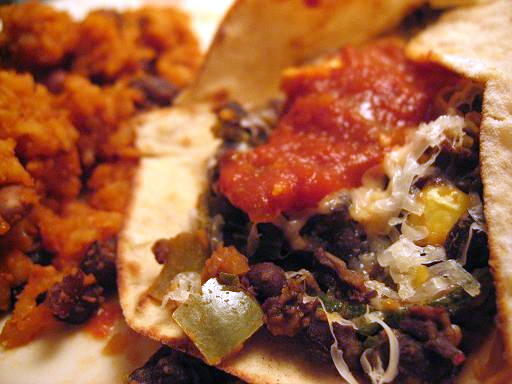
Although the protein in beans is not used as easily in the body as animal proteins, as little as 2% meat in a meal helps the body assimilate the vegetable protein in the beans completely. I always use half of the meat called for in chili and bean soups, often freezing the already-cooked other half for a quick spaghetti meal.
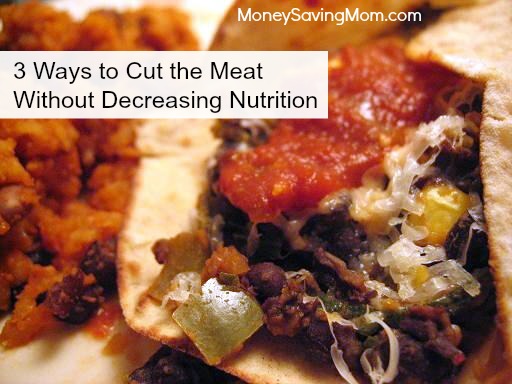
I’ve also learned to use a 1:1 ratio of meat to lentils when we have tacos, and once it’s all seasoned and wrapped up, no one knows I’ve fiddled with anything (unless they look closely, but you can’t taste them at all).
3. Try a meatless meal with legumes instead.
In spite of the fact that beans aren’t quite as quality protein as meat, they’re still a very good and nutritious source of protein, iron and fiber. Particularly if you start with bulk dry beans, they’re incredibly frugal.
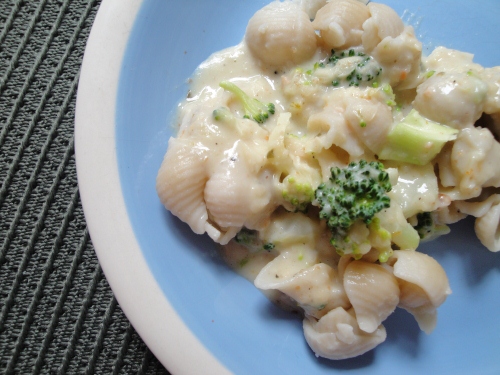
I make it a point to include a bean-based meatless meal at least once a week in my meal planning, ranging from soups to veggie bean burritos to black bean burgers and even a pasta white sauce that uses blended beans as a base. That one is great for the bean haters of the world who can’t stand the texture of beans, because it tastes like a lovely cheesy Alfredo (see below).
Download a free sneak preview of my ebook which includes a recipe for the above-pictured Pasta With White Bean Sauce.
My eBook, The Everything Beans Book, includes 30 recipes to help you easily incorporate the goodness of beans in your weekly menus, plus 20 pages of tips so you can effortlessly cook with dry beans. You’ll trim your budget and maybe even your waist at the same time. Enter to win a free copy of my ebook for the next 48 hours here.
Katie Kimball is a mom of two who spends a ton of time in the kitchen making real food with whole ingredients and then blogs about her successes and failures at Kitchen Stewardship.













 Find more