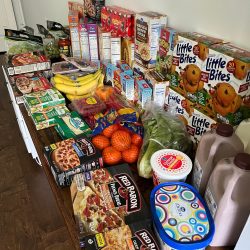
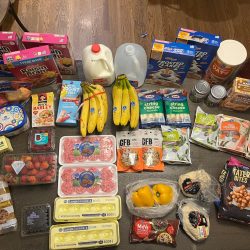
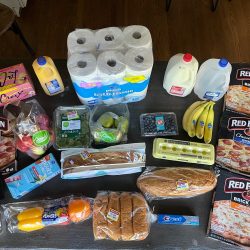
Guest post from Tammy of Skinny Mom’s Kitchen
I was inspired to write this article after reading Crystal’s guest post 8 Tips for Feeding Your Family Whole Foods on a Budget over at Heavenly Homemakers.
Over a year ago, I made the commitment to start feeding my family of four healthier minimally processed foods. This decision was based on my increased food and nutrition knowledge as well as the desire to lose weight.
As I expected, I began to lose weight–40 pounds to be exact! However, the unexpected surprise was the decrease in my grocery bill.
Prior to adopting a healthier whole foods lifestyle our grocery budget was on average $800-$900 a month–and sometimes more. Additionally, we would spend another $200 a month on take-out.
Today, since increasing the amount of whole foods and decreasing prepackaged process foods we buy, we are spending $300-$400 in groceries and $50 in take-out a month. That is more than a 50% savings!
Not only are we eating better but we are saving money too! Who knew?
I also want to point out that I never use coupons. I tried a couple times but failed miserably. My grocery savings has been solely based on cooking more wholesome nutrition foods at home. Of course, I do purchase some processed foods, but for the most part I try to prepare most of our food from scratch.
Before I go over my tips I want to quickly demystify the concept of whole foods. According to Wikipedia, “whole foods are foods that are unprocessed and unrefined or processed and refined as little as possible”.
A lot of times, because we think too much into it, we become overwhelmed trying to visualize how to move towards this lifestyle. However, adopting a healthier whole foods diet can be as simple as baking cookies instead of buying prepackaged, making homemade pizza instead of ordering out, or eating brown rice instead of instant white.
It is likely that you may already be moving towards a whole food diet without even realizing it. Of course there is more to it, but even the simplest changes can have increased health and money-saving benefits.
In addition to the eight tips that Crystal offered I would like to give a few more that I have used to make whole foods affordable:
Bulk up your ground beef with rice, bulgur, and/or beans.
I prefer to purchase grass-fed beef but it is expensive compared to its counterpart. We are talking $5 or more a pound! So to stretch it a little further, I always add in grains or beans.
For example, when I make taco meat, I use one pound of meat, one cup of cooked bulgur, and two cups of cooked black beans. This little trick typically provides our family of four with two full taco dinners.
Prepare your own baked goods.
Do you know what you can bake with a 5-pound bag of flour (white, wheat, or flour of choice)? Well a 5-pound bag, costs around $3-$5, and will yield 20 cups of flour. Therefore, using basic recipes, with 20 cups of flour I can make either 6-7 loaves of bread, 10 quick breads, 10 pizza doughs, 120 muffins, 144 chocolate chip cookies, 150 pancakes, or a little of everything.
Of course you will also need sugar, butter, oil, and other basic ingredients. However, even with all the ingredients the savings compared to buying everything prepackage is significant.
For example, a prepackaged loaf of whole grain bread can easily cost over $3 adding up to $18-$21 just in bread. Greater than the savings is the nutritional value of the food. When you take control of preparing the foods your family eats, you are controlling the ingredients and ultimately the quality of the food.
Use small kitchen appliances to make cooking from scratch easier.
Many people think that it is impossible to cook from scratch. I am here to tell you that not only is it possible but much easier than you think, especially with a few nifty small appliances. I use my slow cooker, rice cooker, and bread machine weekly to prepare a number of recipes from scratch.
For example, beans, shredded chicken, sauces, large batches of brown rice, honey wheat bread, and pizza dough are all foods I am able to make regularly because of these small appliances.
Keep a grocery cost spreadsheet.
Admittedly, I did not do this at first. When I finally did implement this approach I saw a huge difference in my grocery savings. As with everything, just knowing what you spend is half the battle. Basically, a grocery cost spreadsheet lists out the foods you purchase along with the price. This spreadsheet is most effective when referred to as you put your grocery list together. That way you can figure out almost exactly what you are going to spend beforehand.
To start my spreadsheet, I used old grocery receipts to locate prices of the items I purchase regularly. Then I would continue to increase the list by jotting down prices as I grocery shopped. Before I knew it I had put together a spreadsheet filled with the prices of many different grocery items.
Of course prices change and you may want to try new things but it will give you a starting point to work with before you shop. There has been many times, after referring to my spreadsheet that I needed to make changes to my menu plan because I was going to be over budget.
Combine menu planning with make-ahead meals and freezer cooking.
In my experience, this has been the cornerstone to affording whole foods. All three of these concepts alone are effective in reducing stress, saving money, and eating healthier. However, when intentionally used together these three tools will provide even greater benefits. Think of it is this way.
Menu planning provides the road map for what you will eat and the ingredients to purchase. Make ahead meals and freezer cooking are the vehicles and fuel to help you get to your destination (affording a whole foods diet). It is much easier to eat healthy whole foods when they are already prepared and ready to eat. Not to mention you will also save money by reducing food waste because every food and ingredient you purchase will have an intended purpose.
The last bit of advice I can give is to start small, slowly make changes, and don’t put pressure on yourself. You are the only one that knows what is best for your family and budget.
How do you eat whole foods on a budget?
Tammy, the author of Skinny Mom’s Kitchen, is dedicated to helping busy moms eat healthier and lose weight by teaching them how to combine calorie awareness with menu planning, freezer cooking, and other make ahead cooking strategies. She loves showing others how easy, and affordable, it is to serve their family healthy nutritious meals everyday.
photo credit