Q&A Tuesday

I have learned so much from you about goal-setting. Thank you so much for all your wise and helpful advice. I set goals for 2013 and I’m very excited about them. But I’m finding myself getting overly obsessive about reaching my goals, and I feel terrible if, at the end of the day, I haven’t been able to cross off all my little bite-sized pieces of my goals at the end of the day. I almost feel like I want to give up my goals so I stop being so obsessed. Please help me find a better balance! Thank you! -Laura

Laura, I really appreciate you asking this question. While I’m a big fan of goal-setting, I think it’s imperative that we not go overboard with them so that they control our life — ultimately sucking the joy of living out of life itself.

Goals Are Meant To Be a Blessing, Not a Burden

The reason you set goals is to enhance your life, not to exhaust and over-burden you. If goals become additional stress in your life, they need to be tweaked, rewritten, or dropped altogether.

It’s good to challenge ourselves. It’s good to push ourselves outside our comfort zone. It’s good to aim high and work hard.

But there always need to be room to breathe in life. Charging ahead at breakneck speed just for the sake of speed and productivity is no way to live.

With this in mind, here are five ideas for you to consider trying:

1. Create Weekly Goals Versus Daily Goals

I always encourage people to break their goals down into bite-sized pieces. I encourage this because viewing a big goal in one lump sum can be overwhelming.

However, if you break a goal down so small that you feel obligated to always be working on it every single day — even when the inevitable interruptions come up — you can end up feeling like you’ve failed or fallen way behind when you don’t hit your daily goals every single day.

Perhaps a better option for you would be to choose a few small, bite-sized goals to tackle each week versus each day. Write them down and post them on your refrigerator or somewhere else that you’ll see regularly and then fit them in as you’re able throughout the week.

This way, you are still chipping away at your goals, but you’re doing so in a way that’s more flexible and adaptable to your schedule. On days that you’re really busy, you can just focus on the basics. On days that you have some extra time, you can knock out one or two of the bite-sized pieces.

If you don’t get to all the short list of goals that week, just bump the leftovers to the following week.

2. Make Your Goals Your First Priority Of the Day

Since one of my words for 2013 is Discipline, I’ve been making a very concerted effort to do the hardest things first. This means, I’m starting the day by tackling some of my least-favorite but most important things first.

Truthfully, this is making a world of difference for me. I realized that I’ve been wasting a lot of time just stalling… I’d add things to tomorrow’s to-do list or file things to do later instead of just doing it now. There’s a time and place for filing and putting things on tomorrow’s to-do list, but I’ve been challenging myself to stop procrastinating on these things and just face ‘em head on and get them done.

Not only am I getting a lot more done, I’m also finding I have a lot more margin time. Because once you stop stalling and start working, it takes a whole lot less time to do things!

3. Take A Day Off Once a Week

If you go-go-go all week long and never take a break, you’re bound to burn yourself out. Give yourself at least one day “off” each week that you don’t worry about work or goals or to-do lists. This is your day to refuel and refresh.

We have Sundays set aside as our day off at our house. We go to church, come home and have a really simple lunch of some sort, and then have a quiet afternoon either resting, reading, talking, playing a game, or engaging in other relaxing activities.

We don’t blog, worry about business stuff or goals, and I often don’t even turn on my phone or computer all day long. It’s a day we look forward to all week long!

If you can’t take a full day off, at least take half a day every week. I promise that you’ll find you’re more productive when you take time to recharge than if you just keep going and never stop to take a breath.

4. Set Fewer Goals

Experiment with lowering the bar a little when it comes to goal-setting. Maybe what you’re getting hung up on is the fact that you’re trying to accomplish too many goals.

It’s better to have fewer goals and follow through with them than to have a lot of goals and just end up overwhelmed by them. Go through your goal list and try culling it down to the most important goals for 4-6 weeks. Just focus on those and see if that makes a difference in your stress level.

5. Give Yourself Grace

You’re pretty much never going to get everything done that you want to in a day’s time. That’s just life! Focus on what you have accomplished instead of beating yourself up over what you didn’t accomplish.

If you end the day feeling like you accomplished nowhere near what you’d hoped, don’t fret. Just transfer the things you didn’t get done to tomorrow’s to-do list (or decide to skip them altogether), go to bed, get some rest, and wake up to a new day tomorrow!

What advice and suggestions do the rest of you have for Laura? I’d love to hear your input!

photo from Big Stock

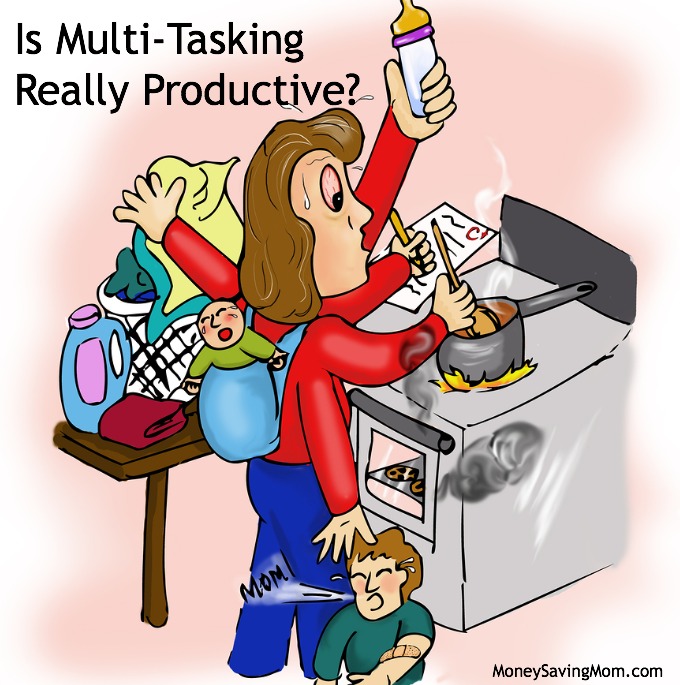
Q&A: Do you think multi-tasking is productive?

by Crystal on January 15, 2013

I’ve been reading your book, 21 Day to a More Disciplined Life, and am loving it! It’s full of great advice for anyone looking to make more of their time. As I’m reading Day 12 I wondered if you had any thoughts about 100% focus vs. multi-tasking.

This chapter focuses on 100% focus, without distractions and I can see how distractions can be death to a goal. On the other hand, as a busy mom, I find that multi-tasking is important and even necessary at times. Do you have any thoughts as to when to multi-task and when to focus? -Rebecca

Great question! I’m a big believer in focused intensity when it comes to comes to many projects.

In fact, I was participating in the BEECH Retreat weekly Thursday night Twitter chat last week when the question came up: “Have you ever sat down to write a blog post & got distracted by social media or email?”

My response? Yes. However, I usually make myself shut down distractions while blogging — otherwise I’ll never get posts written!

If you want to get anything worthwhile done in life, you’ve got to have FOCUS. And I like to take that one step further and make it focused intensity.

What Is Focused Intensity?

Focused Intensity is zeroing in on one specific project and giving it your entire concentration and energy for a determined length of time. I like to set a time limit on it and then challenge myself to see how much I can get done in that timeframe.

For instance, if I’m working on writing a blog post, an article, or a chapter in my next book, I’ll usually shut everything down on my computer, shut my office door, set the timer for 10 or 15 minutes, and work as hard as I can until the timer goes off.

When I work with this kind of focused intensity, I can get a lot done in a short amount of time. Whereas, if I’m all scattered all over the place — trying to write a post while checking and answering emails, keeping up with what’s going on on my Facebook Page, and refreshing my comments page, it will take me a very long time to get any writing done — and I probably won’t do a great job of it.

When Should You Work With Focused Intensity?

Everyone is different, but I’ve found that I cannot write well when there are a dozen distractions going on at once. I also find that I’m not able to think and process ideas and post outlines well if I’m constantly interrupted.

I’ve found it typically takes me three to five times longer to finish a post or writing project when I’m constantly interrupted than it does when I can work with focused intensity. So writing is one area where I always choose times of day when I know I can work with minimal interruptions (during the early morning hours, during afternoon quiet times, or on Saturdays.).

Are There Times When It’s Good to Multi-Task?

There are many, many other things I do that don’t require that same level of focus that writing does. And I’m all about multi-tasking if the end result means greater productivity.

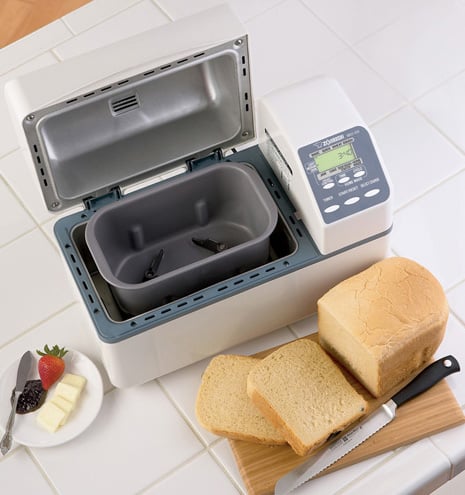
I read while I do my walking warm-up and cool-down on the treadmill. I knit while I’m watching a movie with the family. I scrub my kitchen floor while I talk on the phone. Or, I put bread in the bread machine to mix while I’m chatting with a friend who is over.

There’s no point in just doing one thing, when you can as easily do two things well. I intentionally plan ahead for these opportunities — often even writing them on my daily to-do list. If I know I’m going to be heading to an appointment, I’ll make a note to bring a certain book or writing project, depending upon the appointment. If I know that we’re going to be having a family movie night or I’m having a friend over, I’ll make a note to make sure and get out my knitting or other handwork project.

By planning ahead like this, I’m able to use the time more productively, and in turn, I’m able to chip away at my weekly goal list — all while multi-tasking. So before I know it, projects are getting done without me putting a whole lot of extra effort into them.

That said, make sure when you are multi-tasking that you are actually being more productive. Sometimes, in trying to multi-task, you end up getting less done and just making a mess of multiple things.

What about the rest of you? Do you find that there are certain things you have to focus on without interruption to be productive? What are your favorite ways to multi-task that truly work?

 photo credit

I am a stay-at-home mom and my husband works based on commission. I have been trying to work out a budget rather than living paycheck to paycheck, but am not sure how to budget when his checks can vary up to $700 per check. (He gets paid every other week.)

Some months we have a nice surplus, and other months we borrow from our savings to make sure our checking account stays out of the red. We don’t usually have a problem paying our monthly bills and usually can save a little, but are really hoping to pay off some credit card debt and our car. Any suggestions are appreciated! – Casey

Budgeting on a commission or variable income is very doable. In fact, my husband and I have never had a fixed combined income our entire married lives! Here’s what I’d recommend:

1. Create and Follow a Barebones Budget

In my book, I outline a step-by-step plan for getting on a budget. First, I encourage people to learn self-discipline through setting up a grocery budget. Once you’ve practiced the discipline of creating and sticking with a grocery budget, I encourage you to move on to developing a Barebones Budget.

If you’re already somewhat familiar with budgeting or already have a grocery budget in place, I’d encourage you to jump ahead and create a Barebones Budget. This will include all of your basic living necessities: food, basic utilities, shelter, and transportation. In your case, you’d also want to include your credit card bill(s) every month, too.

Write all of these budget categories down on paper and decide how much you need to set aside every two weeks to adequately cover all of the expenses. If there are any expenses you can lower by cutting your grocery bill, asking for a discount on your utilities, moving to a less expensive housing situation, or selling your car, I’d highly encourage you to do it temporarily in order to free up more money to save and pay off debt.

2. Build Up An Emergency Fund of 3-6 Months’ Expenses

Once you have your Barebones Budget in place, begin following it to a tee. As much as is possible, don’t pay for anything that isn’t a complete necessity right now. It’s a short season and your sacrifices will pay off. Instead, throw every extra penny you can toward building up your emergency fund to three to six months’ of barebone expenses.

Depending upon how often you are dipping into savings would be the determining factor for us as to whether to only set aside three months’ of expenses or to go ahead and set aside six months’ of expenses. This will then give you a cushion going forward on months that you come up short.

3. Pay Off Your Debt

After your emergency fund is full funded, it’s time to focus all of your energies on knocking out your debt as quickly as you possibly can. Continue to live on your Barebones Budget and put everything else that you can scrounge up toward your debt.

Be as aggressive and as creative as possible in attacking your debt and getting rid of it. The sooner it’s gone, the sooner you’ll be able to have some breathing room in your life again!

If you have some hiccups along the way — and you probably will! — don’t be discouraged. Stop and re-fund your emergency fund, if need be, and then get back to getting rid of your debt.

4. Create a Prioritized List of Additional Savings/Spending Goals

Finally, once your debt is gone, make sure you have a fully-funded emergency fund of at least 3-6 months’ expenses, and then create a prioritized list of additional savings and spending goals. Use this list as your guide for months when you have extra: put the extra toward the first thing on your prioritized and slowly start working through it.

If your debt is gone and you have a good emergency fund in place, you’ll have a lot more breathing room and will not only be able to put more into savings, you’ll probably also be able to enjoy some strategic splurging, too!

What advice and tips do the rest of you have for successfully budgeting on a variable income?

photo credit

I am wondering if you have any tips for how to be an effective couponer without it taking over your life! I am about to have my fourth baby and for most of this pregnancy I have totally fallen off the coupon bandwagon because I just can’t seem to keep up the schedule of clipping, organizing, coupon train, printing coupons, planning weekly shopping trips, and so on.

I can’t seem to find the balance between “all” and “nothing”! I’m not opposed, in my mind, to a happy medium, but I can’t seem to figure out how to do that, practically speaking. -Kiersten

Thanks for asking such an excellent questions, Kiersten! Here are some of my thoughts:

1. Give Yourself Grace

There are seasons of life when I can focus more seriously on couponing. There are other seasons when using coupons takes a back burner.

It sounds like you have a lot on your plate right now, so I just want to encourage you not to stress too much over always getting the lowest price on everything. Do the best you can do with the time and energy you have and don’t worry about the deals you’re missing out on. Your health and sanity is worth more than saving a few dollars.

2. Focus on Stocking Up on the Best Deals

If you don’t have a lot of time, focus your dollars on stocking up on the best deals that can be frozen or have a long shelf life. Instead of worrying about getting those 35 different decent deals, pick 2-4 really exceptional deals and buy extras of those. While you might still end up paying full price for things sometimes, by getting 60-75% of your groceries at exceptional deals, you’ll still come out way ahead.

3. Stick With Simple Meals With Inexpensive Ingredients

If the majority of the meals you make are really inexpensive, you’ll save a lot of money–without even using coupons! Make a list of some of your family’s favorite inexpensive meals and use this list as a go-to when you are short on time and energy and just don’t feel like messing with coupons.

4. Consider Price-Matching at Walmart

If you’re finding it exhausting to shop at more than one store, consider price-matching the best deals from your local store at Walmart. This way, you’re still getting great deals, but it’s less time-consuming.

How I Plan Our Weekly Menu and Shopping Trips in Less Than 30 Minutes

1. Print great coupons as they become available throughout the week. I don’t print all the coupons that I post, only those that I know will be a good deal at the stores I regularly frequent.

2. When I’m ready to plan my menu (usually on Saturday or Sunday), I quickly review the printed coupons and divvy them up by store.

3. Then, I glance through my local store’s sale fliers, what coupons I’ve already printed, what I already have on hand, and inspiration from Pinterest and jot down a basic menu plan for the week.

4. While I’m planning the weekly menu, I also make a grocery list at the same time.

5. After I’ve planned the menu and grocery list, I double-check my store’s coupon match-ups to see if there are any deals I’ve missed or coupons I’ve forgotten to print.

6. Then I take the jotted down list of groceries I need to buy, look at my schedule and tentatively plan when and where I’ll do my grocery shopping that week. I don’t always follow this perfectly, but having a rough plan in place that I’ll swing by Walgreens when I’m my way to something else, or that I’ll block out an hour to hit three stores on Tuesday helps me to stay organized and on track during the week.

What advice do the rest of you have for Kiersten?

photo credit

I live in a very large city & there are 3 of the very same grocery stores within a 5-mile radius of where I live. Will it do any good to check deals at each of those grocery stores or will one most likely have the same deals as the one around the corner? -Andrea

Great question, Andrea! I’d strongly suggest checking out all the stores that are within a 5-mile radius of your home, even if they are the same chain. Why? Well, here are three reasons:

1. Different stores have different markdown policies.

I’ve been amazed at the difference of markdown policies at our local Dillon’s stores. One store routinely marks things down at least $0.50 more than the other store. For instance, one store will mark down bagged salads to $1.69 while the other store will mark down the exact same salads to $0.99. By shopping at the store with lower markdowns, I can often save at least a few extra dollars each shopping trip.

2. Some stores are more coupon-friendly than others.

Stores in the same chain can vary widely in their friendliness toward coupons. Usually, if the manager is coupon-friendly, this will trickle down to all the staff. It will save you time and effort to shop at the store that is most accepting toward couponers.

3. Some stores have better stock than others.

If a store doesn’t keep their sale items in stock, it’s rather pointless to shop there regularly. Finding out which store in your area is the best at keeping their shelves stocked–especially when there’s a great deal or loss leader–can save you time and hassle.

Take Time to Investigate–and Then Shop With Confidence!

When you first move to an area (or are first starting to practice strategic shopping), take a few weeks or months to shop at different stores within a close radius of your home to check them out. After a few regular visits to different stores, you’ll probably have a good idea which one(s) are the best to routinely shop at. Once your investigative period is over with, you can streamline your life by doing all of your shopping at the store(s) you found to be the best.

Do you think it’s beneficial to check out all the stores in your area, even if they are the same chain? If so, why? I’d love to hear your thoughts!

photo credit

I’m trying to declutter my home. I have two children, a daughter (5) and a son (1 1/2). My husband and I aren’t sure if we are done having children.

So what to do with all the outgrown baby and kid stuff? I gave away all of my daughter’s girly stuff to friends of ours who had a baby girl. But there’s the crib that my son will soon outgrow, the stroller, baby car seat, bouncers, Bumbo, baby toys, baby clothes (I kept the neutral ones), cloth diapers, and my maternity clothes.

Currently it all sits in my basement in plastic storage bins. But it piles up! I’ve really gotten rid of a lot, donating to a maternity resource center and passing things along. But what I have left still takes up a lot of space.

If you’re not sure whether your family is complete, how do you handle all the outgrown baby, kid, and maternity stuff?

-Jessica

Great question, Jessica! And I think the answer will look different for different people. But here are some of my thoughts:

1. Get Rid of Everything You Don’t Love

If you didn’t use it repeatedly with your last child, there’s a very good chance you won’t be using it much with your next. Instead of letting it hog up storage space, pass it on, sell it, or donate it.

2. Get Rid of Everything That Isn’t In Good Shape

Don’t hang onto clothes or baby items that are worn out, stained, or ripped. Ditch items that are broken or have missing parts–unless you’re absolutely sure you will fix or replace the parts should you need them again. If you’re not 100% sure you’ll go to the effort to fix or repair an item, don’t hang onto it.

Better yet, if you want to hang onto something and it needs repair, go ahead and just fix it before putting it in storage. If you’re not willing to go to effort to fix it now, there’s a good chance you won’t be motivated to fix it when you need it, either.

3. Consider Whether It’s a Necessity

If you don’t have a lot of storage space, only keep the basic necessities. In my Having a Baby Without Breaking the Bank series, I wrote:

First off, we must start by asking ourselves, “What does it really take to raise a baby?” I believe our society has become so materialistic and consumer driven that we hardly know how to even think in basic terms.

Aside from lots of love and nurturing, here are the essentials I believe you truly need:

–Clothes (For starting out, I think you can get by just fine with around six onesies, six sleepers, a few pair of socks, a few hats, and 4-6 blankets.)

–Bed (unless you’re planning to co-sleep)

–Car seat

–Stroller

–Diapers/wipes (either cloth or disposable)

(And if you are unable to nurse–as I know happens on occasion, or if you are adopting, you would also need to add formula to this list.)

And that’s about it, folks. Seriously. There are other things that are nice to have, such as a swing, a sling (or ERGO), a few nicer outfits for baby to wear out of the house, a diaper bag, and so forth. But none of those things are absolute necessities.

4. Calculate How Much It Would Cost to Replace

If you love it and used it repeatedly with your last baby, ask yourself how much it’s worth. If you could easily and inexpensively replace or borrow something, it might not be worth hanging onto it for months or years–especially if you’re not sure you’re going to use it again.

5. Assess Your Storage Space

If you’re really short on storage space, pare down to the basic minimums. It’s just not worth it to keep items you aren’t using if you don’t have anywhere to store them.

6. Create a “Lending Library”

If you’re not using an item, you might as well loan it out to someone who could be using it. That way, you’re not having to store it, it’s not sitting somewhere unused, and it’s saving someone else from having to buy it!

Do you hang onto all your outgrown baby items and maternity clothes?

photo credit

Q&A Tuesday: How do you freeze milk?

by Crystal on January 03, 2012

Any tips on freezing milk in a paper carton? We buy organic milk in a half gallon paper carton. Can I freeze it in that carton or not? I’ve never done it before. Thanks! –Leisha

I freeze milk all the time. And honestly? I’ve never had a problem freezing it in a cardboard container. It will expand some when it freezes, so you might want to drink or use a half cup or so before freezing. But otherwise, just stick the milk in the freezer in the paper carton.

When you’re ready to use it, you can thaw it in the refrigerator overnight. Or, you can stick the carton in a sink full of cold water for 15 or 20 minutes.

I’m often able to find organic milk on clearance that’s close to the expiration date. We use what we can until the expiration date and then I freeze the rest. By buying it on clearance, we’re able to buy higher quality milk without spending a fortune to do so.

I don’t recommended using frozen and then thawed milk for drinking. The consistency changes some and it just isn’t very appealing for drinking–at least our family doesn’t think so. :) However, milk that has been frozen and then thawed works beautifully in pancakes, waffles, french toast, or other baked goods.

Chocolate Chip Pancake Batter

If you typically bake big batches of these items, you can just freeze the milk in the paper or plastic carton, thaw, and use. However, if you only make smaller batches, you’ll want to go ahead and divvy the milk up in one-cup or two-cup portions before freezing so that you can just pull out the exact amount of milk you need. You could use ziptop freezer bags or airtight plastic containers with lids.

Want to stretch your milk even further? Replace a fourth or a half of the milk called for in your pancake, waffle, or baked good recipe with water. You probably won’t even notice a difference!

Do you freeze milk? If so, what’s your favorite way to use it?

Q&A Tuesday: How do you decide your yearly goals?

by Crystal on December 27, 2011

I loved the way you posted your “goals” (what to read, what to make, etc.) last year instead of New Year’s Resolutions and I’ve loved reading how you have checked them off each month. I want to be able to do this for 2012 and was thinking it might be a good topic for you to post a “how to” or tutorial as to how you came up with your list of things to help others “plan” their upcoming year. -Kris

Setting realistic, achievable goals on a yearly basis has been life-changing for me. Not only am I much more productive, I’m also living with much more intention. Here’s how I recommend going about goal-setting:

1. Determine Your Priorities

It’s pretty near impossible to decide what route you need to take if you don’t know what your final destination is supposed to be! Therefore, goal-setting and living an intentional life requires you to first know what your priorities are.

So, before you set down and make out a list of goals for 2012, first spend some time creating a list of five or six priorities in your life. I’ve written more about determining your priorities and share my own current priorities in this post here.

2. Create a List of Focus Areas

Once you have your list of priorities written out, it’s time to get more practical. Take each area of priority and determine 4-5 specific things you want to focus on for that priority item.

For instance, if one of your priorities is improving your financial situation, maybe you decide you want to set a goal to save a specific amount of money, to set up your retirement accounts this year, to read books on improving your financial situation, to go through Financial Peace University, or to start a frugal friends group.

3. Break Your Goals Down Into Bite-Sized Pieces

It’s great to have goals, but it’s hard to actually accomplish them unless you break them down into bite-sized pieces. A big goal can seem overwhelming and daunting as a whole, but when broken down into small pieces, it becomes much more doable.

If one of the save up a specific amount of money, break it down into monthly and then weekly savings goals. Look at your budget and decide where you’re going to come up with the extra money. Will you lower your grocery bill by $10 per week and then put that money toward your savings goal? Will you work an extra few hours and save that money toward your goal?

When you break your goal down to a weekly bite-sized piece, you are better able to know exactly what you need to do to stay on track. If you want to read 24 books next year, you know you’ll need to read two books per month, or half a book each week. That boils down to around a chapter per day, give or take. That’s much more concrete and doable than a big audacious goal of reading 24 books in a year.

4. Set an End Date

I like to set yearly goals, but some goals are too big or too small for a year’s time frame. Consider how much time you realistically think it would take to accomplish your goal and then set a date to have it accomplished.

You can always change the date, if need be, but having a goal finish date gives you momentum and drive. And you just might find yourself picking up speed the closer you get to the finish line!

5. Track Your Progress

Accountability is key to be successful in following through with your goals. My husband and I review our financial goals on a monthly basis and I review my personal goals at least every few weeks. I’ve also found that the public accountability of blogging my goals and process is also amazingly motivating. :)

Plan a monthly accountability meeting with your spouse or accountability partner, write it down on your calendar, and don’t deter from it, no matter how tempted you are to slack off. I promise it will be worth it!

Tomorrow, I’ll post a downloadable goal sheet you can customize and print to create your priorities list, break your goals down, and track your progress. And later this week, I’ll be sharing more of my goals for 2012.

What process do you use for goal-setting? What helps to keep you on track and motivated? I’d love to hear!

Q&A: How do you choose what books you read?

by Crystal on September 21, 2011

Nicole asked on my 10 Weekly Goals Post:

Crystal, how do you decide which books to read next? I love your book choices, and am wondering how you make your selections? Is there a webpage you visit, is it through friends’ recommendations, or do you have a book list you follow? -Nicole

Well, truth be told, there’s no scientific reason behind the books I choose to read and the order I read them. I did make a booklist at the beginning of 2011 with 24 books I planned to read this year. I planned this list from books I already owned and had been wanting to read for some time.

The two books per month I’m supposed to read from this booklist are my first reading priorities each month and I try to not allow myself to read much else until I’ve finished (or almost finished!) these. However, since I often read at least five or six books per month, I specifically only planned two books per month so that I could have room to read quite a few other books throughout the year.

Always Be On the Lookout For Good Book Recommendations

Most of the rest of the books I chose based upon suggestions from friends (I’m constantly asking my local friends, “What are you reading right now?” I get lots of great ideas this way!) and from the blogs I read (Catherine from A Spirited Mind posts many great reviews and I’ve found quite a few excellent books based upon her suggestions.) I also occasionally find books I’m interested in on Pinterest or from an email or comment from a reader. Since I love to read, I’ve learned that just keeping my eyes and ears open for good book recommendations pretty much guarantees I have an endless supply of good book ideas.

Keep a Running List

As soon as I find a book I’m interested in reading, I write it down. And, at the next available opportunity (usually that same day), I’ll check out the reviews on Amazon. While these are not always unbiased (some authors get a bunch of their friends to write glowing book reviews for them), you can get a good sense in skimming the reviews as to whether the book is worth reading.

If I’m still interested after reading the reviews and description on Amazon, I check to see if our library has the book. Most of the time, it does, so I go ahead and place a hold on it. Since I recently spent $25 to get a Gold Card membership, I can request unlimited holds–something that comes in very handy at the rate we check out books at our house.

The thing I love about checking out books from the library is that I don’t feel any sort of obligation to have to read the book. If I get it and start skimming through it and realize it’s not what I thought it was, I can just return it to the library, without any guilt. I’d rather spend my time reading high-quality books that I’m going to enjoy and benefit from, instead of feeling obligated to read a mediocre book because I paid for it.

In the cases where our library doesn’t have the book, I’ll check PaperBackSwap to see if it’s available there. If not, and it’s a book I really want, I add it to my Amazon wishlist and then wait for when we have some extra credit from Swagbucks to use toward buying the book.

As books come in from PaperbackSwap, from Amazon or Barnes & Noble, someone sends me a book (companies often send me books in hopes I’ll read and recommend them on my blog), I keep them on a bookshelf in our schoolroom that is just for books I’ve yet to read. As I finish one book, I choose another from this bookshelf to read. When library books I’ve put on hold come in, I make those higher priority since I have to return them in a timely manner (it’s not saving money to check books out from the library if you end up having to pay late fines repeatedly!).

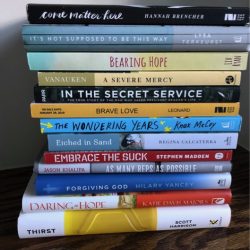
(Pages of notes I took from Organized Simplicity)

The 3-Books-At-A-Time Rule

I try to always have three books going: one that is an easy, highly-interesting read; one that is somewhat business related (about marketing, blogging, writing, growing a business, being a leader, personal finance, etc.); and one that is encouraging and building me up spiritually. I don’t always follow this formula exactly, but that’s what I aim for when choosing what book I’ll read next.

Another thing I’ve implemented this year is to be consistent in finishing books before starting new ones. I used to be the queen of starting books, but was really, really awful about actually finishing a book. I found this to be quite unproductive, since it starts becoming overwhelming and crazy to try to process what you’re reading if you’re reading snippets of 20 different books.

So in 2011, I’ve made it a point to only have three books going at once–in addition to my current devotional book and my current “running” book (I have a spiritually-deep book by the treadmill that I read a few pages out of while I’m doing my pre-run walking warm-up. I’ve been reading really thought-provoking books during this time as I’ve found it then gives me a lot to think about and mull over while running.) Setting a specific boundary on my book-reading has helped me to actually finish many, many more books than I usually do–and I feel like I’ve gleaned a lot more by concentrating and focusing on reading fewer books at a time.

For those who are interested, you can see the books I’ve read so far in 2011 here. You can also read reviews of many of them here. (I’m behind on writing book reviews, but I am hoping to get caught up sometime in the next week!)

photo credit

I am decluttering our house like a crazy woman because I believe, like you, that less is more. But I still struggle in the kitchen. I see your kitchen photo when you do your freezer cooking and I can’t believe you have only crock pot on your counter. How do you do it? -Nami

Growing up, my mom never liked to have anything on the kitchen countertops, so I’m pretty sure that’s where my love of clean countertops originated. I try to have mine completely clean and cleared off as much as possible. Sometimes, when we’re in the middle of homeschooling around the kitchen table, things will pile up. That’s life–and I’m okay with it.

However, I try to make sure the countertops are clutter-free every night before dinner and then again before bed. At least in our home, I’ve found that if I purposefully clean everything off the countertops and put it away at least twice per day, they never pile up beyond control.

To give you a little peek into my kitchen, here’s how I try to have it look every afternoon and evening (try being the key word there, believe me, it doesn’t always happen!)

And here’s a view from the other direction (don’t ask me why the lighting is so bad; I still have a hundred thousand things to learn about photography–as is very apparent from all the pictures I post!):

I keep our weekly menu on the side of the refrigerator. Having it there has been working so well for us to stay organized and to remind me of what I had planned to fix! I just print off the menu I format for my blog post each week and then cross things off as we make the meals:

I don’t keep a lot of cookbooks, since many of the recipes I make are online (thank you, Pinterest!). However, I do have a few favorites that stay on the shelf. And then I have a few others that are kept in one of the cupboards.

This house is the first we’ve lived in that has an actual pantry! It’s taken some shuffling and re-shuffling for me to determine what works best to keep in the pantry. Here’s how it looks now:

Our Busy Bags are on the top shelf in separate tubs. Jesse’s protein stuff and vitamins are on the second shelf. The third shelf holds the crock pot and lunch bags that we use when we take a field trip or have a picnic. The fourth shelf has my bread machine and a canister of oatmeal on it. The floor has the juicer, food processor, and some bulk items.

Since we do much of our homeschooling around the kitchen table, I wanted to have some place handy to keep all our current school books and notebooks, but I didn’t want it to take over our kitchen/dining room. I finally decided upon these storage tubs:

They don’t match our kitchen, but I got them free and they are fun and functional. We store the rest of our homeschooling items on the shelves in our school room/exercise room down in the basement and I just bring up what we need each week. I’ll probably need to revisit and revamp this system as our children grow and our schoolwork/books multiply, but this is working well for us right now.

We do keep a tea kettle out on the stove at all times since I use it often. But other than that (and the knife set you see in another picture above), all other appliances are stowed away when not in use. The built-in Lazy Susan serves as a perfect place for the Vita-Mix, toaster, grain mill, popcorn popper, and a few other items

It might seem like a lot of work to put appliances away when you aren’t using them, but I honestly have found that the extra seconds it takes are worth the clutter-free look it brings to our kitchen. This system might not work for others, but it works well for us. An added benefit is that I have a lot more countertop space to use when working in the kitchen!