Buy the book on Amazon.com Buy the book on Barnes & Noble Buy the book on booksamillion.com Image Map

Living Simply

3 Steps to Tackle Your Clutter

by Crystal on February 8, 2012

Guest post from Jennifer of Pure and Simple Organizing

Our garages and attics are often the most neglected areas of our home. How often do you actually get in the garage to sort through your precious stuff? We just pile and stuff, pile and forget.

We think that once the garage door is closed, we will forget about all the boxes we have piled and stuffed. However, our sneaky subconscious mind reminds us day in and day out about our clutter lurking in these neglected places.

Does the clutter in your home (visible or not) bother you?

My guess is that it does. We, as humans, crave order, and clutter is not order. It causes stress and anxiety, not to mention, it packs our homes full of stuff that we don’t really need or use. Thus, your home becomes a storage unit, not a peaceful, relaxing domain.

Tackle that clutter!

1. Start with the room that bothers you the most (garage, attic, kitchen)

Pick a weekend to tackle the project — it will take longer than you think!

Talk to your family and get them on board with sorting, purging, and cleaning — if the clutter is bothering you, then I bet it is bothering them, too.

If you have a friend who loves to organize, call her, too! You could treat her to dinner or babysit her children for a few hours in exchange for her help.

2. Take everything out. Yes, everything must come out! Make sure that the space is clear.

Sort like with like.  (Toys, holiday decorations, pictures, memory lane)

Throw away anything that is broken, moldy, faded, and not in great condition

Donate multiple items and anything you don’t use, love or need.

3. Evaluate your progress and repeat with the next space!

Organizing helps energize and inspire you. You want to live in the moment rather than be succumbed to the past. Treasure your memories as they live in your head and heart, not in your stuff. Display treasured items. If you keep something special, then serve its purpose. Frame your christening gown and hang on the wall! Put your first report card in a photo album.

Keep what you love and use. Toss or donate the rest.

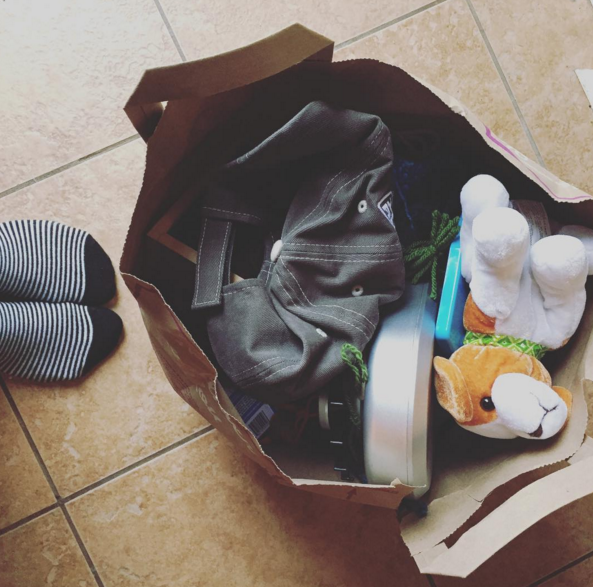
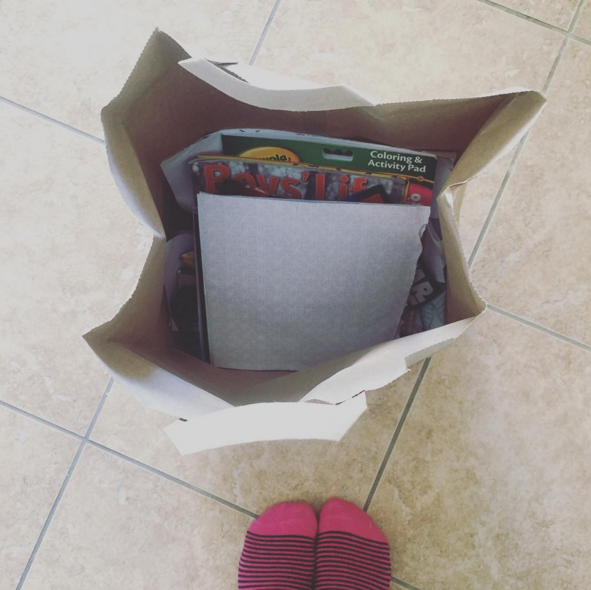
These pictures are of a garage that was badly overstuffed and forgotten. In four days, I managed to create inventory zones for holiday decorations, pool storage, and memory lane. The owners were thrilled! The husband even mentioned putting a pool table in the middle — he had no idea there was so much room up there!

Organize to live simply. Downsize, learn to live in the moment, and you will soon forget about all of the extra stuff.

Jennifer is a home organizer in Charlotte, NC. Her mission is to help families and individuals find calm within their home after clearing out the chaos. Giving someone the opportunity to increase their quality of life by cleaning up and out is her passion! She blogs at Pure and Simple Organizing.

  • Affiliate Link
  • Share on Stumbleupon
  • Del.icio.us
  • Dig this Article
  • Share this article on Twitter
  • Email This Post
  • Print This Post
  • Share this article on Facebook

{ 19 comments }

“How does one balance keeping sentimental items from the past and living a clutter-free, simple lifestyle?” -Emily

As most of you probably well know, I disdain clutter. But even though I can get pretty ruthless in ridding our home of anything we don’t love and use on a very regular basis, I do keep some memorabilia.

Here are some things I consider when deciding whether to keep sentimental items:

1. Ask Yourself: Will I Wish I Had Kept This 25 Years From Now?

When it comes to sentimental items, my rule of thumb is to ask myself, “Will I wish I had kept this 25 years from now?” That really helps me in determining whether or not to hang onto something.

Photographs, letters, and journals are what I hang onto more than actual memorabilia. Sure, it might be fun to show your grandchildren the very first shoes you wore or the very first drawing you made and it’s totally fine to hang onto a few of these things, but if you don’t set some fairly strong ground rules for what you hang onto, you’ll soon have to devote an entire room or storage unit to memorabilia!

2. Ask Yourself: Can I Use It Now?

Just because something has sentimental value, it doesn’t have to be stored away. Some of my favorite sentimental items are things we use on a regular basis–such as my tea set from my grandma. Yes, we run the risk of breaking it if we use it, but it’s so fun to enjoy tea parties with my girls and to tell them about their great grandma whom the set came from.

I also have a set of embroidered dish towels from my grandma that I use almost every day. They are getting worn from use, but I think of her almost every time I pull them out to dry the dishes. To me, it’s much more special to be using her towels in my kitchen than to have them tucked away in a tub in our storage closet.

3. When in Doubt, Hang Onto It

This might seem to fly in the face of point number one, but I’ve been grateful that I’ve followed it over the years–especially with my ruthless clutter-ridding personality! If you’re not sure whether you’ll wish you had hung onto something 25 years from now, don’t get rid of it–yet.

I inherited a KitchenAid from my grandma after she died. I thought I would really love it. Instead, it sat in a closet unused. A couple of times I was seconds away from selling it in our garage sale, but I mentioned this on Facebook and a bunch of you strongly encouraged me to hang onto it. I’m really glad I did because I’ve since fallen in love with it and use it regularly in cooking and baking.

You can always throw something out or pass it on later on, but you can never get something back after you’ve gotten rid of it (well, unless you gave it to someone you know!)

Set Up a Special Memorabilia Storage Space

One thing that has been really helpful to me is to buy two big tubs with lids that I’ve designated specifically for storing mementos. Not only does this provide a place to put special cards or pictures that come in the mail, but it also keeps everything contained and not overflowing into other parts of the house.

We’ve found that two big tubs are currently big enough to house everything we want to hang onto–pictures, childhood memorabilia, letters, and things passed down to us from grandparents that we’re not currently using on a regular basis.

The other beauty of having a designated spot is that it provides boundaries for how much we can keep. When the tubs are getting full, we go through them and pare things down a bit so that we can have more space for new things that might come in.

What about you? How do you balancing hanging onto sentimental items versus having a clutter-free home? I’d love to hear your thoughts and ideas!

  • Affiliate Link
  • Share on Stumbleupon
  • Del.icio.us
  • Dig this Article
  • Share this article on Twitter
  • Email This Post
  • Print This Post
  • Share this article on Facebook

{ 70 comments }

Clear Out the Clutter: The Coat Closet

by Crystal on February 7, 2012

To start off the Clear Out the Clutter project this month, I began at the front door and tackled the coat closet. I was excited to discover it wasn’t as cluttered as I’d thought.

In fact, it only took me around seven minutes to go through and I only found four items to get rid of. But hey, that’s a start!

Tomorrow, it’s onto the girl’s closet. I’m pretty near positive there’s going to be a lot more than four items to get rid of in there–provided I can gently convince the girls that it’s time to let go of some of the extra stuff (like that Happy Meal toy from two years ago!)

“But mom,” I can just hear my daughter protesting, “That Happy Meal toy is really special to me–it makes me think of Grandma because I got it the day Grandma took me to McDonald’s.

Yup, my daughters are pros at figuring out a very good reason why they need to keep all of their items–including papers and toys with missing and broken parts. Cracks me up how different they are than me! They help to balance me out! :)

Did you do any clutter clearing this week? If you posted about it, link directly to your blog post below. We’d especially love to see before and after pictures, if you’re brave! :)

  • Affiliate Link
  • Share on Stumbleupon
  • Del.icio.us
  • Dig this Article
  • Share this article on Twitter
  • Email This Post
  • Print This Post
  • Share this article on Facebook

{ 74 comments }

Rust & Sunshine shows you how to use toilet paper tubes shaped like a heart and dipped in paint to make cute Valentine’s Day cards.

Pottery Barn Kids shows you how to make Valentine’s Day stamps out of potatoes.

  • Affiliate Link
  • Share on Stumbleupon
  • Del.icio.us
  • Dig this Article
  • Share this article on Twitter
  • Email This Post
  • Print This Post
  • Share this article on Facebook

{ 6 comments }

Guest post by Amber from Click. Pray. Love.

Do you have a 12-18 month old child? Have you found it challenging to come up with age-appropriate activities for them to do at home that don’t require the purchase of another toy? If so, I have a few ideas and a challenge to share with you.

First, consider a few of the developmental milestones for a 12-18 month old:

  • Walks independently
  • Stacks objects
  • Knocks objects down
  • Pulls objects apart
  • Puts objects in and dumps them out of containers
  • Hold objects in one hand while manipulating them with the other

Now, here comes the challenge: How many objects can you find in your home that will encourage your child to accomplish or build on those milestones? Here are a few ideas:

  • clothes pins
  • liquid coffee creamer containers
  • muffin tin
  • retractable tape measure
  • magnets
  • food boxes
  • dry pasta
  • plastic vacuum hose
  • balls
  • tape
  • bundt pan
  • plastic flip top lids

Some Practical Suggestions

  • Make an Activity Box – Fill a box with various objects allowing your child to explore the box while teaching him/her how to stir, stack, pour, etc.
  • Fill muffin tins with small objects – Cover each tin with tape or a lid allowing your child to discover what’s in each tin.

  • Work on opening/closing flip top lids. You can also teach them how to thread a ribbon through the opening of flip top lids.

  • Play-doh –  Make Play-doh balls and other shapes for your child. Have them place each one in an egg carton or other container. Give them cookie cutters and begin teaching them how to make their own shapes

  • Box Fun – Keep various size boxes (i.e. cereal, rice, cracker, cream cheese, soap box, etc.). Stack the boxes inside one another allowing your child to pull out each one and attempt to place each one back inside another box.

  • Plastic vacuum Hose – Do you have any balls that will fit inside? If so, try holding the hose up and dropping the ball from top to bottom. You’ll be surprised how quickly your 12-18 month will begin doing this independently. You could also use a paper towel roll.

The list could go on and on, but hopefully these ideas will help get your creative juices flowing. Just remember to look at each object in your house and ask, “How could I use this to create a fun, safe, learning experience for my child?”

Amber is a Physical Therapist turned stay-at-home-mom to her son Bennett. She enjoys photography, wants to begin sewing, and is often thinking about the next fun activity to do with her family. You can join her quest of finding the Divine among the daily at Click.Pray.Love.

  • Affiliate Link
  • Share on Stumbleupon
  • Del.icio.us
  • Dig this Article
  • Share this article on Twitter
  • Email This Post
  • Print This Post
  • Share this article on Facebook

{ 58 comments }

How Being Organized Saves Me Money

by Crystal on February 2, 2012


Guest post by Kristen from Different Shades of Green.

Organizing our home has helped us reach financial goals and harmony. We weren’t always organized though!

Here’s how we started…

Before We Got Organized

Our spare bedroom was our office. I could toss papers in and close the door. I avoided that room, and the mess grew. When I needed to find something, I couldn’t. I missed payments and lost important papers. I had no idea how much money we had or owed.

Our office mess was causing a big financial drain. Interest rates rose, fees piled up, and expenses started climbing. This was compounded by the stress the mess caused. Feeling overwhelmed, I shopped to avoid reality, making the problem worse.

First Step Towards Organization

Finally, I got brave. I moved the office to the kitchen. It scared me to face finances every day! I examined every piece of paper, cleaning up piles and cleaning out drawers.

I downsized to a 2-drawer file and storage box. The file cabinet is now in the kitchen with my desk. When mail arrives, items that don’t require action are tossed or filed. Action items go to my inbox. Seeing the box daily means I maintain it, and things aren’t forgotten.

Benefits of Organization

Financially, we are stronger with an organized office. We haven’t had a late payment in years, and we paid off all our credit card debt! I’m motivated to work on our finances, because I have a visual representation of our success by looking at my tidy desk.

We’re also stronger emotionally. We’re more confident, knowing how much we have and how much we need. We spend less now, but enjoy more freedom.

Fine Tuning

Since that first step, we’ve fine-tuned the organization and expanded:

We keep a folder out labeled ‘monthly budget’. It’s an easy reference point for our goals. We update it monthly, creating harmony in our marriage.

Organizing the entire home helps us save too. Less stuff means less spending, and sometimes more earning. After many military moves, I dislike unpacking junk. We held 7 garage sales in one year, with the profits applied to debt. With less stuff, we can easily manage our belongings.

Organization empowers me. When my husband is deployed, I know where the tools are and can make minor repairs myself to save the cost of a service or handy man. Confidence adds incredible value to savings!

We created ‘stuff rules’. We only keep books we would recommend to friends. We decide on an item’s ‘home’ before we buy. If we can’t think of a home, it doesn’t come home! We have a ‘one in, one out’ rule for closets. Guidelines help us reduce impulse buying.

What matters most is this: with an organized home, I enjoy being home.

And being home saves money!

I don’t need to escape the house to have a good day. Getting organized changed our finances, changed our marriage, and changed our lives. My only regret is that we didn’t do it sooner!

Kristen is the “mom” of two dogs and wife to a sailor. She blogs at Different Shades of Green about the things that matter to her: living green, saving money, supporting American Manufacturing, supporting the Armed Services, teaching and practicing yoga, crafting, and just plain loving life.

  • Affiliate Link
  • Share on Stumbleupon
  • Del.icio.us
  • Dig this Article
  • Share this article on Twitter
  • Email This Post
  • Print This Post
  • Share this article on Facebook

{ 46 comments }

The Real Debate: Cash vs. Credit Cards

by Crystal on January 30, 2012

Guest post from Kathryn of Bond Musings

Discipline is a noble thing. Crystal strives for it. The Proverbs 31 woman is lauded because of her discipline. Succesful people everywhere credit their success to discipline.

So when I was reading the comments on this post about saving money by switching to cash and one reader commented that the real issue was not which spending system is the most effective but was rather why we tend to lack discipline and overspend, I knew she hit the nail on the head.

Yes, discipline is what keeps us from overspending our income.

Crystal has a whole slew of ways to increase your top line/income. Here are a few ways to decrease your bottom line/spending as well.

1. Shop less frequently.

Make a menu for the week with a corresponding grocery list. Stick to that, and don’t go to the grocery store more than once or twice a week. The fewer times you walk through that store’s doors, the less likely you are to impulse buy.

2. Take a break from the deal sites.

This is a hard one, but if you are running out of money by the end of the week/month, you must stop reading about all of the great deals out there so you’re not tempted to buy something you don’t really have the money for.

3. Find a spending system that works for YOU.

Many people spend more money when they use cash because there is no accountability. Others say that they spend like crazy if they use debit or credit cards but that cash puts the brakes on their spending. Honestly evaluate your spending habits and determine where you find more accountability in spending.

4. Clean out your house.

This may seem non sequitor, but hear me out. When you go through your entire house and become intimately knowledgeable about what you have, you realize how much you don’t need.

For me, I am totally set on things like scarves and travel mugs, for which there are numerous deals this time of year. Disciplining yourself to clean out your house can save not only your sanity but also your pocketbook.

5. Make some things yourself.

Homemade cleaners and detergents cost pennies on the dollar compared to even the best deals you could find on the cleaning aisles at the store. Making bagels and English muffins at home is far easier than I thought and costs just a fraction of the store’s prices.

This homemade facewash (that works so well!) cost less than six dollars to make and will last more than a year. All of those recipes take only a few minutes (less time than it would take to run to the store for them!) and will save you money.

The bottom line of our bottom lines really does center on discipline. If you are already disciplined in your spending, I applaud you. However, if you have some room for improvement in this area (like me!), add just one of the above suggestions to your spending habits, and watch more of your money stay right where it should, in your bank account!

For me, switching to cash was a huge help, as is staying away from the deal sites when I run low on cash. For you, you may find that cleaning out your house reveals not only a source of income in the form of a garage sale but also saves you from spending money on items you already have.

Many thanks to the inspiring readers who commented on the post about switching to cash– Money Saving Mom® really does have the best and brightest readers on the Internet! Together, pursuing discipline and saving money can be easy!

Kathryn keeps her hands busy during the day as a stay-at-home mother to two precious girls. She attempts to occupy her mind as well by reading and by blogging at Bond Musings.

photo credit

  • Affiliate Link
  • Share on Stumbleupon
  • Del.icio.us
  • Dig this Article
  • Share this article on Twitter
  • Email This Post
  • Print This Post
  • Share this article on Facebook

{ 92 comments }

Both of my daughters have wavy hair. I love it, but it’s taken some getting used to–especially since I have pretty near straw straight hair. We’ve purchased numerous products over the years: curl spray, frizz spray, gels, and lots of detangling spray.

Because of this, I was quite excited when I saw that you could make your own homemade hair detangler with just conditioner and water. I don’t know why the thought never crossed my mind before, but I’m grateful to have stumbled upon this blog post describing how to make it.

And after reading the simple instructions, I wondered why on earth I’d ever let myself actually pay for hair detangler when I could be making my own for pennies?! It’s kind of like the light-bulb moment I had when I discovered how simple it was to make homemade foaming soap.

At any rate, now that I know how easy it is, I’ll never go back to buying hair detangler again.

Here’s how to make it:

And that’s it, folks. See? I told you it was super simple!

  • Affiliate Link
  • Share on Stumbleupon
  • Del.icio.us
  • Dig this Article
  • Share this article on Twitter
  • Email This Post
  • Print This Post
  • Share this article on Facebook

{ 77 comments }

Hundreds of you have raved about Artisan Bread in Five Minutes a Day. I bought the book months ago, read it in Spring, and have since been trying out making the bread recipes.

The concept is simple: you take a few minutes to mix up some ingredients. You don’t knead the bread and instead let it rest for at least a few hours and then you can refrigerate it for up to two weeks to have fresh Artisan Bread with less than five minutes’ worth of work at any given time.

Truthfully, I was confused over the directions when I read the book the first time. I read and re-read the first chapter to figure out exactly what I was supposed to do with the dough once I made it.

I finally came across Mandy’s video (above) on how to make artisan bread and it all became much more clear. {Yes, I’m a visual learner if there ever was one!}

The bread was extremely easy to make, just like you all have been telling me. However, the first batch was way, way too salty. I followed the directions carefully and was quite disappointed in how it turned out. {Edit: I did use table salt instead of kosher salt the first time around and I’m guessing that could have been much of the issue.}

It looked beautiful, but it tasted gross. So gross, in fact, that I threw out the baked bread and the rest of the dough. And I was rather discouraged about the whole thing. This bread was supposed to revolutionize my baking. Instead, I threw it out. Um, that’s not exactly what I was envisioning with this recipe.

But then I read online where someone suggested cutting the salt in half. I did that and it was a lot better.

(Note: I didn’t use a baking stone (I don’t have one) or the steam method on these loaves. I think that’s why they look undercooked, even though I baked them the full amount of time. I’m going to keep experimenting and am hoping I can land on the perfect amazing bread you all keep talking about!)

I have yet to dub Artisan Bread in Five Minutes a Day as the next best thing to sliced bread and I won’t be making it exclusively as I have a number of other bread recipes I really love, but I think the concept is fascinating, the bread is undeniably easy to make, and it’s definitely a recipe I’ll be adding to our regular bread recipes line-up.

Have you tried the Artisan Bread in Five Minutes a Day Recipe? If so, I’d love to hear what you thought of it! (And feel feel to chime in on suggestions for me on what I’m doing wrong and how I can improve! I really want to make the beautiful loaves that the book pictures!)

Coming up tomorrow: My Homemade Detangler experiment.

  • Affiliate Link
  • Share on Stumbleupon
  • Del.icio.us
  • Dig this Article
  • Share this article on Twitter
  • Email This Post
  • Print This Post
  • Share this article on Facebook

{ 192 comments }

7 Tips for Stockpiling for a Move

by Crystal on January 17, 2012

Guest post by Lacey from Live Loved

My family and I recently moved to a new city and remodeled a house. My in-laws graciously allowed us to stay with them for a time, paying a minimal amount for rent and groceries. Although I was ecstatic to move into our home, I felt a growing amount of worry as the time came to do so — most of it had to do with our grocery budget.

I knew there were a lot of things we would need to buy to get our pantry re-established, especially since we do the majority of our cooking and eating at home. Groceries can add up fast and our tight budget didn’t allow for much wiggle room at all.

My worry was beginning to build.

And then, I began unpacking. And do you know what I found? All kinds of canned tomatoes, oils, spices, pastas, beans, rice, and more. I had completely forgotten that I had packed whatever things I could from our stockpile and kept it in storage at our in-laws. All of which helped to fill my empty pantry that I had been so worried about.

What’s the point of all of this? I think there a few things that can be learned from my experience, and I hope they might prove helpful for you:

1. Don’t worry!

I realized that my worry was very unnecessary. Besides the fact that worry doesn’t accomplish anything, I also claim to rest completely in the Lord and the fact that He knows our needs better than I do. He is the one who provides for our family.

2. Make the effort to stockpile.

If you are moving, list all the items you can stockpile, and then do it! Include cleaning products and dried pantry goods you know will hold up to traveling and storage.

3. Don’t go overboard.

The point is to help get your family’s pantry set-up, not feed the entire neighborhood. Packing and unpacking boxes is a chore even with just a few things, so don’t add too much to your load.

4. Protect your stockpile.

If things need to be in storage, make sure they are well-covered from dust and bugs. Some things I even wrapped in plastic bags and then put into a well-sealed box.

5. Store items in a climate controlled space.

Spices, nuts, oils, and baking goods won’t last forever, but especially not in extreme heat.

6. Write dates on everything.

That way you know how long you have before it goes bad. I might even include the date it went into storage so that you have a good idea of its condition.

7. Create menus that use up your stockpile.

Not having to spend as much on groceries is an added blessing! Some ideas include: spaghetti or pasta dishes, beans and rice, and soups and stews.

What are your best tips to stock-pile for a move?

Lacey is the wife to Kade, mommy to Selah, unashamed coffee addict, and daily recipient of the love of Jesus. She blogs over at Live Loved.

photo credit

  • Affiliate Link
  • Share on Stumbleupon
  • Del.icio.us
  • Dig this Article
  • Share this article on Twitter
  • Email This Post
  • Print This Post
  • Share this article on Facebook

{ 46 comments }

Click Here To View Previous Posts